


This browser is too old to run Achievable.

Update it, or open this page in a current version of Chrome, Safari, Firefox or Edge. On an iPhone or iPad, update iOS: every browser there runs on the version of Safari that comes with it.

Achievable logoAchievable logo
ASVAB
Sign in
Sign up
Purchase
Textbook
Practice exams
Support
How it works
Resources
Exam catalog
Mountain with a flag at the peak
Textbook
Introduction
1. Word Knowledge
2. Mathematics Knowledge
3. Paragraph Comprehension
4. Arithmetic Reasoning
5. General Science
6. Mechanical Comprehension
6.1 Forces and Motion
6.2 Work, Energy and Power
6.3 Simple Machines
6.4 Compound Machines
7. Electronics Information
8. Shop Information
9. Auto Information
10. Assembling Objects
Wrapping up
Achievable logoAchievable logo
6.2 Work, Energy and Power
Achievable ASVAB
6. Mechanical Comprehension
Our ASVAB course is currently in development and is a work-in-progress.

Work, Energy and Power

6 min read
Font
Discuss
Share
Feedback

Torque

Torque is the rotational force applied to an object. It is what makes something twist or turn around a pivot point. Torque is measured in newton-meters (N*m).

Torque= Force x Distance

T=F∗D

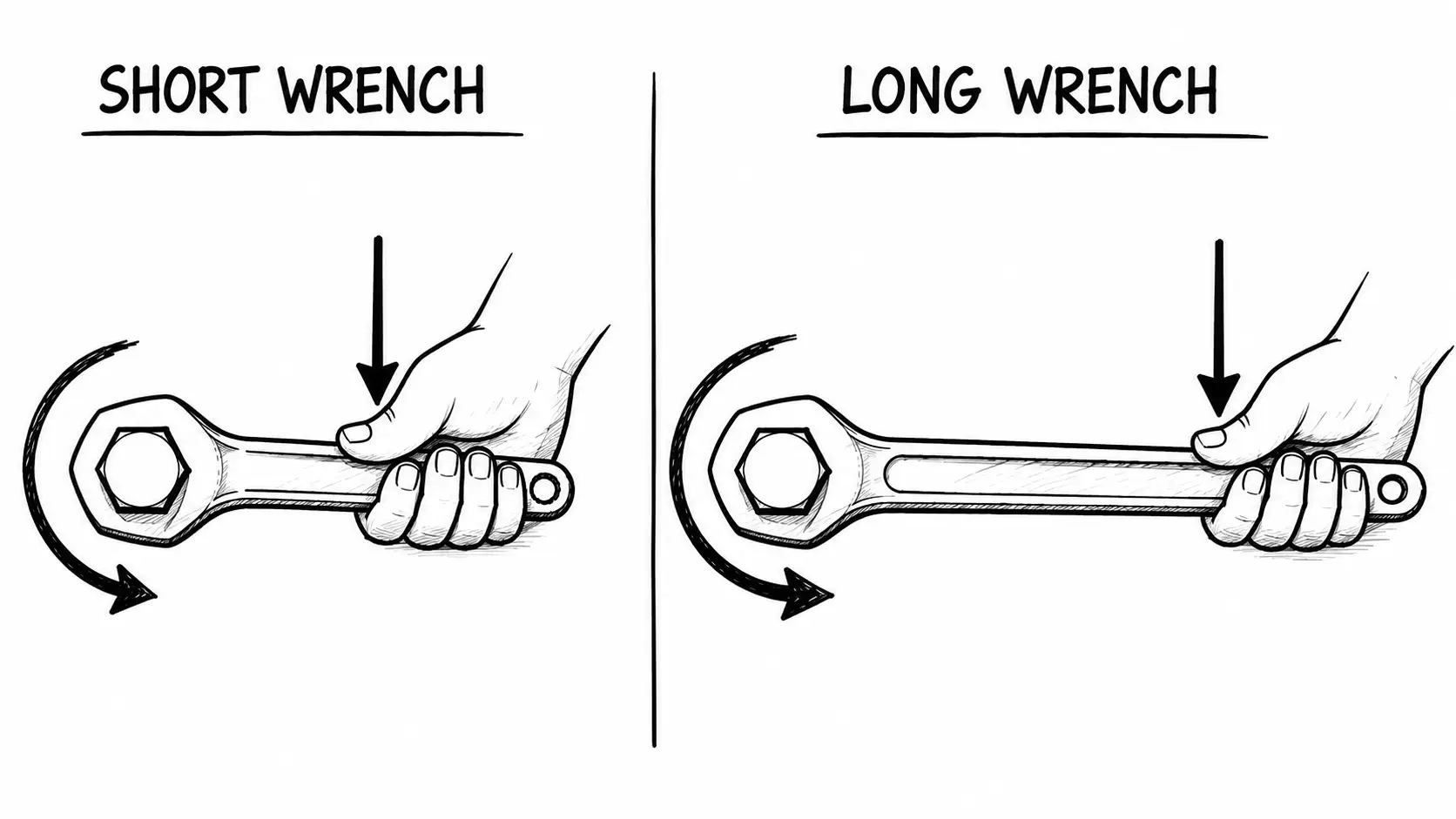
Two hands apply the same downward force to a wrench turning a bolt counterclockwise: on the short wrench the nut rotates slightly, while on the long wrench the same force produces much greater rotation, showing that a longer handle increases torque.
Torque
Achievable
Torque increases as you increase the distance from the pivot point. If you want more torque without adding more force, increase the distance from the pivot. This is why a longer wrench makes a stuck bolt easier to turn. If you decrease the distance from the pivot point, you need more force to create the same amount of torque.

Work

Work is done when a force moves an object over a distance. Work is only done if there is movement. It is measured in Joules (J)

Work= Force x Distance

W=F∗D

Sidenote
Same Equation

You may notice that torque and work have the same equation. The difference between the two is that torque is created when force is applied at a 90° angle, whereas work is force applied in the direction you want the object to move.

Kinetic and potential energy

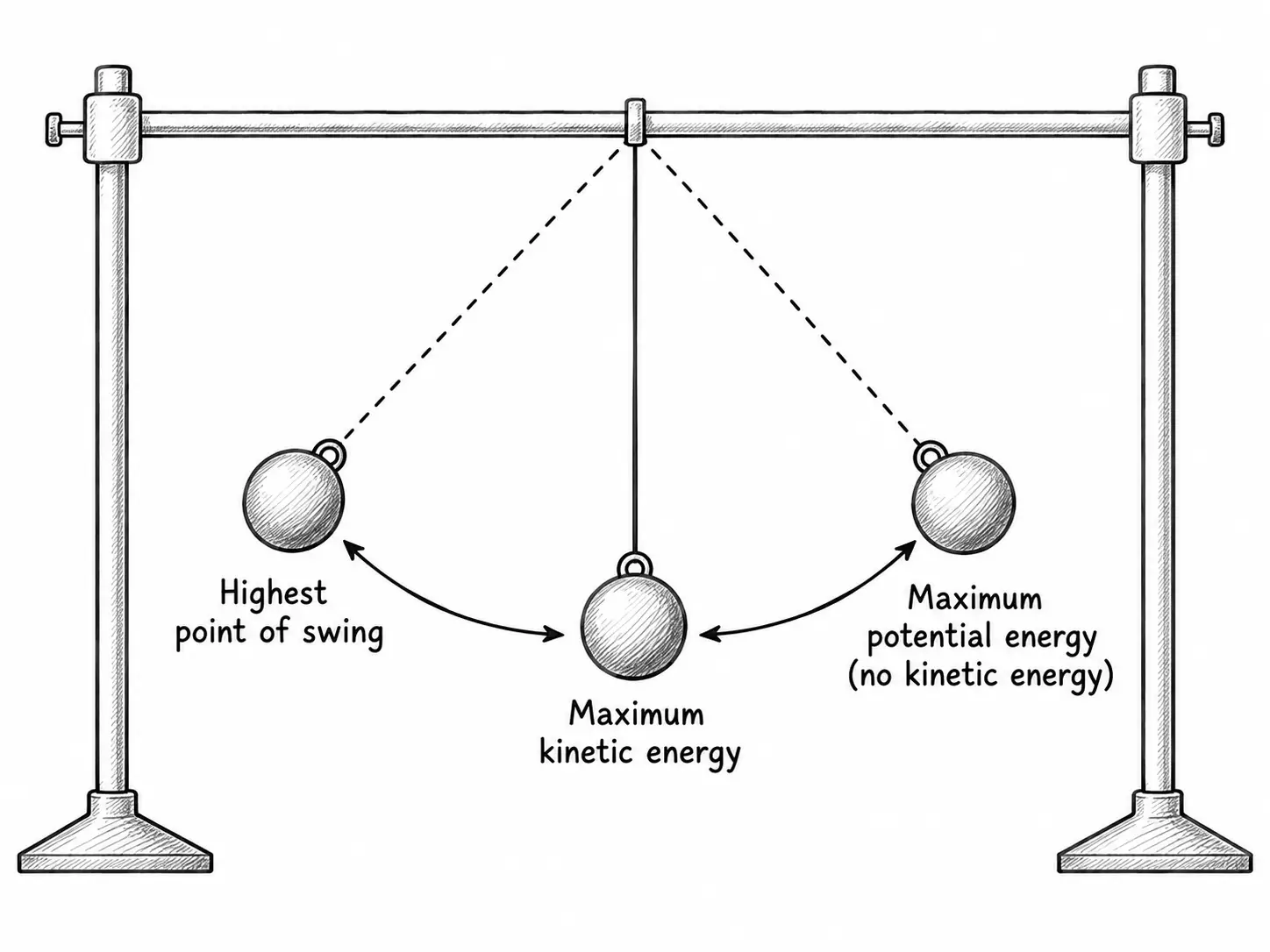
Kinetic energy is the energy of an object in motion.

Potential energy is the energy stored in an object at rest.

A pendulum swings between two raised side positions, each labeled maximum potential energy with no kinetic energy, and the center bottom position, labeled maximum kinetic energy, showing energy converting between potential and kinetic as it swings.
Pendulum diagram (forces)
Achievable

Other energy forms

We can classify all other energy as forms of kinetic or potential energy.

Potential Energy

Chemical: Energy is stored in chemical bonds

Nuclear: Energy stored in the nucleus of the atom

Gravitational: Energy stored due to an object’s position in a gravitational field.

Kinetic Energy

Solar Energy: electromagnetic energy from the sun that travels through space

Thermal Energy: heat energy caused by the movement of atoms.

Motion: energy of an object moving from one place to another

Sound: energy carried by the vibrations of sound waves, creating noise.

Electrical Energy: energy carried by moving electric charges, such as electrons.

Power

Power is the rate at which work is done. It is measured in Watts (W).

In other words, energy is the capacity to do work, while power is how quickly the work is done.

Power=TimeWork​

P=TW​

Let’s look at an example.

How much work is used to lift a 20 newton box 3 meters?

W=F∗d

W=20∗3

W=60J

If it takes 6 seconds to lift it, then how much power is used?

P=TW​

P=660​

P=10 watts

Pressure

Pressure is force distributed over an area. Pressure is measured in Pascals (Pa), but can also be measured in pounds per square inch (PSI), millibars (mbar), or millimeters of Mercury (mmHg).

Pressure=AreaForce​

P=AF​

Pressure and area

The same amount of force applied to a small area generates more pressure than when it’s applied to a large area. This is why a sharp knife cuts better than a dull one, since the force is concentrated on a smaller area.

Because fluids can move in all directions, unlike solids, they behave differently when forces are applied to them. We will focus on air and water to keep things simple.

General Fluid Dynamics

Fluids will always​ move from high-pressure areas to low-pressure areas.

Because of this principle, we can use fluids to move very heavy objects through pneumatics, which use pressurized gases, or hydraulics, which use pressurized liquids.

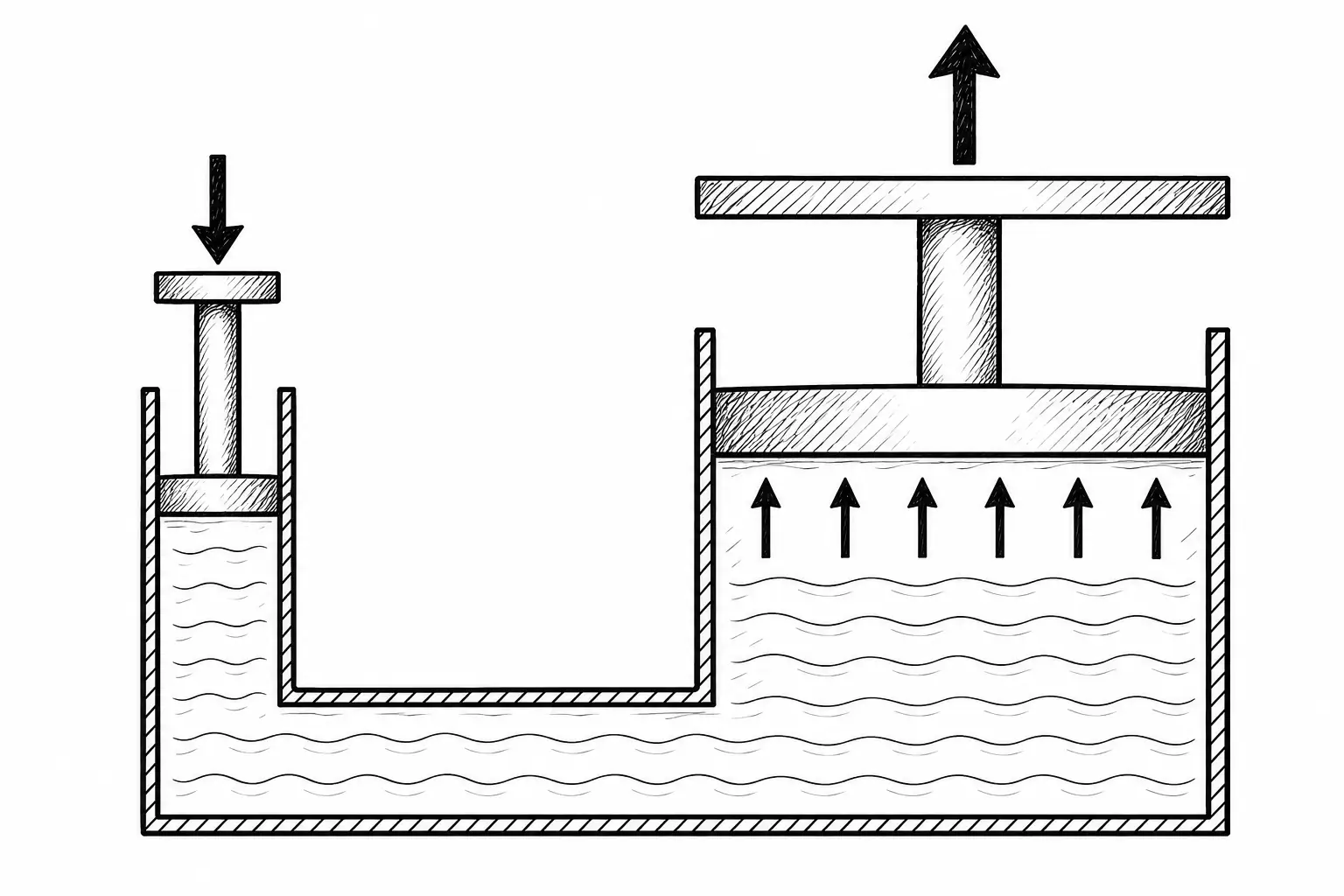
These devices work because of Pascal’s Principle: pressure applied to a fluid in a closed system pushes equally in every direction. Push down on a small piston, and that same pressure pushes up on a larger piston somewhere else in the system. Since pressure equals force divided by area, a small force on a small piston creates the same pressure as a large force on a large piston. That’s how a hydraulic jack can lift a car using just your hand.

A1F1​=A2F2​

A closed container of fluid connects a narrow piston on the left, pushed down by a small force, to a wide piston on the right, which is pushed up with a larger force, illustrating how a small input force on a small piston creates a greater output force on a larger piston.
Hydraulics
Achievable

Air pressure

Air is a fluid too, so it follows the same rules as liquids. Fast-moving air has lower pressure than slow-moving air. Differences in air pressure help airplanes take flight. When air moves over the wing of an airplane, the shape and angle of the wing create lower air pressure at the top of the wing and higher pressure underneath. This pressure difference generates force upwards and creates lift.

Water pressure

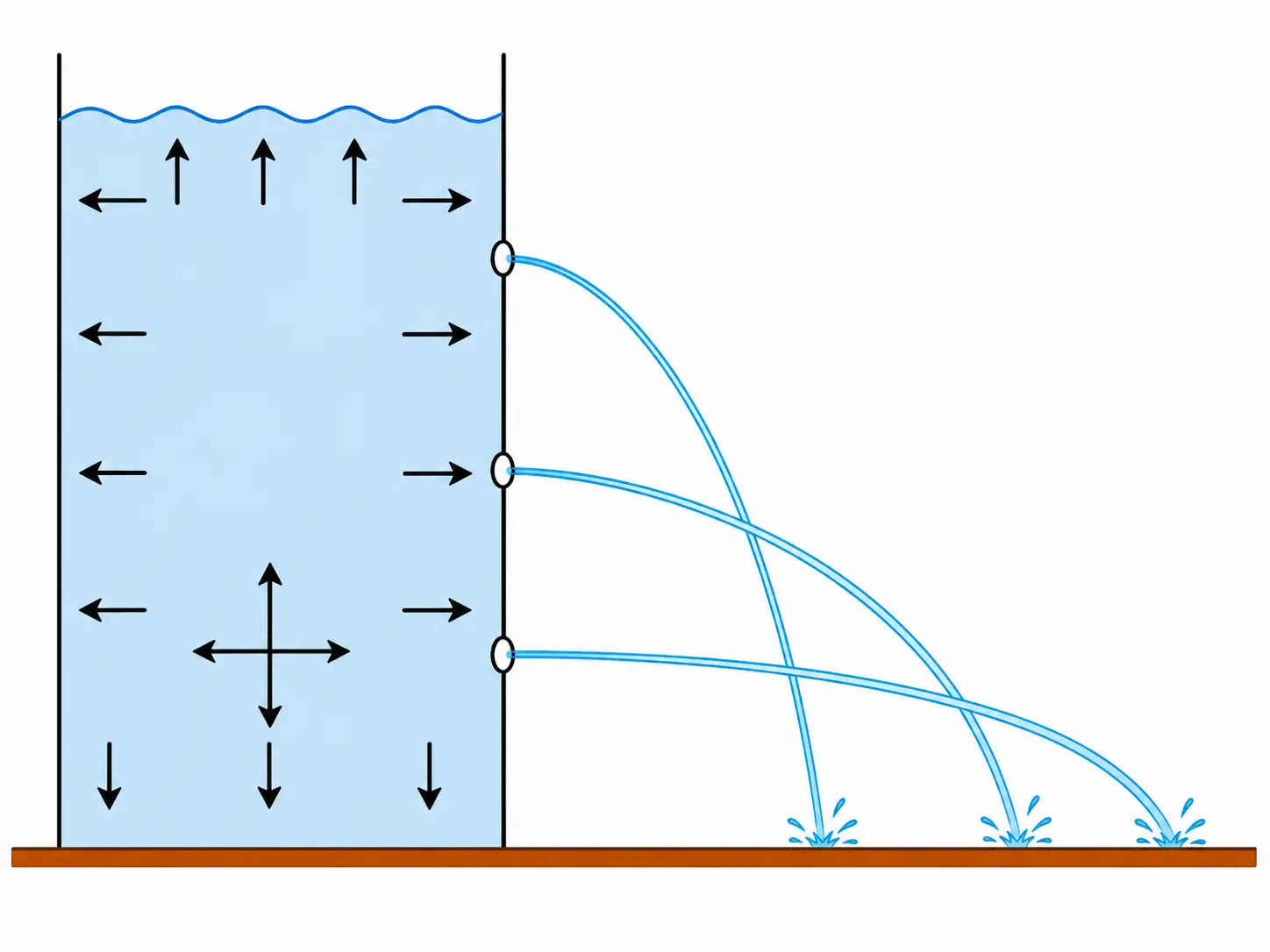
Water pressure increases with depth. If you were to puncture a 5 gallon water container at the top and bottom, the bottom would have significantly more pressure on it and therefore expel the water further.

Water pressure increasing at depth.
Water pressure diagram
Achievable

Torque

  • Rotational force around a pivot; formula: T=F×D, measured in N·m
  • Increasing distance from pivot increases torque for same force (e.g., longer wrench)
  • Decreasing distance requires more force for same torque

Work

  • Done only when force causes movement; formula: W=F×D, measured in Joules
  • Same equation as torque, but differs: torque = force at 90° angle; work = force in direction of motion

Kinetic and Potential Energy

  • Kinetic energy: energy of motion; potential energy: stored energy at rest
  • Potential forms: chemical, nuclear, gravitational
  • Kinetic forms: solar, thermal, motion, sound, electrical

Power

  • Rate at which work is done, measured in Watts
  • Formula: P=TW​
  • Energy = capacity to do work; power = speed of doing work

Pressure

  • Force distributed over area: P=AF​
  • Measured in Pascals (also PSI, mbar, mmHg)
  • Smaller area concentrates force → higher pressure (e.g., sharp knife cuts better)

Fluid Dynamics & Pascal’s Principle

  • Fluids move from high-pressure to low-pressure areas
  • Pascal’s Principle: pressure in closed fluid system pushes equally in all directions
  • Enables hydraulics (liquids) and pneumatics (gases) to amplify force: A1​F1​​=A2​F2​​
  • Small force on small piston = large force on large piston (e.g., hydraulic jack)

Air and Water Pressure

  • Air is a fluid; fast-moving air has lower pressure than slow-moving air
  • Airplane wings create lift via pressure difference (low pressure above, high pressure below)
  • Water pressure increases with depth (greater pressure/force lower in a container)

Sign up for free to take 5 quiz questions on this topic

Previous
Next  | 6.3 Simple Machines
All rights reserved ©2016 - 2026 Achievable, Inc.

Work, Energy and Power

Torque

Torque is the rotational force applied to an object. It is what makes something twist or turn around a pivot point. Torque is measured in newton-meters (N*m).

Torque= Force x Distance

T=F∗D

Torque increases as you increase the distance from the pivot point. If you want more torque without adding more force, increase the distance from the pivot. This is why a longer wrench makes a stuck bolt easier to turn. If you decrease the distance from the pivot point, you need more force to create the same amount of torque.

Work

Work is done when a force moves an object over a distance. Work is only done if there is movement. It is measured in Joules (J)

Work= Force x Distance

W=F∗D

Sidenote
Same Equation

You may notice that torque and work have the same equation. The difference between the two is that torque is created when force is applied at a 90° angle, whereas work is force applied in the direction you want the object to move.

Kinetic and potential energy

Kinetic energy is the energy of an object in motion.

Potential energy is the energy stored in an object at rest.

Other energy forms

We can classify all other energy as forms of kinetic or potential energy.

Potential Energy

Chemical: Energy is stored in chemical bonds

Nuclear: Energy stored in the nucleus of the atom

Gravitational: Energy stored due to an object’s position in a gravitational field.

Kinetic Energy

Solar Energy: electromagnetic energy from the sun that travels through space

Thermal Energy: heat energy caused by the movement of atoms.

Motion: energy of an object moving from one place to another

Sound: energy carried by the vibrations of sound waves, creating noise.

Electrical Energy: energy carried by moving electric charges, such as electrons.

Power

Power is the rate at which work is done. It is measured in Watts (W).

In other words, energy is the capacity to do work, while power is how quickly the work is done.

Power=TimeWork​

P=TW​

Let’s look at an example.

How much work is used to lift a 20 newton box 3 meters?

W=F∗d

W=20∗3

W=60J

If it takes 6 seconds to lift it, then how much power is used?

P=TW​

P=660​

P=10 watts

Pressure

Pressure is force distributed over an area. Pressure is measured in Pascals (Pa), but can also be measured in pounds per square inch (PSI), millibars (mbar), or millimeters of Mercury (mmHg).

Pressure=AreaForce​

P=AF​

Pressure and area

The same amount of force applied to a small area generates more pressure than when it’s applied to a large area. This is why a sharp knife cuts better than a dull one, since the force is concentrated on a smaller area.

Because fluids can move in all directions, unlike solids, they behave differently when forces are applied to them. We will focus on air and water to keep things simple.

General Fluid Dynamics

Fluids will always​ move from high-pressure areas to low-pressure areas.

Because of this principle, we can use fluids to move very heavy objects through pneumatics, which use pressurized gases, or hydraulics, which use pressurized liquids.

These devices work because of Pascal’s Principle: pressure applied to a fluid in a closed system pushes equally in every direction. Push down on a small piston, and that same pressure pushes up on a larger piston somewhere else in the system. Since pressure equals force divided by area, a small force on a small piston creates the same pressure as a large force on a large piston. That’s how a hydraulic jack can lift a car using just your hand.

A1F1​=A2F2​

Air pressure

Air is a fluid too, so it follows the same rules as liquids. Fast-moving air has lower pressure than slow-moving air. Differences in air pressure help airplanes take flight. When air moves over the wing of an airplane, the shape and angle of the wing create lower air pressure at the top of the wing and higher pressure underneath. This pressure difference generates force upwards and creates lift.

Water pressure

Water pressure increases with depth. If you were to puncture a 5 gallon water container at the top and bottom, the bottom would have significantly more pressure on it and therefore expel the water further.

Key points

Torque

  • Rotational force around a pivot; formula: T=F×D, measured in N·m
  • Increasing distance from pivot increases torque for same force (e.g., longer wrench)
  • Decreasing distance requires more force for same torque

Work

  • Done only when force causes movement; formula: W=F×D, measured in Joules
  • Same equation as torque, but differs: torque = force at 90° angle; work = force in direction of motion

Kinetic and Potential Energy

  • Kinetic energy: energy of motion; potential energy: stored energy at rest
  • Potential forms: chemical, nuclear, gravitational
  • Kinetic forms: solar, thermal, motion, sound, electrical

Power

  • Rate at which work is done, measured in Watts
  • Formula: P=TW​
  • Energy = capacity to do work; power = speed of doing work

Pressure

  • Force distributed over area: P=AF​
  • Measured in Pascals (also PSI, mbar, mmHg)
  • Smaller area concentrates force → higher pressure (e.g., sharp knife cuts better)

Fluid Dynamics & Pascal’s Principle

  • Fluids move from high-pressure to low-pressure areas
  • Pascal’s Principle: pressure in closed fluid system pushes equally in all directions
  • Enables hydraulics (liquids) and pneumatics (gases) to amplify force: A1​F1​​=A2​F2​​
  • Small force on small piston = large force on large piston (e.g., hydraulic jack)

Air and Water Pressure

  • Air is a fluid; fast-moving air has lower pressure than slow-moving air
  • Airplane wings create lift via pressure difference (low pressure above, high pressure below)
  • Water pressure increases with depth (greater pressure/force lower in a container)

More from Mechanical Comprehension

  • Forces and Motion
  • Simple Machines
  • Compound Machines