



Functions
A function is a rule (or operation) that takes an input and produces an output. A common way to name a function is , which you can read as “ of .” The function is defined by the operations performed on the input .
Here is an example of a function.

Note: The letter , for function, may also be replaced with , other letters, or even symbols.
Example: The question below is from 2000 AMC 12
Let be a function for which . Find the sum of all values of for which .
A.
B.
C.
D.
E.
Answer: B.
Double input functions
Functions can also have two inputs. In that case, the definition of the function includes operations that use both inputs.
Here is an example of a function with two inputs.
Custom operations
A function (including a two-input function) can be written using symbols that look like “custom operations.” The key idea is that these symbols are just another way to name the same rule.
Here is an example of a double input function and a few ways it may be denoted.
Nested functions
Sometimes you’ll see one function used as the input to another function. This is called a nested (or composed) function.
The notation means:
- First compute the inner function .
- Then plug that result into the outer function .
For example, if
and
then
Floor and ceiling functions
The floor and ceiling functions are rounding functions:
- A floor symbol means “round down to the nearest integer.”
- A ceiling symbol means “round up to the nearest integer.”
When you treat these as functions, the “operation” is rounding. For example:
- outputs rounded up.
- outputs rounded down.
Here is the difference between and graphically.
-x2-3--20250609143539--c5a9c74446bc80648e670e43248a7cd773c1440709ab686f04d07ef32cc7bbb5.svg)
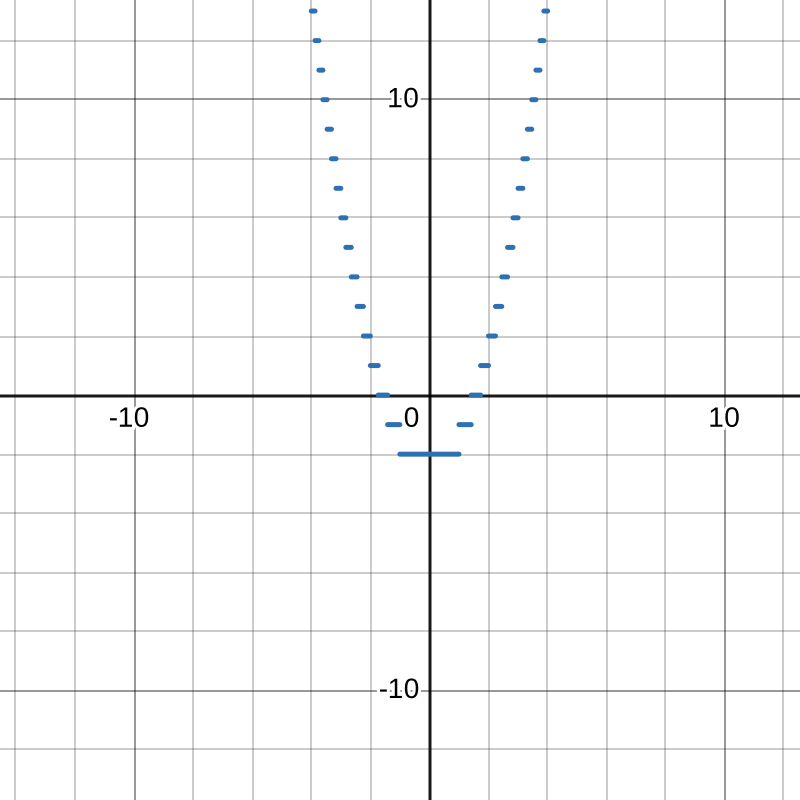
Example: The question below is from 2023 AMC 10.
How many distinct values of satisfy , where denotes the largest integer less than or equal to ?
A.
B.
C.
D.
E.
Answer: B.
Inverse functions
An inverse function reverses the input-output relationship of a function.
A helpful way to visualize inverses is with graphs. If you graph a function by writing in place of , then the graph of the inverse is the reflection of that graph across the line .
You can picture as a mirror line through the origin that rises at a degree angle. For example, compare the function to its inverse below.
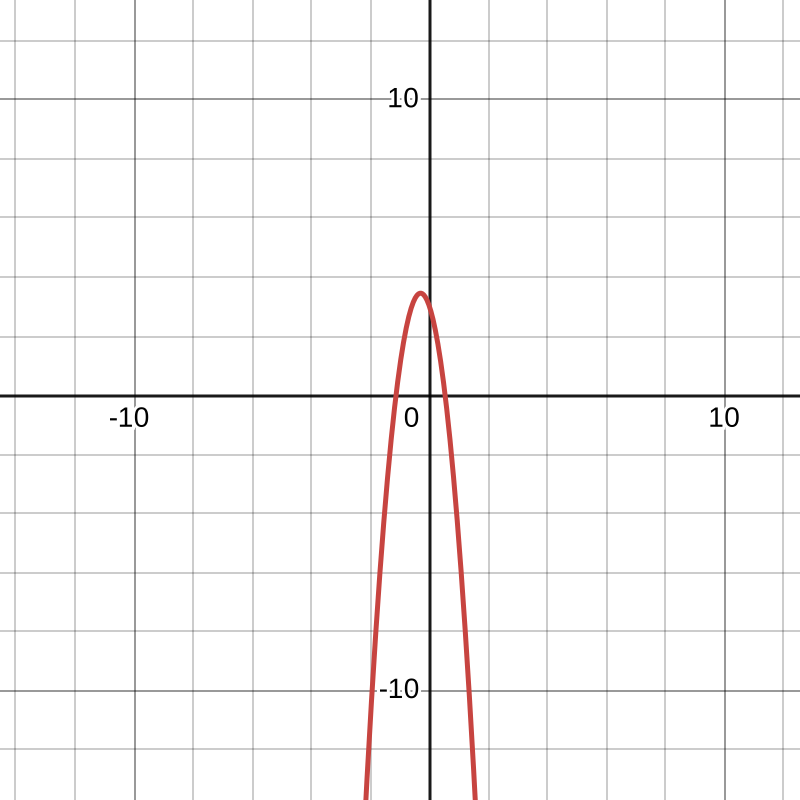
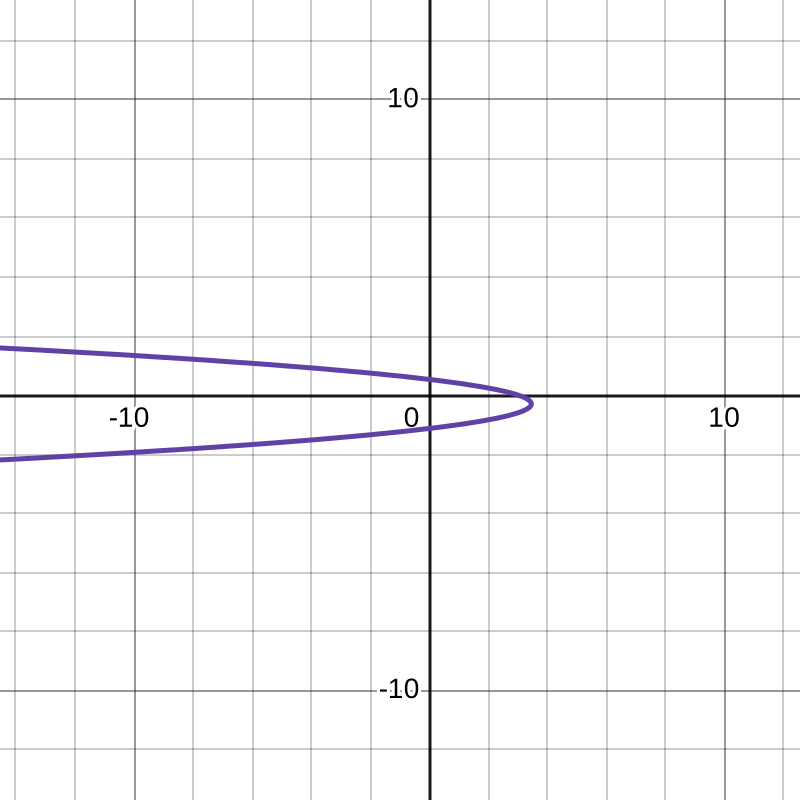
When you draw the "mirror line", the reflection relationship becomes clearer.
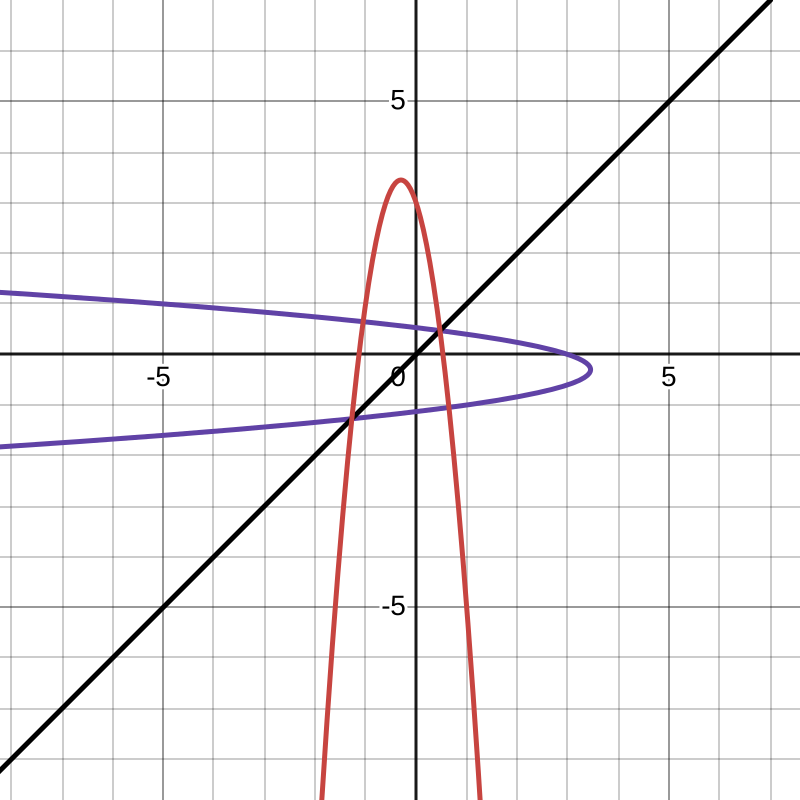
Here’s the main idea: if a point lies on the graph of , then the point lies on the graph of the inverse. Those two points are mirror images across .
To write an inverse relationship algebraically, you often start by swapping and . For example, the original function is . Swapping and gives , which describes the inverse relationship.