



Annotating
Annotating passages might sound tedious, but it’s one of the most practical ways to improve your ACT Reading timing and accuracy. Here’s how it helps, and how to do it in a way that actually matters.
Why annotate or mark the reading test?
In short:
- Annotating helps you find answers faster.
- It reduces endless scanning back and forth through the passage.
- It improves comprehension because you’re actively tracking key details as you read.
Right and wrong ways to annotate
Think about the last novel you read for school. Were you asked to annotate as you read?
Now think about what you actually did on the page: underlines, circles, stars, brackets, and so on. If you mostly underlined, you’re in good company - underlining is the most common approach. The problem is that it often becomes automatic, so it stops helping.
Wrong ways to annotate
Avoid using only underlines. After years of annotating novels, many students end up underlining without making deliberate choices about what matters.
Right ways to annotate
Below is a very opinionated system for annotating ACT Reading passages. Try it on a couple of practice tests first. After that, keep what helps and drop what doesn’t. Different test-takers focus best in different ways.
Things to mark from every passage:
- Names, such as:
- Jill
- Grandpa
- The hooded man
- Dates (or things that mark time), such as:
- November 2nd
- Tomorrow
- Two months ago
- Winter
- Locations, such as:
- France
- My best friend’s house
- At the party
Names, dates, and locations are worth marking because questions often try to confuse you with similar details. If you mark these consistently, it’s much easier to keep the passage straight.
Now, here’s how to mark them:
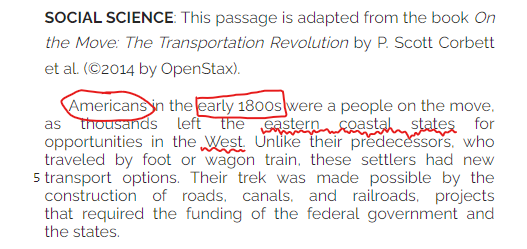
As you can see:
- Names are circled.
- Dates (or things that mark time) are boxed.
- Locations have a jagged underline.
Now you know what to mark in every passage. There’s one more step: learning what extra details to mark based on the passage type. We’ll call these “special things” relevant information.
There are four passages on the reading test:
- Literary narrative
- Social science
- Humanities
- Natural science
We will go into more depth about the four kinds of passages in the [Passage types] chapter. For now, here’s a summary of what counts as relevant information in each type:
- Literary narrative: The perceptions, observations, feelings, and thoughts of characters.
- Social science: The character’s background, accomplishments, values/beliefs, and things that make history.
- Humanities: This can behave like either a literary narrative or a social science passage. A quick rule: if the passage is in first person, annotate it like a literary narrative. If it’s in third person, annotate it like a social science passage.
- Natural science: What is important to science, clearing up scientific misconceptions, what the author is trying to prove in the last paragraph.
This next example includes the three things you should mark in every passage (names, dates, and locations), plus some relevant information in parentheses.
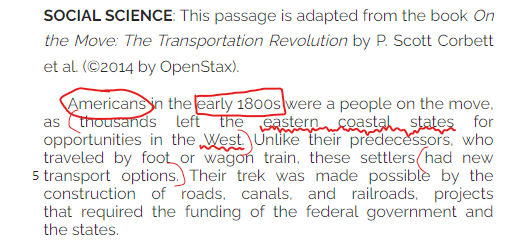
Pop quiz: What kind of things should you mark on the reading passage?
- Names
- Dates (or things that mark time)
- Locations
- Any other relevant information
Now, what kind of markings should you use to annotate these things?
- Names: circle
- Dates (or things that mark time): box
- Locations: jagged underline
- Other relevant information: parentheses (or brackets are fine, too)
Try these specific markings on a couple of practice tests before you modify the system to make it your own.
Annotating questions
Annotating the questions keeps you focused on what the question is actually asking.
This matters most for long questions. The longer the question, the easier it is to lose track of what you’re supposed to answer.
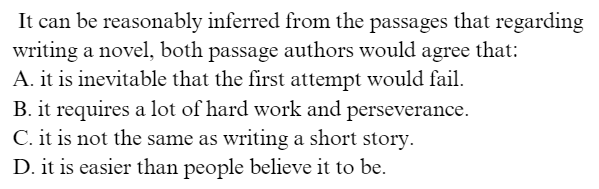
To fix this, circle the main elements of the question - the words and phrases that tell you what to look for. Here is an example of how you could annotate that same question.
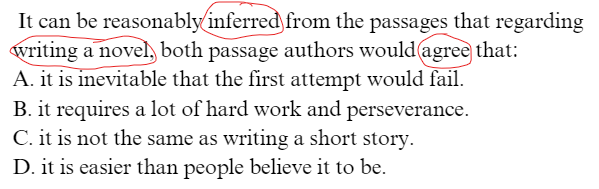
As you can see, the key parts of the question are circled. That keeps your attention on what the question wants.
This is important because the test often includes answer choices that reuse familiar wording from the passage. If you stay locked on the question’s core task, you’re less likely to pick an answer that sounds right but doesn’t actually answer what was asked.
Now you know how to annotate ACT Reading passages. Annotating helps you find answers faster, which matters a lot on a section with a tight time limit.