



Resource allocation
Learning outcome statements
The learning outcome statements relevant for this section are:
- explain how the efficient allocation of organizational resources is planned during the budgeting process
Resource allocation during budgeting process
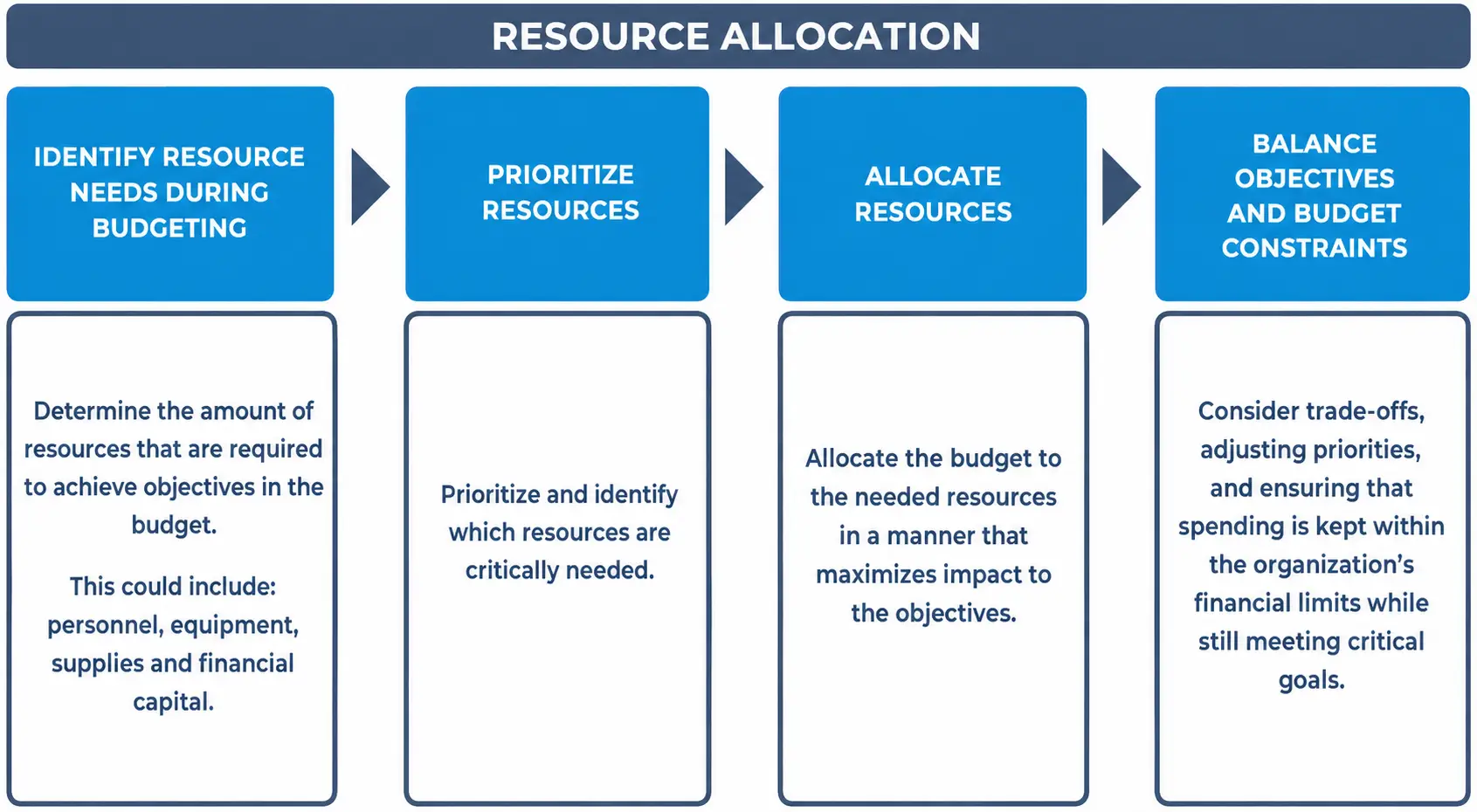
Budgeting exam questions often test whether you understand how organizations turn limited resources into strategic priorities. Effective resource allocation ensures that an organization’s limited resources are used to achieve strategic objectives efficiently. The budgeting process provides a structured approach for identifying, prioritizing, and allocating resources, such as personnel, equipment, and capital, across various departments.
1. Identifying resource needs during budgeting
The first step in resource allocation is identifying the resources needed to achieve departmental and organizational objectives. Managers assess their needs based on factors such as personnel, equipment, and financial capital, using historical data and future projections. These resource estimates are incorporated into departmental budgets to ensure the required inputs align with strategic goals.
Key areas that departments need to consider include:
- Personnel: Determining the number and type of employees needed to meet operational or project goals.
- Equipment and materials: Identifying the tools, machinery, or materials necessary for production or service delivery.
- Supplies and utilities: Estimating the ongoing consumables and utilities needed to support day-to-day operations.
- Financial capital: Estimating the funding required for new projects, expansions, or capital expenditures.
These resource needs are typically based on historical data, industry benchmarks, and future projections of business activity. Managers use these estimates to prepare their departmental budgets, ensuring that the requested resources align with the department’s short-term and long-term objectives.
2. Prioritizing resources
Once resource needs are identified, managers prioritize them based on their importance to the organization’s goals. Resources critical to achieving objectives, such as key personnel or essential equipment, are prioritized, while less critical items may be deferred. This prioritization ensures that the most important resources receive the necessary attention within budget constraints.
Factors that influence prioritization include:
- Contribution to objectives: Resources that directly contribute to the achievement of key objectives, such as personnel in critical functions or essential production equipment, are prioritized higher.
- Cost-benefit analysis: Managers evaluate the costs and benefits associated with each resource. For example, expensive equipment may be justified if it leads to significant efficiency gains, while non-essential items may be deferred.
- Risk of deferral: Some resources can be deferred without significant risk to operations, while others are necessary for immediate use. Resources that support core business activities are typically given top priority.
The goal of prioritization is to ensure that limited resources are allocated to the most important areas, maximizing their impact while keeping costs under control.
3. Allocating resources efficiently
After prioritizing resources, they are allocated in a way that maximizes impact. Managers weigh the costs and benefits of different resource allocation scenarios, deciding which resources provide the highest return on investment (ROI).
For instance, investing in automation might have higher upfront costs but could lead to significant long-term savings and increased productivity. In addition, resources must be allocated in a way that supports the organization’s overall strategic goals. For example, if the organization’s strategy emphasizes growth, more resources may be allocated to marketing and new product development. By weighing different resource allocation scenarios and ensuring alignment with strategic goals, organizations can make the best use of their available resources.
4. Balancing objectives and budget constraints
Throughout the budgeting process, managers must balance the need to achieve departmental objectives with the limitations of the overall organizational budget.
This involves making trade-offs, adjusting priorities, and ensuring that spending is kept within the organization’s financial limits while still meeting critical goals. By carefully balancing objectives with available resources, managers ensure that the organization can operate efficiently without exceeding its financial limits.
Example: Trimming a department budget
The marketing department requests $150,000 for a new campaign, but the finalized budget allows only $120,000 for marketing. The manager cuts the least critical line item - event sponsorships - to bring the request within budget while preserving the campaign’s core spending.
Answer: the department’s core objective is still met at a reduced scope, and total spending stays within the budget constraint.