



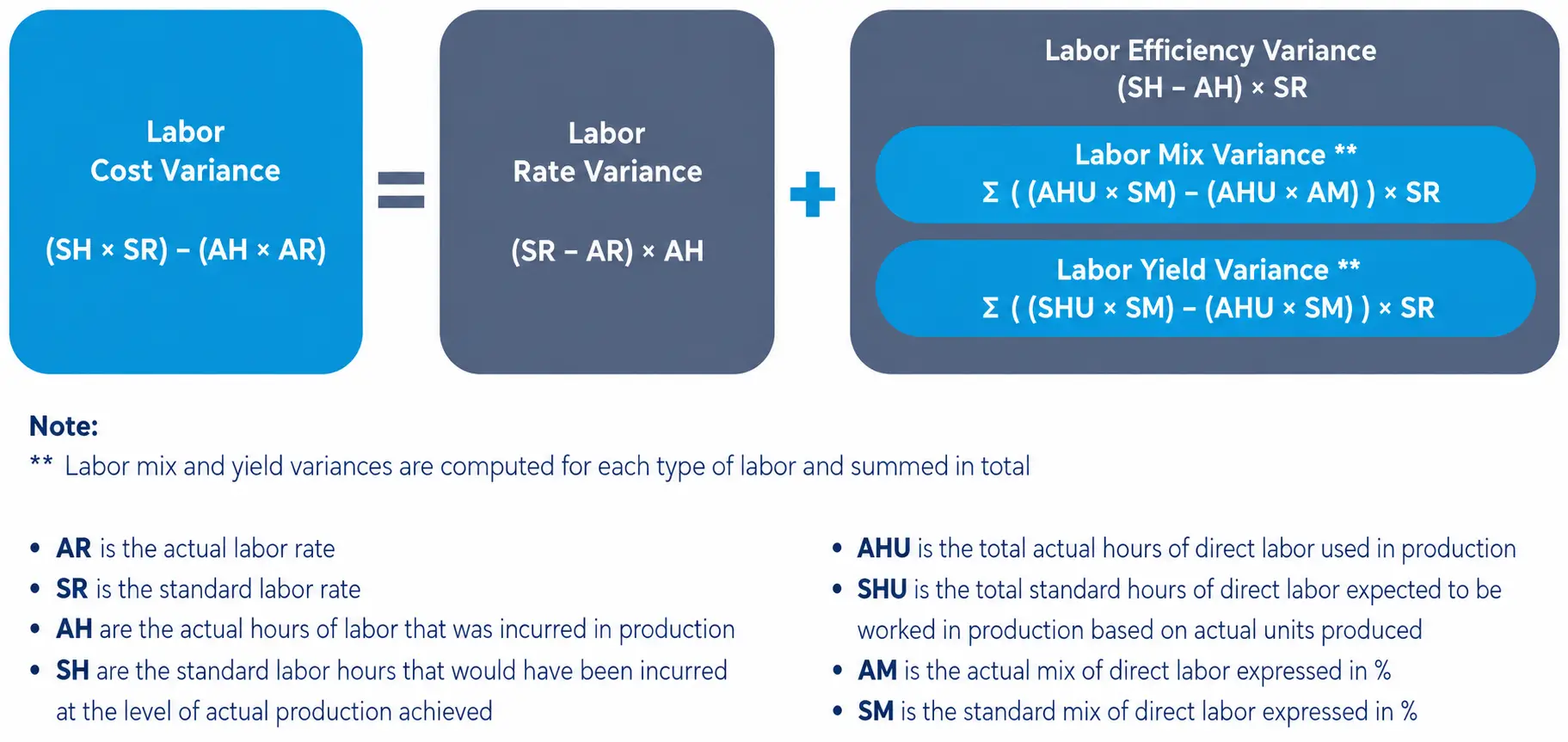
Labor rate variance
Labor rate variance
The labor rate variance is the difference between the standard labor rate and the actual labor rate for the actual hours incurred by production. This variance is typically the responsibility of the HR or personnel manager, as they oversee labor cost management, including wage negotiations, hiring practices, and workforce planning. While external factors such as economic changes, labor market conditions, and inflation can influence wage rates, the HR or personnel manager plays a crucial role in negotiating pay rates, managing labor contracts, and ensuring that wages align with company standards and budgets. By effectively controlling these factors within their scope, they help minimize unfavorable labor rate variances.
The formula for calculating labor rate variances is:
It can also be expressed in terms of the formulas:
Where:
- is the actual labor rate
- is the standard labor rate
- are the actual hours of labor that was incurred in production
The labor rate variance reflects the difference between the actual labor rate paid per hour and the standard labor rate established in the budget. A positive variance indicates a favorable outcome, meaning actual labor costs were lower than expected, while a negative variance signifies an unfavorable outcome, where actual labor rates exceeded the standard rate.
Understanding the reasons behind these variances is essential to avoid confusion. For instance, when the actual labor rate exceeds the standard rate, it creates an unfavorable variance, as higher labor costs negatively impact the company’s financial performance. By analyzing the root causes of these variances, organizations can interpret their implications more accurately and take appropriate corrective actions.