




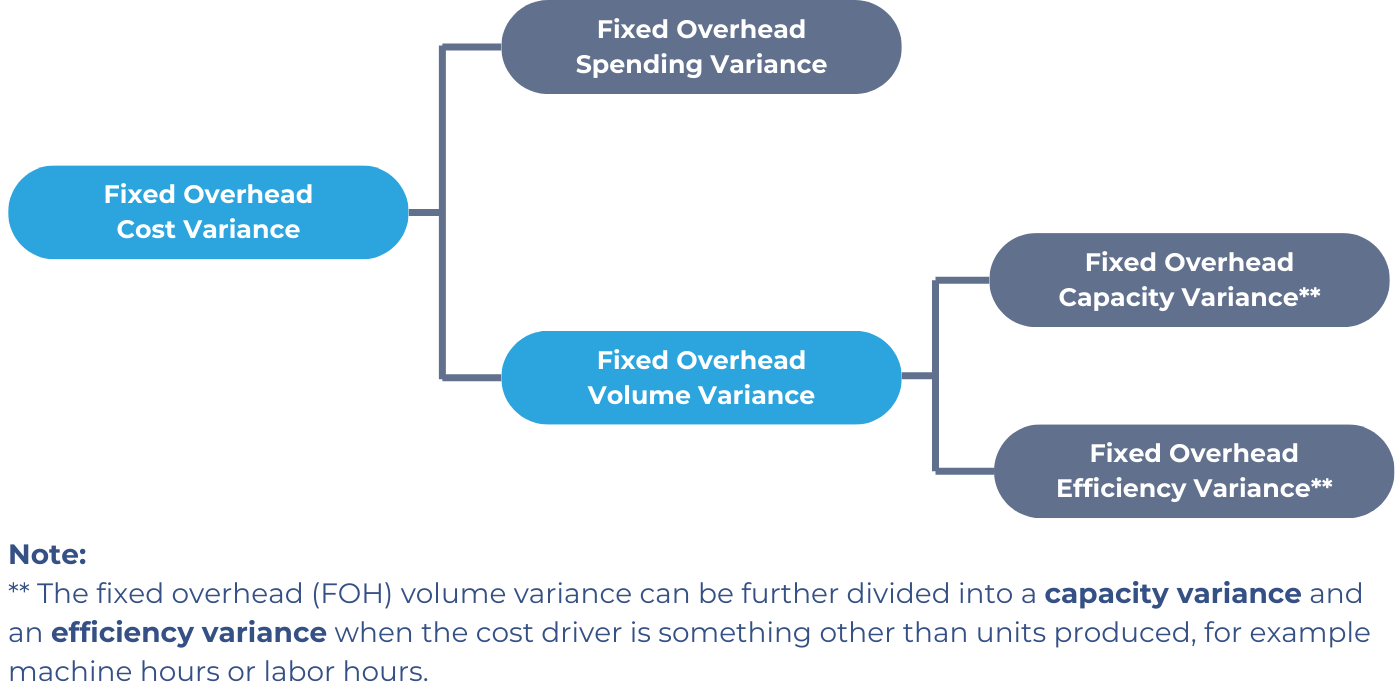
Overview of FOH cost variance formula
The fixed overhead (FOH) cost variance is analyzed differently than all the previous variances because so far we have discussed costs that vary directly with production levels or variable costs, which includes direct materials, direct labor and variable overhead.
Under standard costing, fixed overhead (FOH) is generally considered independent of production within the relevant range of activity. However, FOH is still applied to units of output using a predetermined standard FOH rate. This rate functions in the same way as the standard labor rate or the standard cost per unit of direct materials, ensuring that each unit produced carries a share of fixed overhead. This approach is known as absorption costing.
The process of absorption costing means that the total FOH absorbed by inventory and COGS may be different than the budgeted fixed overhead (in the master budget), even though we expect these to be the same as budgeted since they are independent of production. The difference is called over-absorbed FOH or under-absorbed FOH.
Take for example the scenario below:
The absorption of the FOH can be through units produced or hours used depending on the cost driver. The FOH cost variance can be broken down into different components:
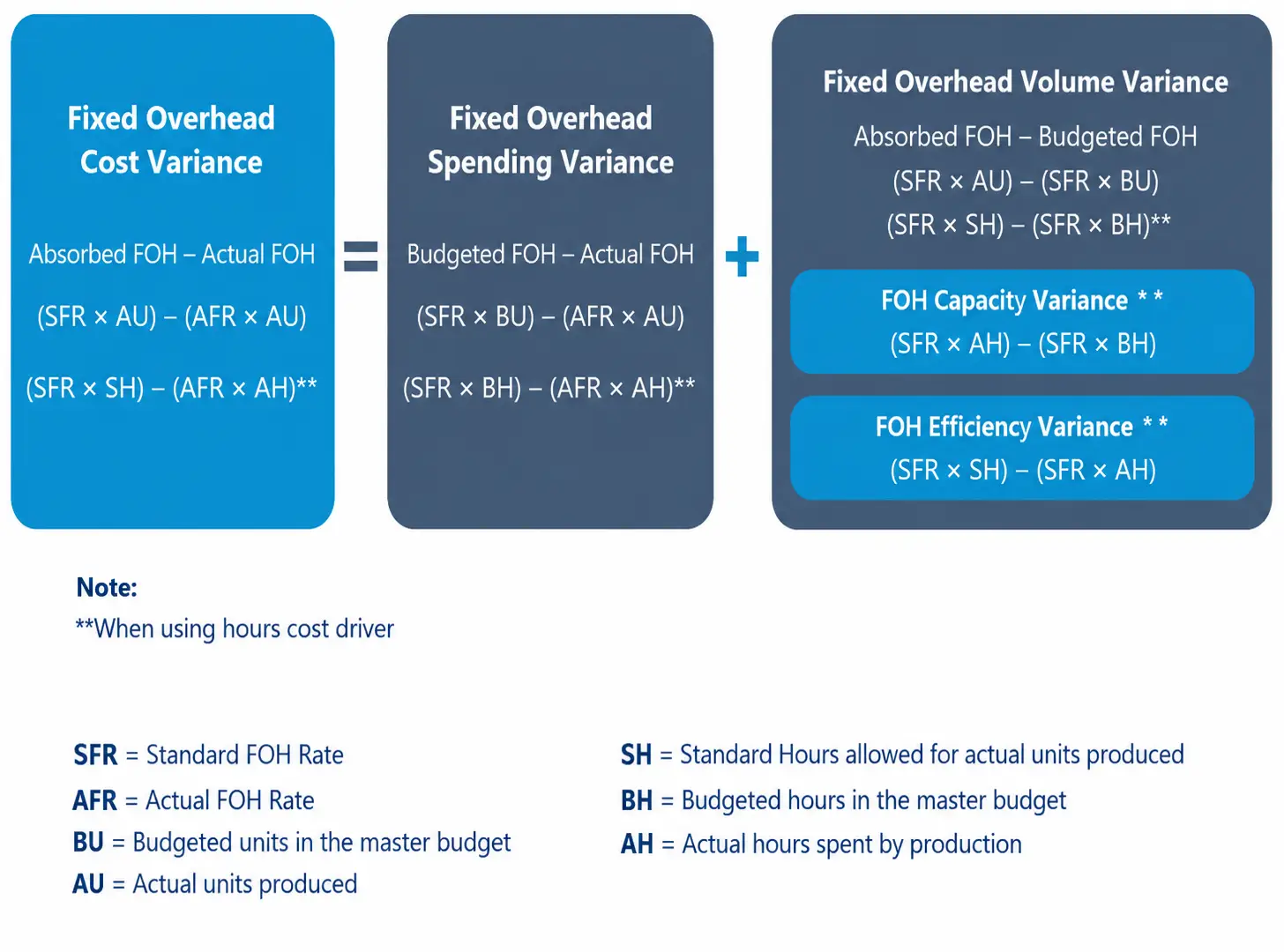
Overview of variance formula
The total of all calculated variances should equal the fixed overhead cost variance. This provides a useful way to verify the accuracy of your calculations by comparing the sum of the individual variances to the total FOH cost variance.
From the figure below, it should be noted that you have several options of computing the FOH variances depending on what is the situation.