


Achievable logoAchievable logo
CMA Part 1
Sign in
Sign up
Purchase
Textbook
Practice exams
Support
How it works
Exam catalog
Mountain with a flag at the peak
Textbook
1. External financial reporting decisions
2. Planning, budgeting, and forecasting
3. Performance management
4. Cost management
5. Internal control
6. Technology and analytics
Achievable logoAchievable logo
1.1.7.4 Net change in cash and cash equivalents
Achievable CMA Part 1
1. External financial reporting decisions
1.1. Financial statements
1.1.7. Cash flow preparation
Our CMA Part 1 course is currently in development and is a work-in-progress.

Net change in cash and cash equivalents

4 min read
Font
Discuss
Share
Feedback

Putting it all together: The statement of cash flows

The cash flows from operating, investing and financing activities are all combined in one statement of cash flows. The subtotals of each activity is combined to a singular sum commonly referred as “net change in cash and cash equivalents”.

The net change in cash and cash equivalents is then added to the beginning balance of cash to arrive at the ending balance. Under US GAAP (ASU 2016-18), this ending balance includes restricted cash, so the total reconciled is cash, cash equivalents, and restricted cash, which should agree to the corresponding amount disclosed in the statement of financial position.

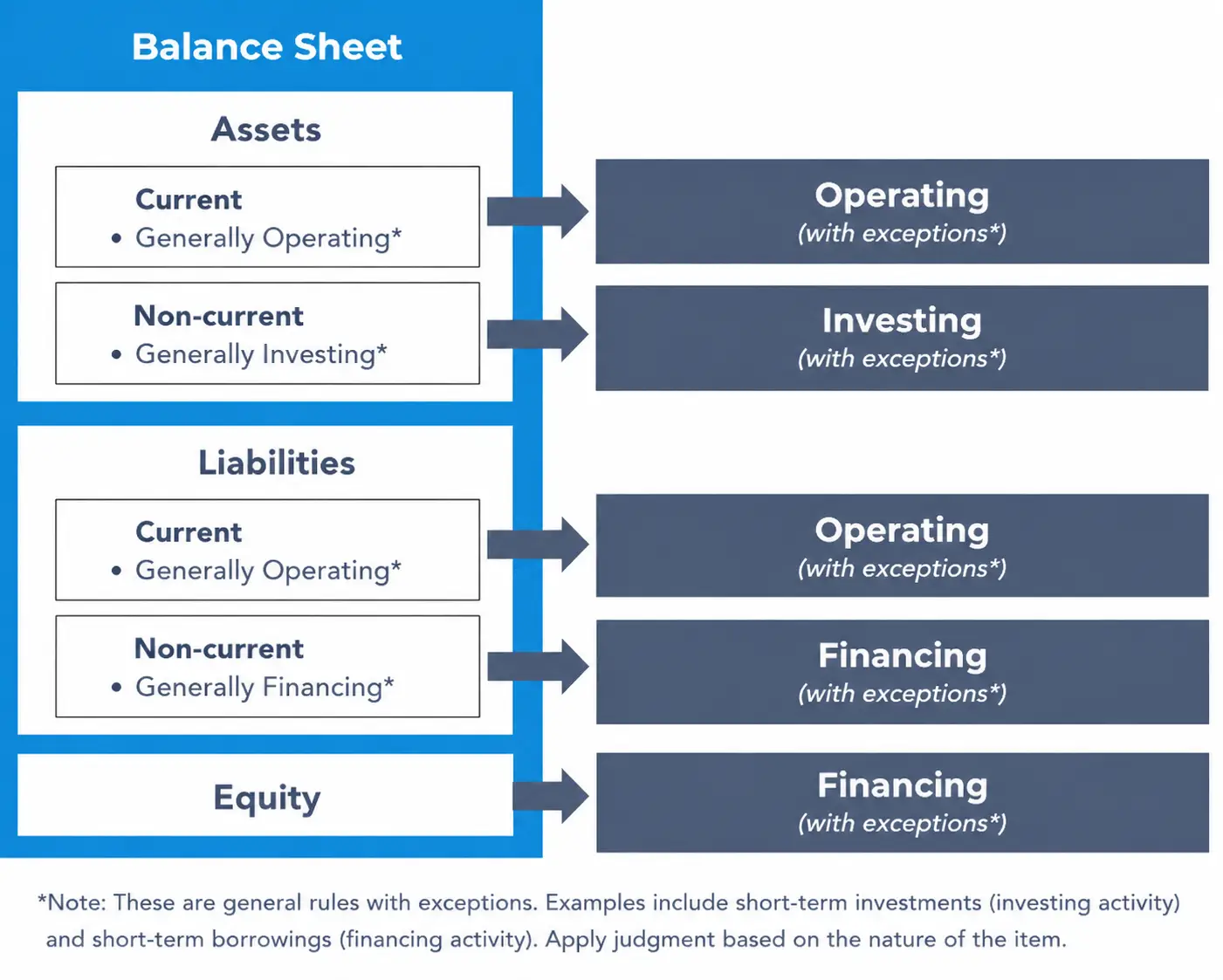
As you may have already noted, the statement of cash flows can be derived from movements of balance sheet accounts. The general treatments are summarized below:

Mapping balance sheet accounts to their related cash flow statement classifications.
Balance Sheet Cash Flow Mapping
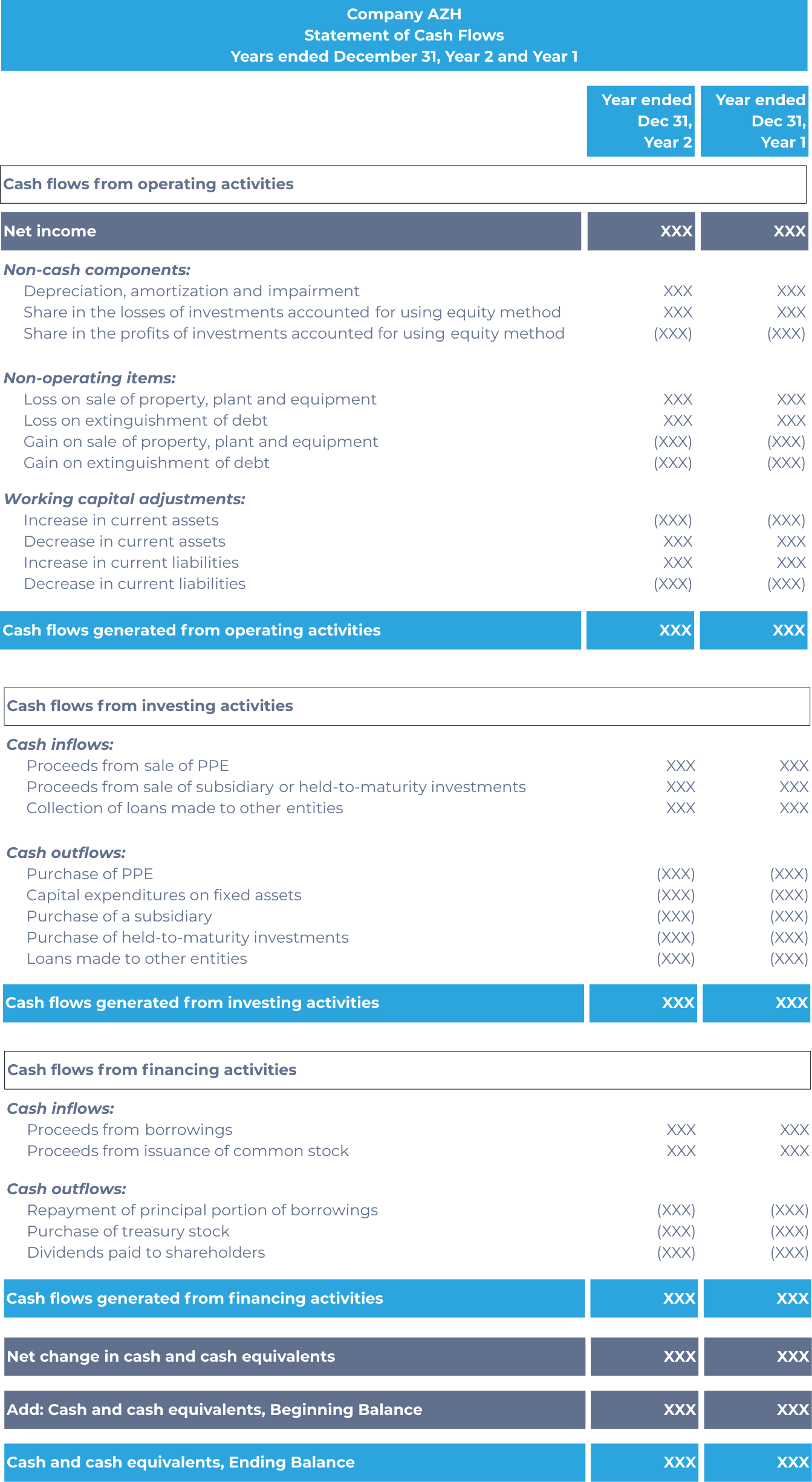
See below combined statement of cash flows using the indirect method for the operating activities:

Proforma combined cash flows (indirect method)

Pitfall: net income and operating cash flow diverge because net income is accrual-based while cash flow tracks actual cash; non-cash charges like depreciation are added back, and a rise in receivables ties up cash despite boosting revenue. Example: $50,000 net income + $15,000 depreciation − $70,000 increase in receivables = −$5,000 operating cash flow - negative despite positive net income.

Purpose and limitations of the statement of cash flows

The following a some of the purposes of the statement of cash flows:

  • Cash flow information helps assess the company’s financial flexibility and risk
  • It helps assess the company’s liquidity, which is the ability of the company to generate cash flows to service their obligations when they become due. However this may lead to some limitations (see below)
  • It helps users understand the prospects for future cash flows of the company
  • Since the income statement is prepared using the accrual method, the statement of cash flows can help explain the difference between the cash flows and the company’s net income

The following are some limitations of the cash flow statement:

  • The cash flow statement is not a direct measure of profitability because it reports cash movements rather than accrual-based earnings; significant non-cash investing and financing activities are still disclosed separately under US GAAP (ASC 230)
  • The cash flow statement may not provide the full context of the company’s liquidity since payments can be delayed to show positive net inflows during the period. This is why the statement of cash flows should be analyzed in the context of other financial information
  • The statement of cash flows may be complicated to prepare for consolidated financial statements with several entities

Statement of Cash Flows Structure

  • Combines operating, investing, and financing cash flows
  • Net change in cash and cash equivalents: sum of all activities
  • Ending cash balance = beginning balance + net change; matches balance sheet

Cash Flow Treatments

  • Derived from changes in balance sheet accounts
  • Specific treatments for assets, liabilities, and equity changes
  • Reference summary table for detailed account impacts

Indirect Method (Operating Activities)

  • Starts with net income
  • Adjusts for non-cash items and changes in working capital
  • Commonly used format for presenting operating cash flows

Purpose of the Statement of Cash Flows

  • Assesses financial flexibility and risk
  • Evaluates liquidity (ability to meet obligations)
  • Explains differences between net income and cash flows
  • Provides insight into future cash flow prospects

Limitations of the Statement of Cash Flows

  • Does not measure profitability (excludes non-cash items)
  • May not fully reflect liquidity (timing of payments can distort inflows)
  • Preparation complexity increases with consolidated entities

Sign up for free to take 6 quiz questions on this topic

Previous
Next  | 1.1.8 Notes to the financial statements
All rights reserved ©2016 - 2026 Achievable, Inc.

Net change in cash and cash equivalents

Putting it all together: The statement of cash flows

The cash flows from operating, investing and financing activities are all combined in one statement of cash flows. The subtotals of each activity is combined to a singular sum commonly referred as “net change in cash and cash equivalents”.

The net change in cash and cash equivalents is then added to the beginning balance of cash to arrive at the ending balance. Under US GAAP (ASU 2016-18), this ending balance includes restricted cash, so the total reconciled is cash, cash equivalents, and restricted cash, which should agree to the corresponding amount disclosed in the statement of financial position.

As you may have already noted, the statement of cash flows can be derived from movements of balance sheet accounts. The general treatments are summarized below:

See below combined statement of cash flows using the indirect method for the operating activities:

Pitfall: net income and operating cash flow diverge because net income is accrual-based while cash flow tracks actual cash; non-cash charges like depreciation are added back, and a rise in receivables ties up cash despite boosting revenue. Example: $50,000 net income + $15,000 depreciation − $70,000 increase in receivables = −$5,000 operating cash flow - negative despite positive net income.

Purpose and limitations of the statement of cash flows

The following a some of the purposes of the statement of cash flows:

  • Cash flow information helps assess the company’s financial flexibility and risk
  • It helps assess the company’s liquidity, which is the ability of the company to generate cash flows to service their obligations when they become due. However this may lead to some limitations (see below)
  • It helps users understand the prospects for future cash flows of the company
  • Since the income statement is prepared using the accrual method, the statement of cash flows can help explain the difference between the cash flows and the company’s net income

The following are some limitations of the cash flow statement:

  • The cash flow statement is not a direct measure of profitability because it reports cash movements rather than accrual-based earnings; significant non-cash investing and financing activities are still disclosed separately under US GAAP (ASC 230)
  • The cash flow statement may not provide the full context of the company’s liquidity since payments can be delayed to show positive net inflows during the period. This is why the statement of cash flows should be analyzed in the context of other financial information
  • The statement of cash flows may be complicated to prepare for consolidated financial statements with several entities
Key points

Statement of Cash Flows Structure

  • Combines operating, investing, and financing cash flows
  • Net change in cash and cash equivalents: sum of all activities
  • Ending cash balance = beginning balance + net change; matches balance sheet

Cash Flow Treatments

  • Derived from changes in balance sheet accounts
  • Specific treatments for assets, liabilities, and equity changes
  • Reference summary table for detailed account impacts

Indirect Method (Operating Activities)

  • Starts with net income
  • Adjusts for non-cash items and changes in working capital
  • Commonly used format for presenting operating cash flows

Purpose of the Statement of Cash Flows

  • Assesses financial flexibility and risk
  • Evaluates liquidity (ability to meet obligations)
  • Explains differences between net income and cash flows
  • Provides insight into future cash flow prospects

Limitations of the Statement of Cash Flows

  • Does not measure profitability (excludes non-cash items)
  • May not fully reflect liquidity (timing of payments can distort inflows)
  • Preparation complexity increases with consolidated entities

More from Cash flow preparation

  • Direct method for operating activities
  • Indirect method for operating activities
  • Investing and financing activities