



Enterprise resource planning (ERP)
Learning outcome statements
The learning outcome statements relevant for this section are:
- identify and describe the operational benefits of ERP
Introduction
In an increasingly complex and interconnected business environment, organizations must manage numerous functions, from finance and inventory to sales, procurement, and human resources. Historically, these functions were supported by separate systems, leading to data silos, inefficiencies, and communication breakdowns across departments.
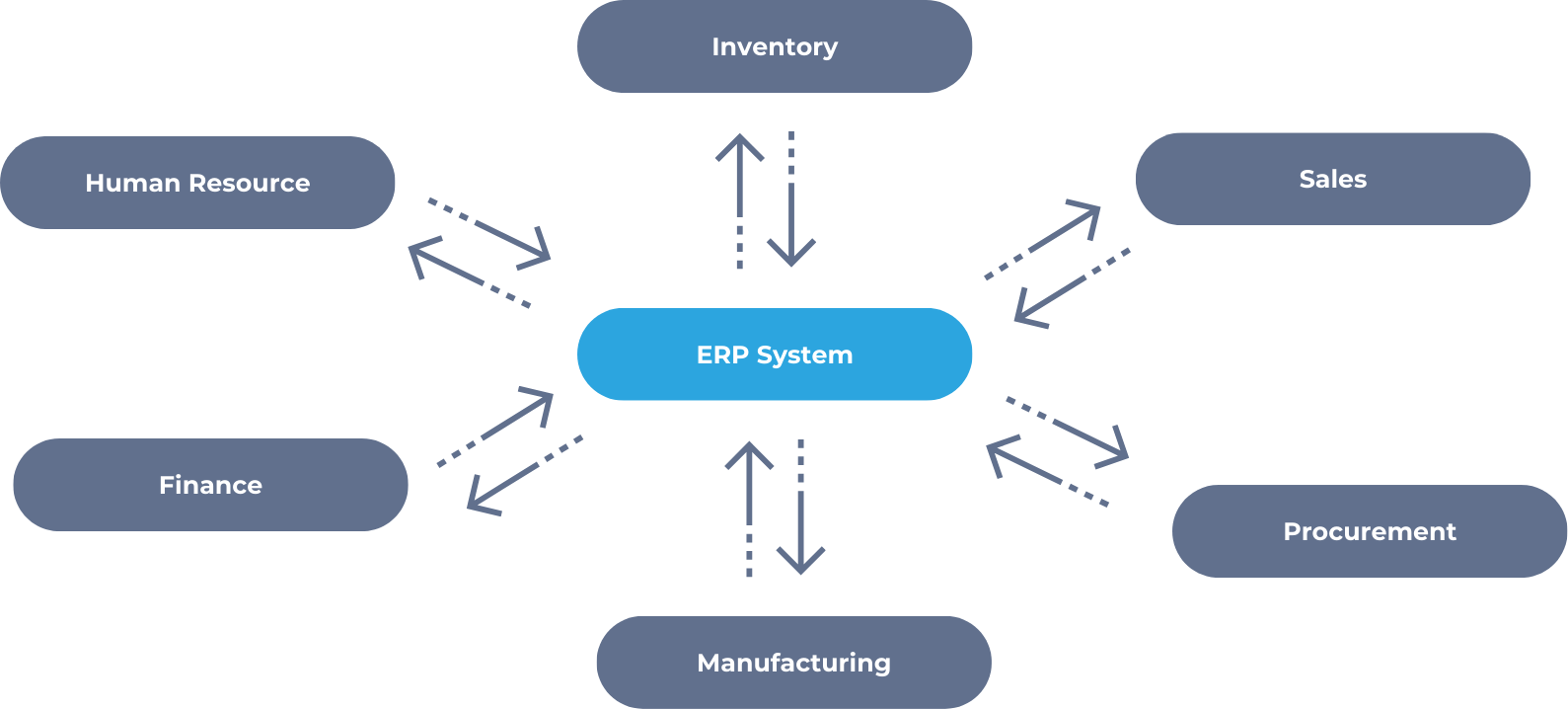
Enterprise Resource Planning (ERP) systems were developed to address this fragmentation. ERP systems integrate all core business processes into a unified software platform, allowing for the seamless flow of information across the organization. By consolidating data and standardizing workflows, ERP systems enable companies to operate more efficiently, reduce errors, and make more informed decisions.
ERP plays a central role in modern operations management by providing a real-time, organization-wide view of performance. Whether implemented in manufacturing firms, service companies, or non-profit organizations, ERP acts as the digital backbone of the enterprise: connecting people, processes, and data across all levels.
This chapter explores the concept of ERP, focusing on its key features, the operational benefits it offers, and considerations companies must address when implementing such systems.
Definition and Key Features of ERP
The purpose of ERP is to provide management and employees with a comprehensive and consistent view of operations, enabling better control, improved planning, and more efficient execution of daily tasks. While ERP systems were originally designed for large manufacturing firms, modern ERP solutions are now scalable and widely adopted by businesses of all sizes and industries.
Operational benefits of ERP
Implementing an Enterprise Resource Planning (ERP) system brings numerous operational advantages that improve the efficiency, accuracy, and responsiveness of an organization. These benefits stem from ERP’s ability to centralize data, integrate processes, and automate routine tasks across departments. Below are the key operational benefits of ERP:
1. Data consistency and real-time access
ERP systems store all business data in a centralized database, ensuring that all departments work with the same information. This eliminates data duplication, reduces input errors, and enhances decision-making by providing real-time visibility across operations.
For example, when a customer order is entered by the sales team, inventory levels are automatically updated, and the finance department can immediately generate the corresponding invoice.
2. Streamlined business processes
By enforcing standardized workflows and automating repetitive tasks, ERP systems help companies reduce manual intervention and delays. This leads to more efficient operations, shorter cycle times, and lower administrative overhead.
For example, purchase requisitions can be routed automatically for approval based on predefined rules, avoiding bottlenecks and increasing procurement speed.
3. Improved cross-functional collaboration
Because ERP integrates different departments on a single platform, it enhances communication and coordination among teams. Functional silos are broken down, enabling a more cohesive approach to shared goals such as customer service, cost control, or timely production.
For example, The production team can plan more accurately because they have direct visibility into sales forecasts and inventory availability.
4. Enhanced reporting and analytics
ERP systems often include built-in business intelligence tools that allow users to generate customized reports, dashboards, and analytics. This provides managers with better insight into operations and enables proactive decision-making.
For example, a financial controller can generate daily cash flow reports and compare budgeted versus actual spending across departments.
5. Regulatory compliance and auditability
ERP systems help ensure compliance with accounting standards, tax regulations, labor laws, and industry-specific rules. Centralized data and digital audit trails support transparency and accountability, which are essential for both internal controls and external audits.
For example, automatic tax calculations and digital records reduce errors and help fulfill reporting obligations during financial audits.
6. Scalability and operational flexibility
Modern ERP systems are designed to support business growth. As the organization expands into new markets or adds new business units, ERP can scale accordingly, offering flexible configurations and support for multiple locations, currencies, and regulatory environments.
For example, a company opening a new distribution center can integrate it into the existing ERP system without disrupting ongoing operations.
Implementation considerations
While ERP systems offer significant advantages, implementing them requires careful planning and resource investment. Key considerations include:
- High initial costs – ERP projects often involve substantial upfront spending on software, infrastructure, training, and consultants.
- Demanding time and resource commitment – Implementation requires focused effort from internal teams across departments, often over many months.
- Change management challenges – Shifting to ERP requires employees to adapt to new processes, which may lead to resistance without strong communication and training.
- Complex data migration – Transferring and cleaning data from old systems to the ERP platform is time-consuming and must be executed with precision.
- System integration issues – ERP must often connect with existing applications, which may require custom solutions and additional testing.
- Risk of over-customization – Modifying ERP software too extensively can lead to higher costs, longer implementation times, and upgrade difficulties.
- Lengthy implementation timeline – Full ERP deployment may take months or years depending on scope, often requiring a phased rollout.