


Achievable logoAchievable logo
CCMA
Sign in
Sign up
Purchase
Textbook
Practice exams
Support
How it works
Exam catalog
Mountain with a flag at the peak
Textbook
1. Medical assistant
2. Electronic records
3. Medical terminology and anatomy
4. The fundamentals of infection control
5. Introduction to vital signs
6. The patient interview and history
7. The physical examination
8. Appointment scheduling
9. Insurance billing
10. Diagnostic coding and the ICD-10-CM System
11. Procedural coding
12. Medical billing and reimbursement essentials
13. Assisting with medical specialties
14. Assisting with the musculoskeletal system
15. Assisting with the cardiovascular system
16. Assisting with the respiratory system
17. Assisting with the nervous system
18. Anatomy and physiology of the urinary system
19. Assisting in obstetrics and gynecology
20. Assisting in endocrinology
21. Assisting in ophthalmology & otolaryngology
22. Assisting in gastroenterology
23. Assisting in the immune & lymphatic systems
24. Assisting in pediatrics: the developmental stages and care
25. The medical assistant’s role in caring for the older patient
26. The role of the medical assistant in physical therapy examination and assessment
27. Preparing for minor surgery: room, solutions, and supplies
28. Introduction to the clinical laboratory
29. Urinalysis
30. Blood collection
31. Analysis of blood
32. Electrocardiography and heart structure
33. The principles of pharmacology
34. Essential calculations and measurement systems
35. Solid, liquid, & solutions medication doses
36. Administering medications
37. Metabolism and core nutrient roles
38. Medical emergencies in the healthcare setting
38.1 Medical emergencies in the healthcare setting
38.2 Emergency preparedness and community response
38.3 Assisting with medical emergencies
38.4 Management of emergencies (Initial assessment and unresponsive patient care)
38.5 Cardiac emergencies and choking
38.6 Common office emergencies
38.7 Pain and traumatic injury management
38.8 Special needs, metabolic, and final review
Achievable logoAchievable logo
38.3 Assisting with medical emergencies
Achievable CCMA
38. Medical emergencies in the healthcare setting
Our CCMA course is currently in development and is a work-in-progress.

Assisting with medical emergencies

9 min read
Font
Discuss
Share
Feedback

First aid is the immediate care given to a person who has been injured or has suddenly taken ill. Knowledge of first aid and related skills often can mean the difference between life and death, temporary and permanent disability, or rapid recovery and long-term hospitalization. The medical assistant may be responsible for initiating first aid in the office and continuing to administer first aid until the provider or the trained medical team arrives. Every medical assistant should successfully complete a course for the professional in cardiopulmonary resuscitation (CPR) and should continue to hold a current CPR card as long as he or she is employed.

Basic knowledge of CPR and life support skills needs to be updated regularly, because procedures change as new techniques are developed. For example, both the American Red Cross and the American Heart Association (AHA) now recommend training on automated external defibrillators (AEDs) for all healthcare workers.

Medical assistants need up-to-date training in current emergency practices. They should encourage their local professional chapters to offer workshops on the management of emergencies in an ambulatory care practice, in addition to community-wide emergency preparedness. Being prepared for both types of emergencies is important. The facility’s employees must be ready to respond both to emergencies on site and to natural disasters or other emergencies that affect the community.

Medical assistants are not responsible for diagnosing emergencies, especially over the telephone, but they are expected to make decisions about emergency situations on the basis of their medical knowledge and training. If any doubt exists about how to manage a particular situation or emergency phone call, the medical assistant should not hesitate to consult the provider, the office manager, or some other, more experienced member of the healthcare team.

The medical assistant’s role in performing emergency procedures:

  • Perform only the emergency procedures for which you have been trained.
  • If an emergency occurs in the facility, notify the provider.
  • If a provider cannot be located, immediately contact the local emergency medical services team (EMS or 911).

Emergency supplies

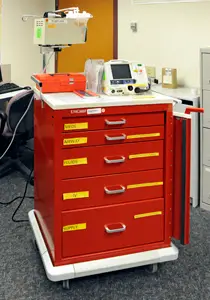
Emergency supplies consist of a properly equipped “crash cart” or box of items needed for a variety of emergencies. The contents vary to some degree, depending on the types of emergencies the particular office might expect to encounter and whether pediatric patients are seen in the practice. Emergency supplies should be kept in an easily accessible place that is known to all personnel in the office, and the supplies should be inventoried regularly. Expiration dates of medications and sterile supplies must be checked weekly or monthly, along with the status of available oxygen tanks and related materials. The cart should be replenished with fresh supplies after every use. Each time crash cart supplies are checked, a log must be completed and signed for legal purposes.

Emergency crash cart with defibrillator displayed
Emergencey cart with defibulator
Wikimedia Commons
/
Public Domain

Emergency pharmaceutical supplies should include certain basic drugs, such as epinephrine, which has multiple uses in emergency situations. As a vasoconstrictor, it controls hemorrhage, relaxes the bronchioles to relieve acute asthma attacks, is administered for an acute anaphylactic reaction, and is an emergency heart stimulant used to treat shock. Epinephrine should be available in a ready-to-use cartridge syringe and needle unit. These units are supplied in 1-mL cartridges.

Other drugs used include atropine, digoxin (Lanoxin), nitroglycerin (Nitrostat), lidocaine (Xylocaine), and sodium bicarbonate. Atropine reduces secretions, increases the respiratory rate and heart rate, and is a smooth muscle relaxant. It is administered in a cardiac emergency for asystole, or it can be used to treat bradycardia. Digoxin is a cardiac drug used to treat arrhythmia and congestive heart failure (CHF); it is good for emergency use because it has a relatively rapid action. Nitroglycerin is a vasodilator that is given to relieve angina; it acts by dilating the coronary arteries so that an increased volume of oxygenated blood can reach the myocardium. Lidocaine is used intravenously to treat a cardiac arrhythmia and locally as an anesthetic, and sodium bicarbonate corrects metabolic acidosis, which typically occurs after cardiac arrest. Many of the medications administered during a medical emergency are given intravenously (IV), which is outside of the medical assistant’s scope of practice.

Emergency medical supplies also should include an emetic, such as syrup of ipecac, which causes vomiting soon after the syrup is swallowed, and activated charcoal, an antidote that is swallowed to absorb ingested poisons. Narcan, an antidote given intravenously for narcotic drug overdoses, is administered when indicated to raise blood pressure and increase the respiratory rate. Antihistamines for the treatment of allergic reactions and for anaphylaxis need to be available to treat any allergic responses to medications administered in the facility. Such antihistamines include Benadryl for minor reactions and Solu-Medrol, a corticosteroid, for severe anaphylactic reactions.

Other medications also may be found in a crash cart. For example, isoproterenol (e.g., Isuprel, Medihaler-Iso, Norisodrine), an antispasmodic used to treat bronchospasms (e.g., as in an asthma attack), also is effective as a cardiac stimulant. Phenobarbital and diazepam (Valium) are used for convulsions and/or sedative effects. Furosemide (Lasix) is used for CHF. Glucagon is used primarily to counteract severe hypoglycemic reactions (low blood glucose) in patients with diabetes who are taking insulin.

Basic emergency supplies

Equipment:

  • Adhesive tape in 1- and 2-inch widths
  • Airways (variety of types and sizes)
  • Alcohol wipes
  • Ambu bag with assorted sizes of facial masks
  • Antimicrobial skin ointment
  • Bandage scissors
  • Cotton balls and cotton swabs
  • Cardiopulmonary resuscitation (CPR) masks (adult and pediatric)
  • Defibrillator
  • Elastic bandages in 2- and 3-inch widths
  • Filter needles
  • Flashlight with batteries
  • Gauze pads, 2 × 2- and 4 × 4-inch widths, and roller bandage (sterile and nonsterile)
  • Gloves (sterile and nonsterile) in multiple sizes
  • Hot and cold packs (instant type)
  • Intravenous catheters, tubing, solutions (variety of types, including D5W and Ringer’s lactate), and tourniquet
  • Laryngoscope with blades
  • Lubricant
  • Endotracheal tubes (variety of sizes with stylets)
  • Personal protective equipment (PPE), including impervious gowns, splash guards or goggles, and booties
  • Portable oxygen tank with regulator, mask, and nasal cannula
  • Roller gauze (Ace bandages and gauze dressing) in various sizes
  • Sharps container
  • Sphygmomanometer (pediatric and adult regular and large sizes)
  • Splints (various sizes)
  • Sterile dressings (miscellaneous sizes, including two abdominal pad
  • Steri-Strips, dermal glue, or suturing material
  • Suction machine and catheters
  • Syringes and needles (assorted sizes and gauges
  • Tongue blades
  • Tubex cartridge system
  • Venipuncture supplies and butterfly units

Medications

  • Activated charcoal (bottle of 29 to 50 g)
  • Antihistamine (injectable and oral)
  • Atropine
  • Dextrose
  • Diazepam (Valium)
  • Digoxin (Lanoxin), injectable
  • Diphenhydramine (Benadryl)
  • Epinephrine (Adrenalin), injectable
  • Furosemide (Lasix)
  • Glucagon and/or glucose tablets
  • Ipecac syrup
  • Isoproterenol (Isuprel), injectable
  • Lidocaine (Xylocaine), injectable and spray
  • Naloxone (Narcan), injectable
  • Nitroglycerin tablets
  • Phenobarbital, injectable
  • Sodium bicarbonate, injectable
  • Methylprednisolone (Solu-Medrol), injectable
  • Sterile water and saline for injection

Some offices may now include Narcan in their emergency kits/carts.

Defibrillators

The medical assistant may be required to assist the healthcare team with defibrillation of emergency patients. Defibrillation is indicated when a patient is in ventricular fibrillation (VF). VF is a severe cardiac arrhythmia that is caused by uncoordinated, rapid firing of the electrical system of the heart, which makes it impossible for the ventricles to empty. In the absence of ventricular emptying, the patient has no pulse, blood pressure drops to zero, and the patient could die within 4 minutes unless help is given immediately.

Defibrillators are devices that send an electrical current through the myocardium by means of handheld paddles (in a healthcare facility) or self-adhesive pads applied to the chest. This electrical shock causes momentary asystole, giving the heart’s natural pacemaker an opportunity to resume the heart rate at a normal rhythm.

An automated external defibrillator has a computerized system that analyzes a cardiac rhythm and delivers voice-prompt instructions on how to operate the device. AEDs use self-adhesive pads that record and monitor the cardiac rhythm, and the device instructs the rescuer when to deliver the electrical charge. The apex-anterior position is the most commonly used pad position, with the anterior (sternum) pad placed to the right of the upper sternum, and the apex pad placed under the individual’s left nipple at the left middle axillary line. To defibrillate a female individual, the apex pad is placed next to or underneath the left breast. The AED self-adhesive pads are packaged with expiration dates so these should be checked periodically.

Precautions for automated external defibrillators:

  • Neither the individual nor the rescuer should be in contact with any metal during defibrillation. Do not place the AED pad over jewelry, and remove the patient’s glasses to prevent injuries.
  • When available, a pediatric-dose AED system should be used for children 1 to 8 years of age (it should not be used on infants younger than 1 year old). These systems deliver a reduced shock dose for victims up to about 8 years old or weighing 55 pounds.
  • All clothing (including bras) must be removed; pads must be applied directly to the skin. If the individual has a great deal of hair on the chest, try to push the hair aside before applying the pads; or, apply the pads and quickly remove them to remove hair from the area, then reapply new pads. The machine will prompt you by stating “Check electrode” if the connection is poor.
  • To prevent burns, make sure the individual is lying on a dry surface and the chest is dry before applying the pads.
  • If the patient has an implanted defibrillator or pacemaker, it will be obvious from the bulged area under the surface of the skin on the chest. Apply the AED pads at least 1 inch away from implants to prevent interference.

Assisting with medical emergencies

  • First aid: immediate care for injury or sudden illness
  • Medical assistants must maintain current CPR certification
  • Regular training in CPR, AED use, and emergency preparedness required

Medical assistant’s role in emergencies

  • Perform only procedures within your training
  • Notify provider or EMS (911) if provider unavailable
  • Do not diagnose emergencies; consult provider or experienced staff if unsure

Emergency supplies

  • Crash cart/box: stocked with equipment and medications for various emergencies
  • Supplies must be accessible, regularly inventoried, and replenished after use
  • Log checks for legal documentation

Emergency medications

  • Epinephrine: vasoconstrictor, bronchodilator, anaphylaxis, heart stimulant
  • Atropine: reduces secretions, treats asystole/bradycardia
  • Digoxin: treats arrhythmia, CHF
  • Nitroglycerin: vasodilator for angina
  • Lidocaine: treats arrhythmia, local anesthetic
  • Sodium bicarbonate: corrects metabolic acidosis post-cardiac arrest
  • Antihistamines (Benadryl, Solu-Medrol): treat allergic reactions/anaphylaxis
  • Narcan: reverses narcotic overdose
  • Other: ipecac (emetic), activated charcoal (antidote), isoproterenol, phenobarbital, diazepam, furosemide, glucagon

Basic emergency equipment

  • Airways, Ambu bag, CPR masks, defibrillator
  • Bandages, gauze, adhesive tape, sterile dressings
  • IV supplies, oxygen tank, suction machine
  • PPE (gowns, gloves, goggles), splints, sphygmomanometer
  • Sharps container, syringes, laryngoscope, endotracheal tubes

Defibrillators

  • Used for ventricular fibrillation (VF), a life-threatening arrhythmia
  • Delivers electrical shock to restore normal heart rhythm
  • AEDs: analyze rhythm, provide voice prompts, use self-adhesive pads

AED precautions

  • Avoid contact with metal; do not place pads over jewelry or implants
  • Use pediatric-dose AED for ages 1–8 (not infants <1 year)
  • Pads must be applied directly to dry skin; remove clothing and excess chest hair
  • Place pads at least 1 inch from implanted devices
  • Check pad expiration dates regularly

Sign up for free to take 17 quiz questions on this topic

Previous
Next  | 38.4 Management of emergencies (Initial assessment and unresponsive patient care)
All rights reserved ©2016 - 2026 Achievable, Inc.

Assisting with medical emergencies

First aid is the immediate care given to a person who has been injured or has suddenly taken ill. Knowledge of first aid and related skills often can mean the difference between life and death, temporary and permanent disability, or rapid recovery and long-term hospitalization. The medical assistant may be responsible for initiating first aid in the office and continuing to administer first aid until the provider or the trained medical team arrives. Every medical assistant should successfully complete a course for the professional in cardiopulmonary resuscitation (CPR) and should continue to hold a current CPR card as long as he or she is employed.

Basic knowledge of CPR and life support skills needs to be updated regularly, because procedures change as new techniques are developed. For example, both the American Red Cross and the American Heart Association (AHA) now recommend training on automated external defibrillators (AEDs) for all healthcare workers.

Medical assistants need up-to-date training in current emergency practices. They should encourage their local professional chapters to offer workshops on the management of emergencies in an ambulatory care practice, in addition to community-wide emergency preparedness. Being prepared for both types of emergencies is important. The facility’s employees must be ready to respond both to emergencies on site and to natural disasters or other emergencies that affect the community.

Medical assistants are not responsible for diagnosing emergencies, especially over the telephone, but they are expected to make decisions about emergency situations on the basis of their medical knowledge and training. If any doubt exists about how to manage a particular situation or emergency phone call, the medical assistant should not hesitate to consult the provider, the office manager, or some other, more experienced member of the healthcare team.

The medical assistant’s role in performing emergency procedures:

  • Perform only the emergency procedures for which you have been trained.
  • If an emergency occurs in the facility, notify the provider.
  • If a provider cannot be located, immediately contact the local emergency medical services team (EMS or 911).

Emergency supplies

Emergency supplies consist of a properly equipped “crash cart” or box of items needed for a variety of emergencies. The contents vary to some degree, depending on the types of emergencies the particular office might expect to encounter and whether pediatric patients are seen in the practice. Emergency supplies should be kept in an easily accessible place that is known to all personnel in the office, and the supplies should be inventoried regularly. Expiration dates of medications and sterile supplies must be checked weekly or monthly, along with the status of available oxygen tanks and related materials. The cart should be replenished with fresh supplies after every use. Each time crash cart supplies are checked, a log must be completed and signed for legal purposes.

Emergency pharmaceutical supplies should include certain basic drugs, such as epinephrine, which has multiple uses in emergency situations. As a vasoconstrictor, it controls hemorrhage, relaxes the bronchioles to relieve acute asthma attacks, is administered for an acute anaphylactic reaction, and is an emergency heart stimulant used to treat shock. Epinephrine should be available in a ready-to-use cartridge syringe and needle unit. These units are supplied in 1-mL cartridges.

Other drugs used include atropine, digoxin (Lanoxin), nitroglycerin (Nitrostat), lidocaine (Xylocaine), and sodium bicarbonate. Atropine reduces secretions, increases the respiratory rate and heart rate, and is a smooth muscle relaxant. It is administered in a cardiac emergency for asystole, or it can be used to treat bradycardia. Digoxin is a cardiac drug used to treat arrhythmia and congestive heart failure (CHF); it is good for emergency use because it has a relatively rapid action. Nitroglycerin is a vasodilator that is given to relieve angina; it acts by dilating the coronary arteries so that an increased volume of oxygenated blood can reach the myocardium. Lidocaine is used intravenously to treat a cardiac arrhythmia and locally as an anesthetic, and sodium bicarbonate corrects metabolic acidosis, which typically occurs after cardiac arrest. Many of the medications administered during a medical emergency are given intravenously (IV), which is outside of the medical assistant’s scope of practice.

Emergency medical supplies also should include an emetic, such as syrup of ipecac, which causes vomiting soon after the syrup is swallowed, and activated charcoal, an antidote that is swallowed to absorb ingested poisons. Narcan, an antidote given intravenously for narcotic drug overdoses, is administered when indicated to raise blood pressure and increase the respiratory rate. Antihistamines for the treatment of allergic reactions and for anaphylaxis need to be available to treat any allergic responses to medications administered in the facility. Such antihistamines include Benadryl for minor reactions and Solu-Medrol, a corticosteroid, for severe anaphylactic reactions.

Other medications also may be found in a crash cart. For example, isoproterenol (e.g., Isuprel, Medihaler-Iso, Norisodrine), an antispasmodic used to treat bronchospasms (e.g., as in an asthma attack), also is effective as a cardiac stimulant. Phenobarbital and diazepam (Valium) are used for convulsions and/or sedative effects. Furosemide (Lasix) is used for CHF. Glucagon is used primarily to counteract severe hypoglycemic reactions (low blood glucose) in patients with diabetes who are taking insulin.

Basic emergency supplies

Equipment:

  • Adhesive tape in 1- and 2-inch widths
  • Airways (variety of types and sizes)
  • Alcohol wipes
  • Ambu bag with assorted sizes of facial masks
  • Antimicrobial skin ointment
  • Bandage scissors
  • Cotton balls and cotton swabs
  • Cardiopulmonary resuscitation (CPR) masks (adult and pediatric)
  • Defibrillator
  • Elastic bandages in 2- and 3-inch widths
  • Filter needles
  • Flashlight with batteries
  • Gauze pads, 2 × 2- and 4 × 4-inch widths, and roller bandage (sterile and nonsterile)
  • Gloves (sterile and nonsterile) in multiple sizes
  • Hot and cold packs (instant type)
  • Intravenous catheters, tubing, solutions (variety of types, including D5W and Ringer’s lactate), and tourniquet
  • Laryngoscope with blades
  • Lubricant
  • Endotracheal tubes (variety of sizes with stylets)
  • Personal protective equipment (PPE), including impervious gowns, splash guards or goggles, and booties
  • Portable oxygen tank with regulator, mask, and nasal cannula
  • Roller gauze (Ace bandages and gauze dressing) in various sizes
  • Sharps container
  • Sphygmomanometer (pediatric and adult regular and large sizes)
  • Splints (various sizes)
  • Sterile dressings (miscellaneous sizes, including two abdominal pad
  • Steri-Strips, dermal glue, or suturing material
  • Suction machine and catheters
  • Syringes and needles (assorted sizes and gauges
  • Tongue blades
  • Tubex cartridge system
  • Venipuncture supplies and butterfly units

Medications

  • Activated charcoal (bottle of 29 to 50 g)
  • Antihistamine (injectable and oral)
  • Atropine
  • Dextrose
  • Diazepam (Valium)
  • Digoxin (Lanoxin), injectable
  • Diphenhydramine (Benadryl)
  • Epinephrine (Adrenalin), injectable
  • Furosemide (Lasix)
  • Glucagon and/or glucose tablets
  • Ipecac syrup
  • Isoproterenol (Isuprel), injectable
  • Lidocaine (Xylocaine), injectable and spray
  • Naloxone (Narcan), injectable
  • Nitroglycerin tablets
  • Phenobarbital, injectable
  • Sodium bicarbonate, injectable
  • Methylprednisolone (Solu-Medrol), injectable
  • Sterile water and saline for injection

Some offices may now include Narcan in their emergency kits/carts.

Defibrillators

The medical assistant may be required to assist the healthcare team with defibrillation of emergency patients. Defibrillation is indicated when a patient is in ventricular fibrillation (VF). VF is a severe cardiac arrhythmia that is caused by uncoordinated, rapid firing of the electrical system of the heart, which makes it impossible for the ventricles to empty. In the absence of ventricular emptying, the patient has no pulse, blood pressure drops to zero, and the patient could die within 4 minutes unless help is given immediately.

Defibrillators are devices that send an electrical current through the myocardium by means of handheld paddles (in a healthcare facility) or self-adhesive pads applied to the chest. This electrical shock causes momentary asystole, giving the heart’s natural pacemaker an opportunity to resume the heart rate at a normal rhythm.

An automated external defibrillator has a computerized system that analyzes a cardiac rhythm and delivers voice-prompt instructions on how to operate the device. AEDs use self-adhesive pads that record and monitor the cardiac rhythm, and the device instructs the rescuer when to deliver the electrical charge. The apex-anterior position is the most commonly used pad position, with the anterior (sternum) pad placed to the right of the upper sternum, and the apex pad placed under the individual’s left nipple at the left middle axillary line. To defibrillate a female individual, the apex pad is placed next to or underneath the left breast. The AED self-adhesive pads are packaged with expiration dates so these should be checked periodically.

Precautions for automated external defibrillators:

  • Neither the individual nor the rescuer should be in contact with any metal during defibrillation. Do not place the AED pad over jewelry, and remove the patient’s glasses to prevent injuries.
  • When available, a pediatric-dose AED system should be used for children 1 to 8 years of age (it should not be used on infants younger than 1 year old). These systems deliver a reduced shock dose for victims up to about 8 years old or weighing 55 pounds.
  • All clothing (including bras) must be removed; pads must be applied directly to the skin. If the individual has a great deal of hair on the chest, try to push the hair aside before applying the pads; or, apply the pads and quickly remove them to remove hair from the area, then reapply new pads. The machine will prompt you by stating “Check electrode” if the connection is poor.
  • To prevent burns, make sure the individual is lying on a dry surface and the chest is dry before applying the pads.
  • If the patient has an implanted defibrillator or pacemaker, it will be obvious from the bulged area under the surface of the skin on the chest. Apply the AED pads at least 1 inch away from implants to prevent interference.
Key points

Assisting with medical emergencies

  • First aid: immediate care for injury or sudden illness
  • Medical assistants must maintain current CPR certification
  • Regular training in CPR, AED use, and emergency preparedness required

Medical assistant’s role in emergencies

  • Perform only procedures within your training
  • Notify provider or EMS (911) if provider unavailable
  • Do not diagnose emergencies; consult provider or experienced staff if unsure

Emergency supplies

  • Crash cart/box: stocked with equipment and medications for various emergencies
  • Supplies must be accessible, regularly inventoried, and replenished after use
  • Log checks for legal documentation

Emergency medications

  • Epinephrine: vasoconstrictor, bronchodilator, anaphylaxis, heart stimulant
  • Atropine: reduces secretions, treats asystole/bradycardia
  • Digoxin: treats arrhythmia, CHF
  • Nitroglycerin: vasodilator for angina
  • Lidocaine: treats arrhythmia, local anesthetic
  • Sodium bicarbonate: corrects metabolic acidosis post-cardiac arrest
  • Antihistamines (Benadryl, Solu-Medrol): treat allergic reactions/anaphylaxis
  • Narcan: reverses narcotic overdose
  • Other: ipecac (emetic), activated charcoal (antidote), isoproterenol, phenobarbital, diazepam, furosemide, glucagon

Basic emergency equipment

  • Airways, Ambu bag, CPR masks, defibrillator
  • Bandages, gauze, adhesive tape, sterile dressings
  • IV supplies, oxygen tank, suction machine
  • PPE (gowns, gloves, goggles), splints, sphygmomanometer
  • Sharps container, syringes, laryngoscope, endotracheal tubes

Defibrillators

  • Used for ventricular fibrillation (VF), a life-threatening arrhythmia
  • Delivers electrical shock to restore normal heart rhythm
  • AEDs: analyze rhythm, provide voice prompts, use self-adhesive pads

AED precautions

  • Avoid contact with metal; do not place pads over jewelry or implants
  • Use pediatric-dose AED for ages 1–8 (not infants <1 year)
  • Pads must be applied directly to dry skin; remove clothing and excess chest hair
  • Place pads at least 1 inch from implanted devices
  • Check pad expiration dates regularly

More from Medical emergencies in the healthcare setting

  • Medical emergencies in the healthcare setting
  • Emergency preparedness and community response
  • Management of emergencies (Initial assessment and unresponsive patient care)
  • Cardiac emergencies and choking
  • Common office emergencies