


Achievable logoAchievable logo
CCMA
Sign in
Sign up
Purchase
Textbook
Practice exams
Support
How it works
Exam catalog
Mountain with a flag at the peak
Textbook
1. Medical assistant
2. Electronic records
3. Medical terminology and anatomy
4. The fundamentals of infection control
5. Introduction to vital signs
6. The patient interview and history
7. The physical examination
8. Appointment scheduling
9. Insurance billing
9.1 Health insurance basics
9.2 Government health plans: Medicare and Medicaid programs
9.3 Other government and private health plans
9.4 The medical assistant's role
9.5 HIPAA overview and the privacy rule
9.6 Other private laws
9.7 Healthcare laws overview
10. Diagnostic coding and the ICD-10-CM System
11. Procedural coding
12. Medical billing and reimbursement essentials
13. Assisting with medical specialties
14. Assisting with the musculoskeletal system
15. Assisting with the cardiovascular system
16. Assisting with the respiratory system
17. Assisting with the nervous system
18. Anatomy and physiology of the urinary system
19. Assisting in obstetrics and gynecology
20. Assisting in endocrinology
21. Assisting in ophthalmology & otolaryngology
22. Assisting in gastroenterology
23. Assisting in the immune & lymphatic systems
24. Assisting in pediatrics: the developmental stages and care
25. The medical assistant’s role in caring for the older patient
26. The role of the medical assistant in physical therapy examination and assessment
27. Preparing for minor surgery: room, solutions, and supplies
28. Introduction to the clinical laboratory
29. Urinalysis
30. Blood collection
31. Analysis of blood
32. Electrocardiography and heart structure
33. The principles of pharmacology
34. Essential calculations and measurement systems
35. Solid, liquid, & solutions medication doses
36. Administering medications
37. Metabolism and core nutrient roles
38. Medical emergencies in the healthcare setting
Achievable logoAchievable logo
9.1 Health insurance basics
Achievable CCMA
9. Insurance billing
Our CCMA course is currently in development and is a work-in-progress.

Health insurance basics

8 min read
Font
Discuss
Share
Feedback

Introduction

Much like the rest of the healthcare world, the health insurance industry has its own vocabulary. It is important for you, as a medical assistant, to become familiar with the terminology associated with health insurance, as patients may ask you to explain things even if you are working on the clinical side of medical assisting.

Benefits are also an area that can be very confusing for patients. Having that basic understanding of health insurance benefits will make you a better advocate for your patients.

Basic insurance terminology

A health insurance policy is purchased with a premium or payment. The premium can be paid by an individual, an employer, or a combination of employer contribution and individual (employee) contribution.

The policy is considered a legal contract and will stay in force as long as the premium is being paid. The policy will specify exactly what services are covered. The more services that are covered, the higher the premium cost. The person responsible for the payment of the premium is referred to as a subscriber.

Regardless of who pays the premium, most policies require the patient to pay a portion of the healthcare expenses. This is referred to as cost-sharing, which includes the following:

  • Deductible: A set dollar amount that the policyholder must pay before the insurance company starts to pay for services. It can be as low as $100 and as high as $5000. The higher the deductible, the lower the premium.
  • Co-insurance: After the deductible has been met, the policyholder may need to pay a certain percentage of the bill, and the insurance company pays the rest. A typical split is 80/20—the insurance company pays 80%, and the policyholder pays 20%.
  • Copayment: A set dollar amount that the policyholder must pay for each office visit. Copayments may differ for different types of office visits. For example, there can be one copayment amount for a primary care provider and a different copayment amount (usually higher) to see a specialist or to be seen in the emergency department.

The policy will specify the dollar amounts for the deductible, co-insurance, and copayment. The premium is not usually considered part of cost-sharing.

In order for the insurance carrier to pay for services, a claim must be submitted. The insurance company then reviews the claim to determine if the services provided are covered under the policy. It is important for a medical assistant to be familiar with the different types of insurance so that claims can be submitted accurately. This will result in faster payment for the healthcare facility.

Benefits

The federal government requires all health plans to cover essential health benefits. There are 10 categories of essential health benefits:

  • Ambulatory patient services

  • Hospitalization

    Mental health and substance use disorder services

  • Prescription drugs

  • Preventive and wellness services and chronic disease management

  • Emergency services

  • Maternity and newborn care

  • Rehabilitative and habilitative services and devices

  • Laboratory services

  • Pediatric services, including oral and vision care

In addition to the essential health benefits, an insurance policy may cover other services. For a group policy, an employer can pick and choose the benefits it wants for employees, such as vision or dental coverage. Medical assistants should contact an insurance company to determine if certain services are covered under a patient’s policy.

Private health plans

There are two types of health insurance plans in the United States:

  • Government health insurance plans
  • Private health insurance plans

Health insurance models

There are basically two different models of health insurance today:

  • Traditional health insurance
  • Managed care organizations

You can find these options in both employer group plans and individual plans.

Traditional health insurance

Traditional health insurance plans pay for all or a share of cost of covered services, regardless of which provider, hospital, or other licensed healthcare provider is used. Because providers are paid for each office visit, test, procedure, or other services they deliver, traditional insurance plans are often called fee-for-service plans. This was the first type of health insurance. Traditional health insurance plans provide the most flexibility for the patient but are also the costliest option.

Policyholders of fee-for-service plans and their dependents choose when and where to get healthcare services. When the policy is purchased, the subscriber is often given a fee schedule, which explains the benefit payment amounts. Benefits are usually paid to the insured unless that person has authorized payment to be made directly to the provider. This is referred to as the assignment of benefits.

The fee schedule amounts can be determined by a process called usual, customary, and reasonable (UCR). UCR is the amount paid for a medical service in a geographic area based on what providers in the area usually charge for the same or similar service.

Managed care organizations

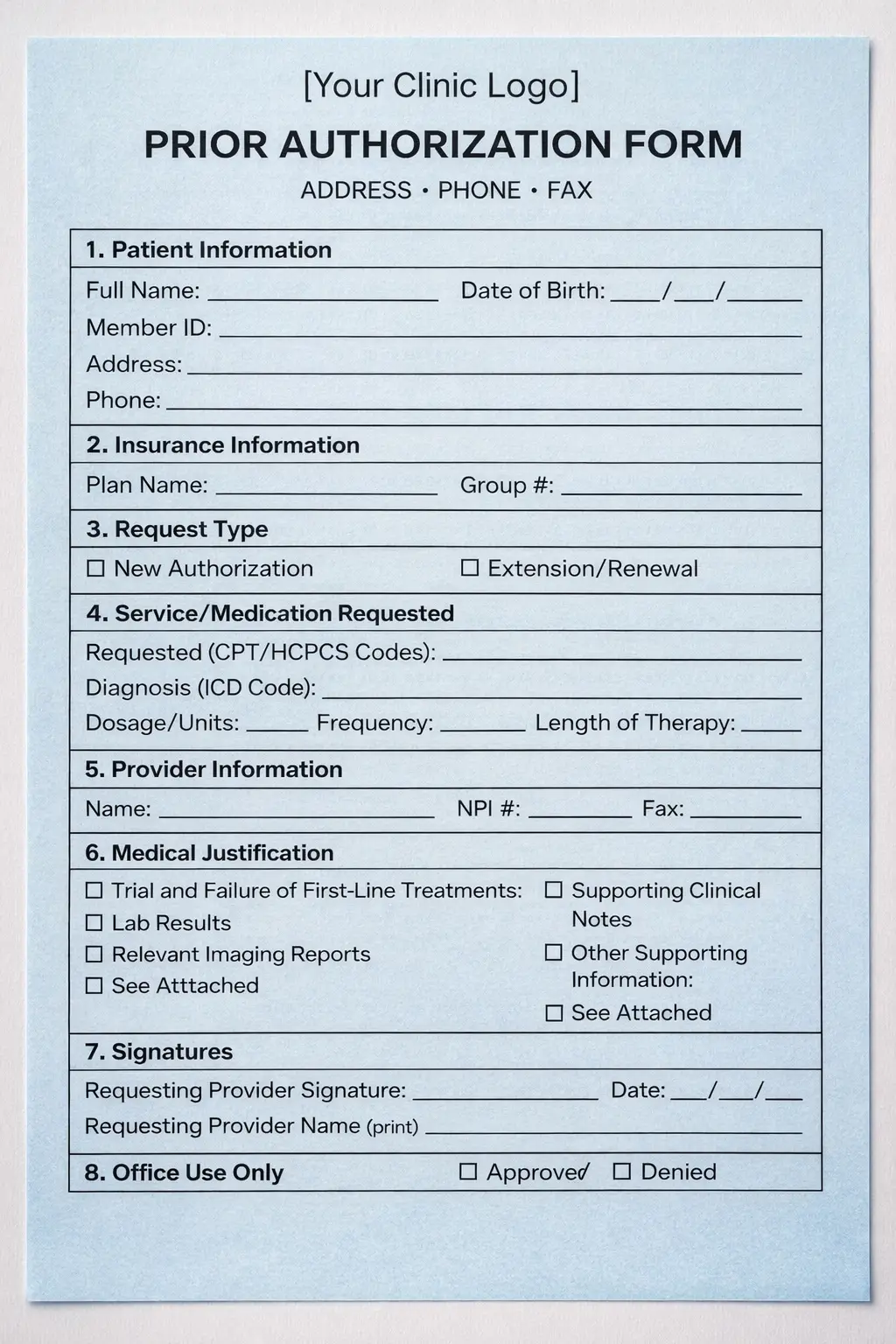
Managed care organizations (MCOs) are health insurance companies whose goal is to provide quality, cost-effective care to their members. MCOs negotiate reduced rates with contracted providers and hospitals. In return, the managed care plan increases the provider’s patient load. Many MCOs require the patient to choose a primary care provider (PCP) who coordinates the patient’s care. Managed-care plans can also require referrals for their patients to be treated by a specialist, thus limiting patient access to more expensive care. The preauthorization process can further control patient care costs. Medical care, testing, or medication therapy is provided only when it is justified by the health insurance plan. It is important for medical assistants to be familiar with the various models of managed care to understand their effects on healthcare costs fully.

Prior authorization form used for insurance approvals
Prior authorization form

Models of managed care organizations

Patient care is coordinated through a network of providers and hospitals. There are different types of managed care plans, such as health maintenance organizations (HMOs), preferred provider organizations (PPOs), and exclusive provider organizations (EPOs). They provide healthcare in return for scheduled payments and coordinate healthcare through a defined network of PCPs, hospitals, and other providers.

Health maintenance organization

HMOs are health plans that are regulated by HMO laws, which require them to include preventive care as part of their benefits package. The goal of the HMO health insurance plan is to reduce the cost of healthcare while still providing quality healthcare. HMO plans typically have the lowest monthly premiums among other health insurance plans. The patient’s out-of-pocket expenses are also very low. Patients are not required to pay a deductible or co-insurance.

Patients are required to select a PCP, who acts as the gatekeeper to more specialized care. The insurance plan will not pay for services that are not included in its provider network; patients are 100% financially responsible for medical expenses incurred outside the HMO network of providers. For example, patients wanting to visit the dermatologist for eczema must visit their PCP first; they would be fully responsible financially if they made an appointment with a dermatologist directly. The PCP can either treat patients or refer them to a specialist.

PCPs receive financial incentives when they reduce the cost of patient care. In the earlier example, prescribing medicine to the patient is more cost-effective than referring the patient to a specialist. HMOs always require the following:

  • Referrals from the PCP to specialists
  • Pre-certification and preauthorization for hospital admissions, outpatient procedures, and treatments

HMOs can be set up using several models. The payment structure can be different for each of those models.

Health insurance plans typically cover health services and procedures that are deemed medically necessary. Medically necessary services are those that are proper and needed for the diagnosis or treatment of the medical condition. Most insurance policies do not cover elective procedures. Elective procedures are medical procedures that are not deemed medically necessary, such as a facelift or another cosmetic procedure. The Affordable Care Act (ACA) states that health insurance plans must cover preventive care. Preventive care includes services provided to help prevent certain illnesses or that lead to an early diagnosis. Insurance companies must cover preventive care services and cannot impose cost-sharing for those services.

Preventive care services:

  • Alcohol misuse screening
  • Hepatitis B and C screening
  • Blood pressure screening
  • Human immunodeficiency virus (HIV) screening
  • Cholesterol screening
  • Immunization vaccines
  • Colorectal cancer screening
  • Lung cancer screening
  • Depression screening
  • Obesity screening and counseling
  • Diabetes (type 2) screening
  • Tobacco use screening
  • Diet counseling
  • Sexually transmitted infection (STI) prevention counseling

Basic insurance terminology

  • Premium: payment for insurance policy; may be split between employer and employee
  • Cost-sharing: includes deductible, co-insurance, copayment
    • Deductible: amount paid by policyholder before insurance pays
    • Co-insurance: percentage split after deductible (e.g., 80/20)
    • Copayment: fixed amount per office visit
  • Claims: submitted for insurance payment; accurate submission speeds facility payment

Benefits

  • Essential health benefits (10 categories): ambulatory, hospitalization, mental health, prescription drugs, preventive/wellness, emergency, maternity/newborn, rehabilitative/habilitative, laboratory, pediatric (oral/vision)
  • Group policies may offer additional benefits (e.g., vision, dental)
  • Medical assistants should verify coverage for specific services

Private health plans

  • Two main types: government health insurance, private health insurance

Health insurance models

  • Two models: traditional health insurance, managed care organizations (MCOs)
  • Available in both group and individual plans

Traditional health insurance

  • Fee-for-service: pays for covered services regardless of provider
  • Most flexible but highest cost
  • Assignment of benefits: payment to provider if authorized
  • UCR (usual, customary, reasonable): determines payment amounts

Managed care organizations (MCOs)

  • Aim: quality, cost-effective care via negotiated provider rates
  • Require PCP selection; PCP coordinates care
  • May require referrals and preauthorization for specialist care and procedures
  • Controls costs through network restrictions and care management

Models of managed care organizations

  • Types: HMOs, PPOs, EPOs
  • Care coordinated through network of providers and hospitals

Health maintenance organization (HMO)

  • Regulated by HMO laws; must include preventive care
  • Lowest premiums and out-of-pocket costs; usually no deductible or co-insurance
  • Requires PCP selection; PCP acts as gatekeeper
    • Referrals needed for specialists
    • Pre-certification/preauthorization required for many services
  • No coverage for out-of-network services (patient pays 100%)
  • PCPs incentivized to reduce care costs
  • Covers medically necessary services; excludes elective procedures
  • ACA requires coverage of preventive care without cost-sharing

Preventive care services

  • Includes screenings (alcohol misuse, hepatitis B/C, blood pressure, HIV, cholesterol, colorectal/lung cancer, depression, obesity, diabetes type 2)
  • Immunization vaccines
  • Counseling (diet, tobacco use, STI prevention)

Sign up for free to take 18 quiz questions on this topic

Previous
Next  | 9.2 Government health plans: Medicare and Medicaid programs
All rights reserved ©2016 - 2026 Achievable, Inc.

Health insurance basics

Introduction

Much like the rest of the healthcare world, the health insurance industry has its own vocabulary. It is important for you, as a medical assistant, to become familiar with the terminology associated with health insurance, as patients may ask you to explain things even if you are working on the clinical side of medical assisting.

Benefits are also an area that can be very confusing for patients. Having that basic understanding of health insurance benefits will make you a better advocate for your patients.

Basic insurance terminology

A health insurance policy is purchased with a premium or payment. The premium can be paid by an individual, an employer, or a combination of employer contribution and individual (employee) contribution.

The policy is considered a legal contract and will stay in force as long as the premium is being paid. The policy will specify exactly what services are covered. The more services that are covered, the higher the premium cost. The person responsible for the payment of the premium is referred to as a subscriber.

Regardless of who pays the premium, most policies require the patient to pay a portion of the healthcare expenses. This is referred to as cost-sharing, which includes the following:

  • Deductible: A set dollar amount that the policyholder must pay before the insurance company starts to pay for services. It can be as low as $100 and as high as $5000. The higher the deductible, the lower the premium.
  • Co-insurance: After the deductible has been met, the policyholder may need to pay a certain percentage of the bill, and the insurance company pays the rest. A typical split is 80/20—the insurance company pays 80%, and the policyholder pays 20%.
  • Copayment: A set dollar amount that the policyholder must pay for each office visit. Copayments may differ for different types of office visits. For example, there can be one copayment amount for a primary care provider and a different copayment amount (usually higher) to see a specialist or to be seen in the emergency department.

The policy will specify the dollar amounts for the deductible, co-insurance, and copayment. The premium is not usually considered part of cost-sharing.

In order for the insurance carrier to pay for services, a claim must be submitted. The insurance company then reviews the claim to determine if the services provided are covered under the policy. It is important for a medical assistant to be familiar with the different types of insurance so that claims can be submitted accurately. This will result in faster payment for the healthcare facility.

Benefits

The federal government requires all health plans to cover essential health benefits. There are 10 categories of essential health benefits:

  • Ambulatory patient services

  • Hospitalization

    Mental health and substance use disorder services

  • Prescription drugs

  • Preventive and wellness services and chronic disease management

  • Emergency services

  • Maternity and newborn care

  • Rehabilitative and habilitative services and devices

  • Laboratory services

  • Pediatric services, including oral and vision care

In addition to the essential health benefits, an insurance policy may cover other services. For a group policy, an employer can pick and choose the benefits it wants for employees, such as vision or dental coverage. Medical assistants should contact an insurance company to determine if certain services are covered under a patient’s policy.

Private health plans

There are two types of health insurance plans in the United States:

  • Government health insurance plans
  • Private health insurance plans

Health insurance models

There are basically two different models of health insurance today:

  • Traditional health insurance
  • Managed care organizations

You can find these options in both employer group plans and individual plans.

Traditional health insurance

Traditional health insurance plans pay for all or a share of cost of covered services, regardless of which provider, hospital, or other licensed healthcare provider is used. Because providers are paid for each office visit, test, procedure, or other services they deliver, traditional insurance plans are often called fee-for-service plans. This was the first type of health insurance. Traditional health insurance plans provide the most flexibility for the patient but are also the costliest option.

Policyholders of fee-for-service plans and their dependents choose when and where to get healthcare services. When the policy is purchased, the subscriber is often given a fee schedule, which explains the benefit payment amounts. Benefits are usually paid to the insured unless that person has authorized payment to be made directly to the provider. This is referred to as the assignment of benefits.

The fee schedule amounts can be determined by a process called usual, customary, and reasonable (UCR). UCR is the amount paid for a medical service in a geographic area based on what providers in the area usually charge for the same or similar service.

Managed care organizations

Managed care organizations (MCOs) are health insurance companies whose goal is to provide quality, cost-effective care to their members. MCOs negotiate reduced rates with contracted providers and hospitals. In return, the managed care plan increases the provider’s patient load. Many MCOs require the patient to choose a primary care provider (PCP) who coordinates the patient’s care. Managed-care plans can also require referrals for their patients to be treated by a specialist, thus limiting patient access to more expensive care. The preauthorization process can further control patient care costs. Medical care, testing, or medication therapy is provided only when it is justified by the health insurance plan. It is important for medical assistants to be familiar with the various models of managed care to understand their effects on healthcare costs fully.

Models of managed care organizations

Patient care is coordinated through a network of providers and hospitals. There are different types of managed care plans, such as health maintenance organizations (HMOs), preferred provider organizations (PPOs), and exclusive provider organizations (EPOs). They provide healthcare in return for scheduled payments and coordinate healthcare through a defined network of PCPs, hospitals, and other providers.

Health maintenance organization

HMOs are health plans that are regulated by HMO laws, which require them to include preventive care as part of their benefits package. The goal of the HMO health insurance plan is to reduce the cost of healthcare while still providing quality healthcare. HMO plans typically have the lowest monthly premiums among other health insurance plans. The patient’s out-of-pocket expenses are also very low. Patients are not required to pay a deductible or co-insurance.

Patients are required to select a PCP, who acts as the gatekeeper to more specialized care. The insurance plan will not pay for services that are not included in its provider network; patients are 100% financially responsible for medical expenses incurred outside the HMO network of providers. For example, patients wanting to visit the dermatologist for eczema must visit their PCP first; they would be fully responsible financially if they made an appointment with a dermatologist directly. The PCP can either treat patients or refer them to a specialist.

PCPs receive financial incentives when they reduce the cost of patient care. In the earlier example, prescribing medicine to the patient is more cost-effective than referring the patient to a specialist. HMOs always require the following:

  • Referrals from the PCP to specialists
  • Pre-certification and preauthorization for hospital admissions, outpatient procedures, and treatments

HMOs can be set up using several models. The payment structure can be different for each of those models.

Health insurance plans typically cover health services and procedures that are deemed medically necessary. Medically necessary services are those that are proper and needed for the diagnosis or treatment of the medical condition. Most insurance policies do not cover elective procedures. Elective procedures are medical procedures that are not deemed medically necessary, such as a facelift or another cosmetic procedure. The Affordable Care Act (ACA) states that health insurance plans must cover preventive care. Preventive care includes services provided to help prevent certain illnesses or that lead to an early diagnosis. Insurance companies must cover preventive care services and cannot impose cost-sharing for those services.

Preventive care services:

  • Alcohol misuse screening
  • Hepatitis B and C screening
  • Blood pressure screening
  • Human immunodeficiency virus (HIV) screening
  • Cholesterol screening
  • Immunization vaccines
  • Colorectal cancer screening
  • Lung cancer screening
  • Depression screening
  • Obesity screening and counseling
  • Diabetes (type 2) screening
  • Tobacco use screening
  • Diet counseling
  • Sexually transmitted infection (STI) prevention counseling
Key points

Basic insurance terminology

  • Premium: payment for insurance policy; may be split between employer and employee
  • Cost-sharing: includes deductible, co-insurance, copayment
    • Deductible: amount paid by policyholder before insurance pays
    • Co-insurance: percentage split after deductible (e.g., 80/20)
    • Copayment: fixed amount per office visit
  • Claims: submitted for insurance payment; accurate submission speeds facility payment

Benefits

  • Essential health benefits (10 categories): ambulatory, hospitalization, mental health, prescription drugs, preventive/wellness, emergency, maternity/newborn, rehabilitative/habilitative, laboratory, pediatric (oral/vision)
  • Group policies may offer additional benefits (e.g., vision, dental)
  • Medical assistants should verify coverage for specific services

Private health plans

  • Two main types: government health insurance, private health insurance

Health insurance models

  • Two models: traditional health insurance, managed care organizations (MCOs)
  • Available in both group and individual plans

Traditional health insurance

  • Fee-for-service: pays for covered services regardless of provider
  • Most flexible but highest cost
  • Assignment of benefits: payment to provider if authorized
  • UCR (usual, customary, reasonable): determines payment amounts

Managed care organizations (MCOs)

  • Aim: quality, cost-effective care via negotiated provider rates
  • Require PCP selection; PCP coordinates care
  • May require referrals and preauthorization for specialist care and procedures
  • Controls costs through network restrictions and care management

Models of managed care organizations

  • Types: HMOs, PPOs, EPOs
  • Care coordinated through network of providers and hospitals

Health maintenance organization (HMO)

  • Regulated by HMO laws; must include preventive care
  • Lowest premiums and out-of-pocket costs; usually no deductible or co-insurance
  • Requires PCP selection; PCP acts as gatekeeper
    • Referrals needed for specialists
    • Pre-certification/preauthorization required for many services
  • No coverage for out-of-network services (patient pays 100%)
  • PCPs incentivized to reduce care costs
  • Covers medically necessary services; excludes elective procedures
  • ACA requires coverage of preventive care without cost-sharing

Preventive care services

  • Includes screenings (alcohol misuse, hepatitis B/C, blood pressure, HIV, cholesterol, colorectal/lung cancer, depression, obesity, diabetes type 2)
  • Immunization vaccines
  • Counseling (diet, tobacco use, STI prevention)

More from Insurance billing

  • Government health plans: Medicare and Medicaid programs
  • Other government and private health plans
  • The medical assistant's role
  • HIPAA overview and the privacy rule
  • Other private laws