



Vaccine types and schedules
Vaccines
Vaccines are biological products given as injections, nasal sprays, or oral drops. They stimulate the immune system by exposing it to controlled amounts of weakened or dead microbes, or to specific components of those microbes. The immune system responds by producing protective antibodies. Vaccines provide active immunity.
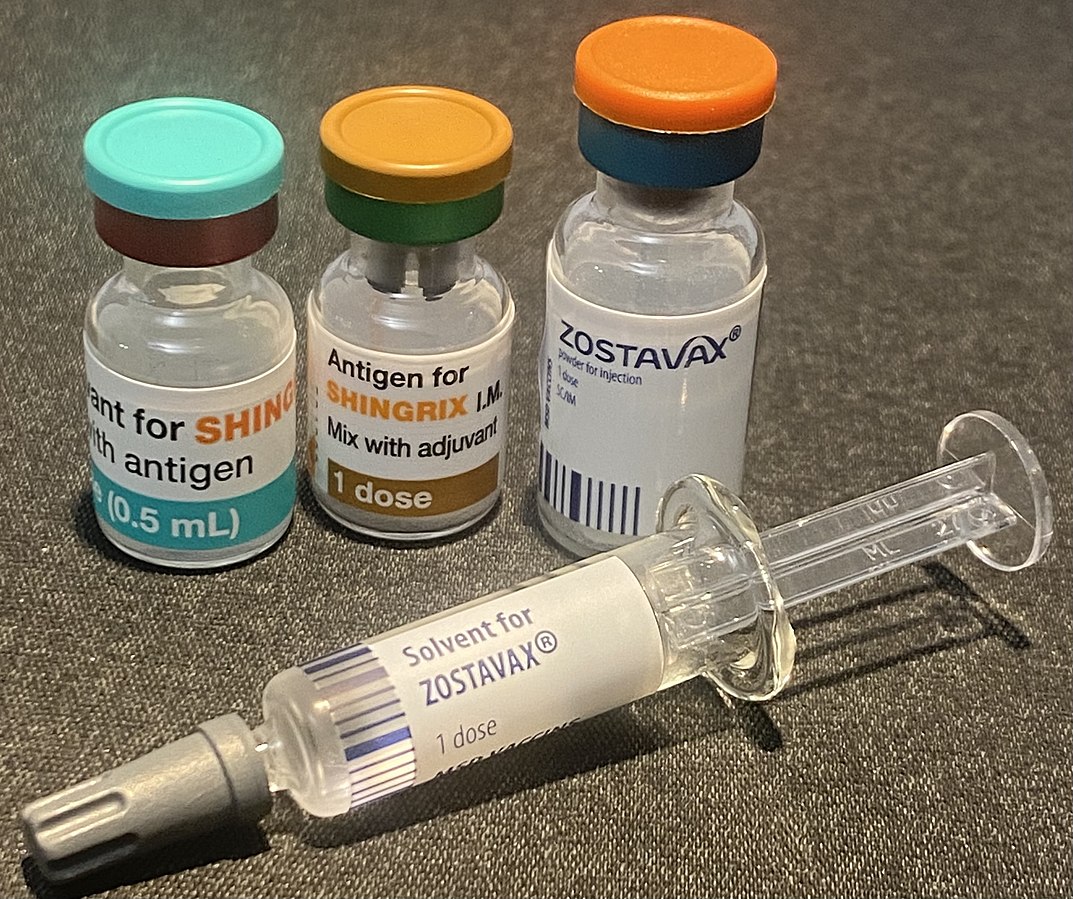
Most vaccines (including inactivated vaccines and the live nasal spray influenza vaccine) are stored refrigerated, between 2-8 degrees Celsius. Some vaccines, such as the chickenpox (varicella) vaccine, VARIVAX, and the Zostavax shingles vaccine (discontinued in the US in 2020), are stored frozen, between -50 and -15 degrees Celsius. Storage of the Pfizer COVID-19 vaccine (Comirnaty) depends on the presentation. The prefilled syringes for ages 12 and older are refrigerated only, at 2-8 degrees Celsius, and must not be frozen. Single-dose vials for ages 5-11 may be stored in an ultracold freezer at -90 to -60 degrees Celsius. Frozen vials are thawed in the refrigerator before use. VARIVAX is reconstituted from the freezer, or it may be kept in the refrigerator for up to 72 hours before reconstitution. It is used within 30 minutes of reconstitution.
Before administering a vaccine, the lot number, expiry date, and manufacturer are recorded, and a vaccine information statement (VIS) is given to the patient.
Depending on the vaccine components and the immune response they produce, vaccines can be classified as follows:
| Vaccine type | Description | Examples |
|---|---|---|
| Live attenuated | - Uses an attenuated or weakened strain of the microorganism - Stimulates cell-mediated, long-lasting immunity - Temperature sensitive - Contraindicated in immunocompromised individuals like HIV, organ transplant recipients, etc. |
MMR Rotavirus Smallpox Chickenpox Yellow fever Nasal influenza Oral polio (Sabin) |
| Inactivated | - Use killed microorganisms - Booster doses are essential for long-lasting immunity |
Hepatitis A Flu shots Polio shots (IPV or Salk) Rabies |
| Subunit, recombinant, polysaccharide, and conjugate | - Use antigenic parts or subunits of the pathogen to induce specific immunity - Booster doses are required |
Haemophilus influenzae type b or Hib Hepatitis B HPV Pertussis component of DTaP Pneumococcal Meningococcal Shingles Novavax for COVID-19 virus |
| Toxoid | - Uses inactivated toxins | Diphtheria and tetanus |
| Messenger RNA (mRNA) vaccine | - Uses messenger RNA coding for protein like S protein in the COVID-19 virus | COVID-19 vaccines: Comirnaty (Pfizer-BioNTech) and Spikevax (Moderna) |
| Vector vaccines | - Uses a harmless vector like a non-pathogenic virus to introduce an antigenic protein into the body | COVID-19 vector vaccine from Janssen/Johnson and Johnson (no longer available in the US) |
Vaccine adverse effects include fever, local erythema and swelling after DTaP booster doses, and allergic reactions to neomycin in MMR, IPV, and chickenpox vaccines. Most influenza vaccines are made using eggs and may contain trace egg protein, but under current CDC/ACIP guidance, egg allergy of any severity is no longer a contraindication or precaution, and people with egg allergy can receive any age-appropriate flu vaccine. Thimerosal is a mercury-containing preservative found in some multidose vials, such as some flu vaccines. It was removed from routine U.S. childhood vaccines by 2001 as a precaution against theoretical risk to infants’ developing brains, though studies have not shown harm at vaccine doses.
CDC immunization schedule for under 18 years of age: The table below summarizes the recommended pediatric and adolescent immunization schedule (CDC child and adolescent immunization schedule).
| Vaccine | Doses and recommended ages |
|---|---|
| Hepatitis B (HepB) | 3 doses: birth, 1-2 months, 6-18 months |
| Rotavirus | 2 doses (Rotarix: 2 and 4 months) or 3 doses (RotaTeq: 2, 4, and 6 months) |
| Diphtheria, tetanus, acellular pertussis (DTaP) | 5 doses: 2, 4, 6, 15-18 months, and 4-6 years |
| Pneumococcal conjugate (PCV15 or PCV20) | 4 doses: 2, 4, 6, and 12-15 months |
| Inactivated poliovirus (IPV) | 4 doses: 2, 4, 6-18 months, and 4-6 years |
| Haemophilus influenzae type b (Hib) | 2-3 doses at 2 and 4 months (plus 6 months for some products), with a booster at 12-15 months |
| Measles, mumps, rubella (MMR) | 2 doses: 12-15 months and 4-6 years |
| Varicella | 2 doses: 12-15 months and 4-6 years |
| Influenza | 1 dose annually during flu season |
| Tetanus, diphtheria, acellular pertussis (Tdap) | 1 dose at 11-12 years |
| Meningococcal | 1 dose at 11-12 years, with a booster at 16 years |
CDC recommended vaccines in adults: Certain vaccinations are recommended by CDC to prevent diseases like herpes zoster, pneumococcal pneumonia, severe flu, and COVID-19 pneumonia in susceptible adults. Shingles or herpes zoster vaccination, called RZV (recombinant zoster vaccine) or Shingrix, is given as 2 doses 2-6 months apart after the age of 50 years. HPV vaccine is administered in 2-3 doses depending on the initial age at immunization, starting at age 9 years.
| Route of administration | Type of patient | Needle gauge and length* |
|---|---|---|
| Intramuscular | Neonate (up to 28 days of age) | 22-25 G; ⅝ inch |
| Intramuscular | Infants (1-12 months of age) | 22-25 G: 1 inch |
| Intramuscular | Toddlers and children (1-18 years of age) | 22-25 G; 1-1.25 inches for injection into the thigh; ⅝-1 inch for injection into the arm |
| Intramuscular | Adults | 22-25 G; 1 inch For obese adults, use 1.5 inches |
| Subcutaneous | Any | 23-25 G; ⅝ inch |
Needle gauge is denoted by G, which refers to the diameter of the hole in the needle. A higher G means a thinner needle. Needles are available in various gauges and lengths. The length is listed along with the gauge of the needle on the packaging.
The arm is the preferred site for vaccinating older children (above 2 years of age), while the thigh is the preferred site for toddlers aged 1-2 years. Arm injection is recommended for adults.