



Sensitivity analysis
Learning outcome statements
The learning outcome statements relevant for this section are:
- define sensitivity analysis and identify when it would be the appropriate tool to use
- identify the benefits and limitations of sensitivity analysis
Definition of sensitivity analysis
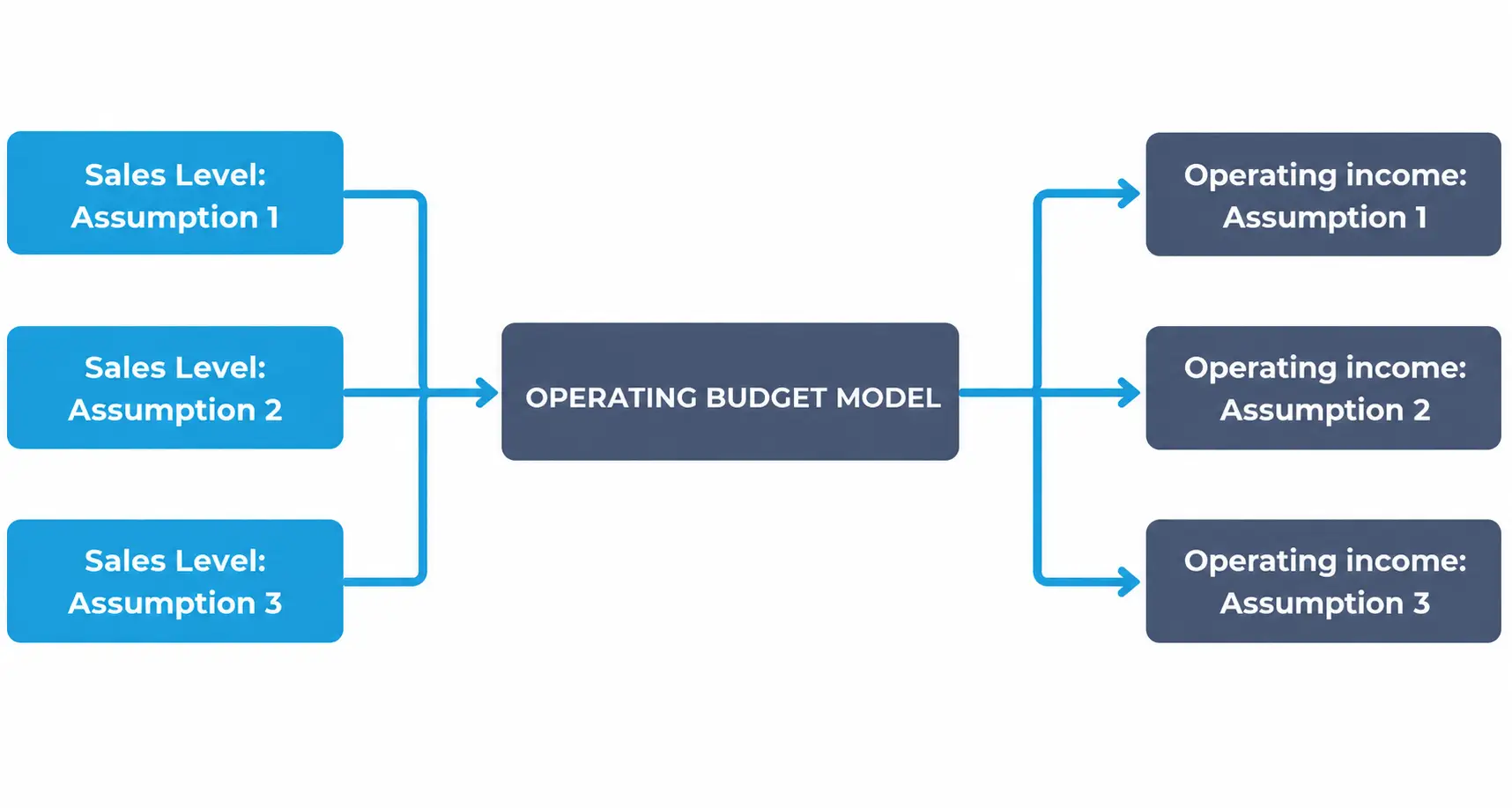
By systematically changing key inputs, analysts can identify which factors have the most significant impact on outcomes, allowing for better risk management and decision-making.
This method is particularly useful in financial modeling, project management, and economic forecasting. For example, in capital budgeting, sensitivity analysis can evaluate how changes in interest rates or projected revenues impact a company’s net present value (NPV). Similarly, in supply chain management, it can determine how fluctuations in raw material prices affect overall production costs.
When to use sensitivity analysis
Sensitivity analysis is a decision-making tool that tests how changes in key assumptions or input variables affect outcomes. It is particularly useful in environments of uncertainty, where managers need to understand the range of possible results and the degree of risk associated with different scenarios. By highlighting which variables have the greatest impact, sensitivity analysis helps organizations validate models, improve financial forecasts, strengthen risk management, and support operational planning.
When some inputs are uncertain
Sensitivity analysis is particularly valuable when input variables are uncertain or subject to fluctuations. By testing different scenarios, businesses can understand the range of possible outcomes and make more informed decisions.
Validating a model
Sensitivity analysis helps assess the robustness of a model by determining how sensitive the results are to changes in key assumptions. If small changes in inputs significantly alter outcomes, it indicates that the model may need refinement or additional validation.
Financial forecasting
Businesses use sensitivity analysis to determine the impact of fluctuating interest rates, inflation, or market demand on investment decisions. By running multiple scenarios with different assumptions, companies can assess the financial feasibility of projects, optimize pricing strategies, and evaluate potential investment risks.
Risk management
Organizations assess how variations in risk factors influence financial stability and operational performance by modeling different risk scenarios and evaluating their potential impact. By identifying critical vulnerabilities, organizations can implement proactive risk mitigation strategies, such as diversifying suppliers or adjusting investment portfolios to minimize financial exposure.
Operational planning
Companies apply this technique to assess how variations in labor costs, fuel prices, or exchange rates affect profitability. Businesses operating in international markets also use sensitivity analysis to anticipate how currency exchange rate fluctuations will affect revenues and costs, helping them develop contingency plans for adverse movements.
Benefits and limitations of sensitivity analysis
Benefits
- Improved decision-making: Sensitivity analysis helps organizations assess the impact of various factors on their business outcomes, enabling them to make more informed strategic decisions.
- Better risk management: By testing different scenarios, businesses can identify vulnerabilities and develop risk mitigation strategies to minimize potential losses.
- Resource optimization: Organizations can allocate resources more effectively by understanding how changes in costs, demand, or other variables affect profitability and efficiency.
- Enhanced financial planning: Sensitivity analysis is widely used in financial forecasting, allowing companies to evaluate how changes in interest rates, exchange rates, or inflation impact investment returns.
- Model validation: It helps validate the robustness of predictive models by identifying how sensitive the outcomes are to changes in input variables.
Limitations
- Data dependence: The accuracy of sensitivity analysis depends on the quality and reliability of input data. Inaccurate assumptions can lead to misleading results.
- Time-consuming: Conducting thorough sensitivity analysis, especially for complex models, can be time-intensive and require significant computational resources.
- Limited scope: It focuses on the impact of changing one or a few variables at a time, which may not account for complex interactions between multiple variables in real-world scenarios.
- Does not provide definitive answers: Sensitivity analysis highlights how outcomes change under different conditions but does not prescribe the best course of action.
- Potential for oversimplification: Some models may overlook external factors that significantly influence business outcomes, leading to incomplete assessments.
Despite these limitations, sensitivity analysis remains a valuable tool for businesses seeking to evaluate uncertainty, refine models, and enhance decision-making processes.