




Achievable logoAchievable logo
CMA Part 1
Sign in
Sign up
Purchase
Textbook
Practice exams
Support
How it works
Exam catalog
Mountain with a flag at the peak
Textbook
1. External financial reporting decisions
2. Planning, budgeting, and forecasting
2.1 Strategic planning
2.2 Budgeting concepts
2.3 Forecasting techniques
2.4 Budgeting methodologies
2.5 Annual profit plan and supporting schedules
2.5.1 Operational budgets
2.5.2 Financial budgets
2.5.3 Capital budgets
2.6 Top-level planning and analysis
3. Performance management
4. Cost management
5. Internal control
6. Technology and analytics
Achievable logoAchievable logo
2.5.2 Financial budgets
Achievable CMA Part 1
2. Planning, budgeting, and forecasting
2.5. Annual profit plan and supporting schedules
Our CMA Part 1 course is currently in development and is a work-in-progress.

Financial budgets

8 min read
Font
Discuss
Share
Feedback

Learning outcome statements

The learning outcome statements relevant for this section are:

  1. define the purposes of a cash budget and describe the relationship between the cash budget and all other budgets
  2. demonstrate an understanding of the relationship between credit policies and purchasing (payables) policies and the cash budget
  3. prepare a cash budget
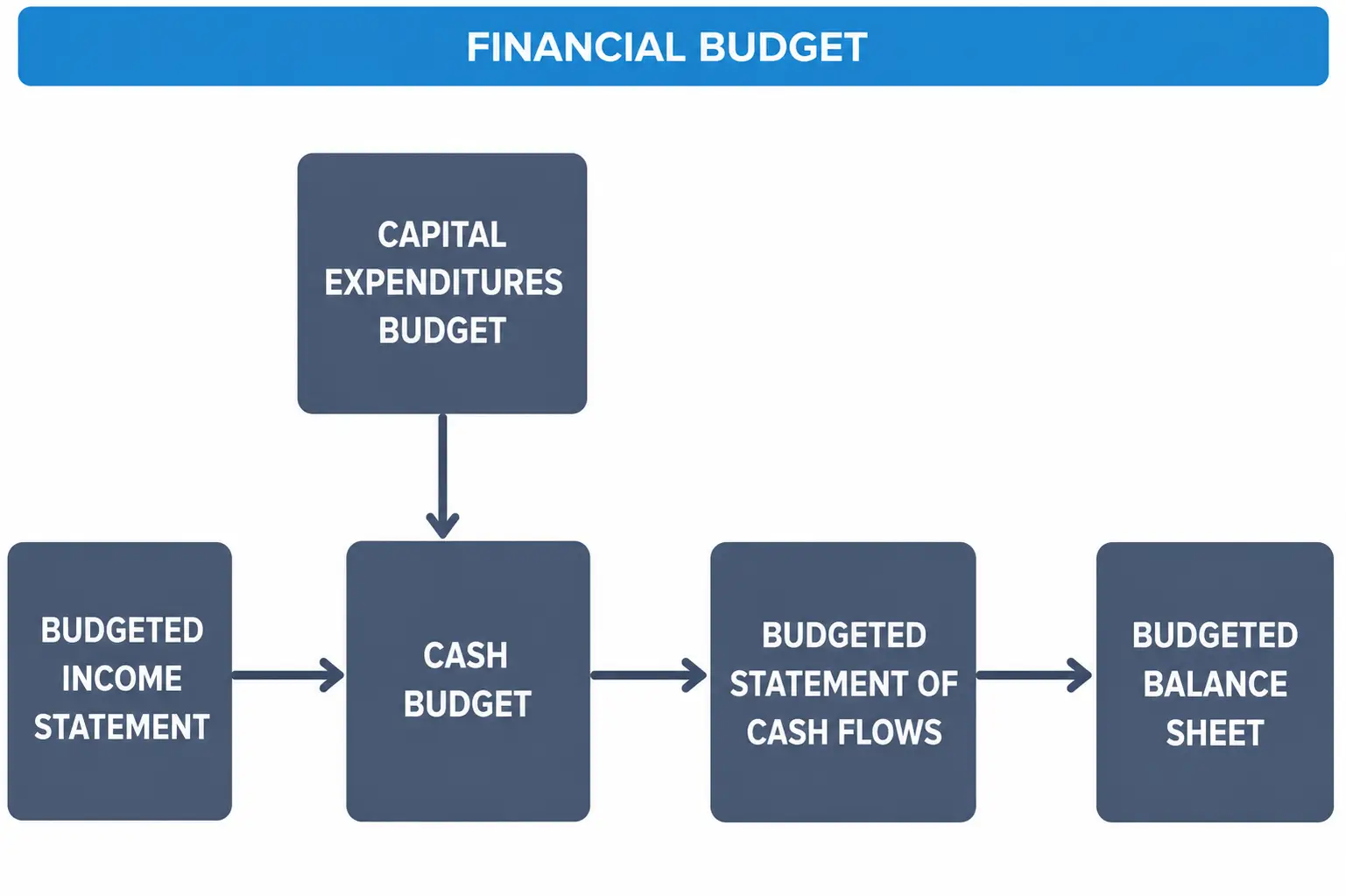
Showing the financial budget flow from budgeted income statement through cash budget to balance sheet.
Financial Budget Flow

Budgeted financial statements

Following the budgeted income statement, the next step in the operational budget is to prepare additional budgeted financial statements:

  1. the budgeted balance sheet and
  2. the budgeted statement of cash flows.

These statements complete the financial picture of the organization’s expected position by the end of the budget period.

These budgeted statements offer a comprehensive overview of projected financial performance and position, supporting management in making informed, strategic decisions for the company’s future.

Budgeted balance sheet

The budgeted balance sheet projects the company’s financial position by estimating assets, liabilities, and equity balances at the end of the period. This statement is based on data from previous budgets, such as inventory levels from the production budget and accounts receivable/payable projections from the sales and purchases budgets.

For our GreenLine example, we will not prepare a detailed budgeted balance sheet due to the limited data. However, in practice, this statement is essential for evaluating the company’s financial stability and liquidity at the end of the budgeting period.

Budgeted statement of cash flows

This statement projects cash inflows and outflows throughout the budget period grouped as operating, investing and financing activities in-line with GAAP. The budgeted statement of cash flows is often critical for cash management, helping organizations anticipate funding needs or surpluses.

It is good to note that the budgeted statement of cash flows is different from the cash budget as described below.

The cash budget

Financial budgets are critical tools within the overall budgeting framework, focusing on:

  • cash flow management
  • liquidity, and
  • financing needs.

They guide decision-makers in planning cash requirements, addressing financing needs, and ensuring the company’s financial stability over the budget period. For our GreenLine Furniture example, we will not prepare a detailed cash budget due to the limited data, however the preparation of the cash budget can be understood from the discussions related to its components and its relationships to the other budgets.

The cash budget is a key component of financial budgets and serves several essential purposes:

  • Ensuring liquidity: The cash budget forecasts cash inflows and outflows over short-term periods, often monthly, ensuring that the company has adequate cash to meet operational and financial obligations as they arise.
  • Supporting cash flow planning: It helps to anticipate cash surpluses and deficits, allowing management to plan financing actions, such as borrowing or investing excess funds.
  • Informing decision-making: By monitoring cash requirements, the cash budget informs strategic decisions on capital investments, expense management, and working capital adjustments.

Cash budget vs. budgeted statement of cash flows

While both the cash budget and the budgeted statement of cash flows focus on projecting cash flow, they serve different purposes, are structured differently, and are based on distinct components.

Cash budget

Prepared first, the cash budget projects short-term cash inflows and cash outflows to manage immediate liquidity and ensure that funds are available to meet operational, capital, and financial needs on a monthly or quarterly basis. The components of the cash budget are the following:

Cash budget components
  • Cash receipts: Includes all expected cash inflows, primarily from sales, but also from other sources such as interest income, sale of assets, or loans. Sales-related cash receipts are influenced by credit policies and collection patterns.
  • Cash disbursements: All planned cash outflows, including payments for direct materials, labor, overhead costs, selling and administrative expenses, capital expenditures, and other operating costs. Payments align with purchasing policies, which determine timing and amounts for cash outflows.
  • Financing section: If there is a projected cash deficit, this section outlines planned borrowings, repayments, or financing activities to cover the shortfall. Conversely, if there is a cash surplus, it may include planned investments of excess cash or debt repayments.

This breakdown makes the cash budget a working tool for managing day-to-day liquidity, allowing management to plan for periods of cash shortfall or surplus and ensure operational continuity.

Budgeted statement of cash flows

Provides a comprehensive annual view of projected cash movements, structured according to US GAAP financial reporting format. It is more focused on long-term planning and financial statement alignment than on managing immediate cash needs. The components of the budgeted statement of cash flows are as follows:

Cash flow statement components
  • Operating activities: This section includes cash flows from core business operations, such as cash receipts from customers and cash payments for operating expenses. It reflects the net cash generated from day-to-day activities.
  • Investing activities: This section details cash flows related to investment in or sale of long-term assets, such as property, equipment, or securities. For example, cash outflows for purchasing new machinery or inflows from selling an asset are recorded here.
  • Financing activities: This section includes cash flows related to borrowing and repaying debt, issuing equity, and distributing dividends. It reflects how the company’s financing strategy impacts cash flow, whether through new financing, debt repayment, or shareholder payouts.

These two tools are complementary, with the cash budget ensuring day-to-day liquidity and the budgeted statement of cash flows providing an overall view of cash movements aligned with external reporting standards. Together, they enable effective cash management, financial planning, and alignment with strategic goals.

Relationship of the cash budget with other budgets

The cash budget consolidates inputs from multiple operational and financial budgets to project cash requirements accurately. Key relationships include:

  • Sales and collections: The sales budget informs projected cash inflows, considering the timing of collections from credit sales. Delayed collections impact cash flow planning and can require adjustments in financing or cash reserves.
  • Direct materials, direct labor, and overhead budgets: These production budgets outline anticipated expenses for purchasing materials, paying labor, and covering overheads. Since these are often cash outflows, they feed into the cash budget, highlighting timing and amounts of expected payments.
  • Capital expenditures: Planned asset purchases, such as equipment or property, represent significant cash outflows. Including these in the cash budget helps management plan for financing needs or adjust spending.

Understanding the impact of credit policies and purchasing policies

Credit policies (related to sales) and purchasing policies (related to payables) directly affect cash flow and are integral to preparing a realistic cash budget:

Credit policies

Credit terms determine how quickly customers are expected to pay. For example, if a company offers net 30 payment terms, cash inflows are delayed by at least 30 days from the point of sale. Adjustments to credit terms, such as offering discounts for early payments, can accelerate cash collections but might reduce revenue slightly.

Purchasing policies

Payment terms with suppliers affect cash outflows. Favorable payment terms, such as net 60 days, delay cash outflows, preserving cash for other needs. However, paying early might allow the company to take advantage of supplier discounts, impacting cash management strategies.

Effective alignment of credit and purchasing policies with cash budget planning helps companies optimize cash flow and liquidity, minimizing reliance on external financing.

Budgeted financial statements

  • Include budgeted balance sheet and budgeted statement of cash flows
  • Project financial position and performance at period end
  • Support strategic decision-making

Budgeted balance sheet

  • Projects assets, liabilities, equity at period end
  • Based on prior budgets (inventory, receivables, payables)
  • Essential for evaluating financial stability and liquidity

Budgeted statement of cash flows

  • Projects cash inflows/outflows by operating, investing, financing activities
  • Follows US GAAP structure
  • Focused on long-term cash flow planning

The cash budget

  • Forecasts short-term cash inflows and outflows (often monthly)
  • Ensures liquidity for operational/financial obligations
  • Informs decisions on financing, investments, and working capital

Cash budget vs. budgeted statement of cash flows

  • Cash budget: short-term, operational tool for managing liquidity
    • Components: cash receipts, cash disbursements, financing section
  • Budgeted statement of cash flows: annual, GAAP-aligned, strategic planning
    • Sections: operating, investing, financing activities

Relationship of the cash budget with other budgets

  • Consolidates data from sales, production, and capital expenditure budgets
  • Sales budget: informs timing/amount of cash inflows
  • Production budgets: outline cash outflows for materials, labor, overhead
  • Capital expenditures: major planned cash outflows

Impact of credit and purchasing policies

  • Credit policies: affect timing of cash inflows from customers
    • E.g., longer credit terms delay collections
  • Purchasing policies: affect timing of cash outflows to suppliers
    • Favorable terms delay payments, preserve cash
  • Alignment optimizes cash flow and reduces need for external financing

Sign up for free to take 11 quiz questions on this topic

Previous
Next  | 2.5.3 Capital budgets
All rights reserved ©2016 - 2026 Achievable, Inc.

Financial budgets

Learning outcome statements

The learning outcome statements relevant for this section are:

  1. define the purposes of a cash budget and describe the relationship between the cash budget and all other budgets
  2. demonstrate an understanding of the relationship between credit policies and purchasing (payables) policies and the cash budget
  3. prepare a cash budget

Budgeted financial statements

Following the budgeted income statement, the next step in the operational budget is to prepare additional budgeted financial statements:

  1. the budgeted balance sheet and
  2. the budgeted statement of cash flows.

These statements complete the financial picture of the organization’s expected position by the end of the budget period.

These budgeted statements offer a comprehensive overview of projected financial performance and position, supporting management in making informed, strategic decisions for the company’s future.

Budgeted balance sheet

The budgeted balance sheet projects the company’s financial position by estimating assets, liabilities, and equity balances at the end of the period. This statement is based on data from previous budgets, such as inventory levels from the production budget and accounts receivable/payable projections from the sales and purchases budgets.

For our GreenLine example, we will not prepare a detailed budgeted balance sheet due to the limited data. However, in practice, this statement is essential for evaluating the company’s financial stability and liquidity at the end of the budgeting period.

Budgeted statement of cash flows

This statement projects cash inflows and outflows throughout the budget period grouped as operating, investing and financing activities in-line with GAAP. The budgeted statement of cash flows is often critical for cash management, helping organizations anticipate funding needs or surpluses.

It is good to note that the budgeted statement of cash flows is different from the cash budget as described below.

The cash budget

Financial budgets are critical tools within the overall budgeting framework, focusing on:

  • cash flow management
  • liquidity, and
  • financing needs.

They guide decision-makers in planning cash requirements, addressing financing needs, and ensuring the company’s financial stability over the budget period. For our GreenLine Furniture example, we will not prepare a detailed cash budget due to the limited data, however the preparation of the cash budget can be understood from the discussions related to its components and its relationships to the other budgets.

The cash budget is a key component of financial budgets and serves several essential purposes:

  • Ensuring liquidity: The cash budget forecasts cash inflows and outflows over short-term periods, often monthly, ensuring that the company has adequate cash to meet operational and financial obligations as they arise.
  • Supporting cash flow planning: It helps to anticipate cash surpluses and deficits, allowing management to plan financing actions, such as borrowing or investing excess funds.
  • Informing decision-making: By monitoring cash requirements, the cash budget informs strategic decisions on capital investments, expense management, and working capital adjustments.

Cash budget vs. budgeted statement of cash flows

While both the cash budget and the budgeted statement of cash flows focus on projecting cash flow, they serve different purposes, are structured differently, and are based on distinct components.

Cash budget

Prepared first, the cash budget projects short-term cash inflows and cash outflows to manage immediate liquidity and ensure that funds are available to meet operational, capital, and financial needs on a monthly or quarterly basis. The components of the cash budget are the following:

  • Cash receipts: Includes all expected cash inflows, primarily from sales, but also from other sources such as interest income, sale of assets, or loans. Sales-related cash receipts are influenced by credit policies and collection patterns.
  • Cash disbursements: All planned cash outflows, including payments for direct materials, labor, overhead costs, selling and administrative expenses, capital expenditures, and other operating costs. Payments align with purchasing policies, which determine timing and amounts for cash outflows.
  • Financing section: If there is a projected cash deficit, this section outlines planned borrowings, repayments, or financing activities to cover the shortfall. Conversely, if there is a cash surplus, it may include planned investments of excess cash or debt repayments.

This breakdown makes the cash budget a working tool for managing day-to-day liquidity, allowing management to plan for periods of cash shortfall or surplus and ensure operational continuity.

Budgeted statement of cash flows

Provides a comprehensive annual view of projected cash movements, structured according to US GAAP financial reporting format. It is more focused on long-term planning and financial statement alignment than on managing immediate cash needs. The components of the budgeted statement of cash flows are as follows:

  • Operating activities: This section includes cash flows from core business operations, such as cash receipts from customers and cash payments for operating expenses. It reflects the net cash generated from day-to-day activities.
  • Investing activities: This section details cash flows related to investment in or sale of long-term assets, such as property, equipment, or securities. For example, cash outflows for purchasing new machinery or inflows from selling an asset are recorded here.
  • Financing activities: This section includes cash flows related to borrowing and repaying debt, issuing equity, and distributing dividends. It reflects how the company’s financing strategy impacts cash flow, whether through new financing, debt repayment, or shareholder payouts.

These two tools are complementary, with the cash budget ensuring day-to-day liquidity and the budgeted statement of cash flows providing an overall view of cash movements aligned with external reporting standards. Together, they enable effective cash management, financial planning, and alignment with strategic goals.

Relationship of the cash budget with other budgets

The cash budget consolidates inputs from multiple operational and financial budgets to project cash requirements accurately. Key relationships include:

  • Sales and collections: The sales budget informs projected cash inflows, considering the timing of collections from credit sales. Delayed collections impact cash flow planning and can require adjustments in financing or cash reserves.
  • Direct materials, direct labor, and overhead budgets: These production budgets outline anticipated expenses for purchasing materials, paying labor, and covering overheads. Since these are often cash outflows, they feed into the cash budget, highlighting timing and amounts of expected payments.
  • Capital expenditures: Planned asset purchases, such as equipment or property, represent significant cash outflows. Including these in the cash budget helps management plan for financing needs or adjust spending.

Understanding the impact of credit policies and purchasing policies

Credit policies (related to sales) and purchasing policies (related to payables) directly affect cash flow and are integral to preparing a realistic cash budget:

Credit policies

Credit terms determine how quickly customers are expected to pay. For example, if a company offers net 30 payment terms, cash inflows are delayed by at least 30 days from the point of sale. Adjustments to credit terms, such as offering discounts for early payments, can accelerate cash collections but might reduce revenue slightly.

Purchasing policies

Payment terms with suppliers affect cash outflows. Favorable payment terms, such as net 60 days, delay cash outflows, preserving cash for other needs. However, paying early might allow the company to take advantage of supplier discounts, impacting cash management strategies.

Effective alignment of credit and purchasing policies with cash budget planning helps companies optimize cash flow and liquidity, minimizing reliance on external financing.

Key points

Budgeted financial statements

  • Include budgeted balance sheet and budgeted statement of cash flows
  • Project financial position and performance at period end
  • Support strategic decision-making

Budgeted balance sheet

  • Projects assets, liabilities, equity at period end
  • Based on prior budgets (inventory, receivables, payables)
  • Essential for evaluating financial stability and liquidity

Budgeted statement of cash flows

  • Projects cash inflows/outflows by operating, investing, financing activities
  • Follows US GAAP structure
  • Focused on long-term cash flow planning

The cash budget

  • Forecasts short-term cash inflows and outflows (often monthly)
  • Ensures liquidity for operational/financial obligations
  • Informs decisions on financing, investments, and working capital

Cash budget vs. budgeted statement of cash flows

  • Cash budget: short-term, operational tool for managing liquidity
    • Components: cash receipts, cash disbursements, financing section
  • Budgeted statement of cash flows: annual, GAAP-aligned, strategic planning
    • Sections: operating, investing, financing activities

Relationship of the cash budget with other budgets

  • Consolidates data from sales, production, and capital expenditure budgets
  • Sales budget: informs timing/amount of cash inflows
  • Production budgets: outline cash outflows for materials, labor, overhead
  • Capital expenditures: major planned cash outflows

Impact of credit and purchasing policies

  • Credit policies: affect timing of cash inflows from customers
    • E.g., longer credit terms delay collections
  • Purchasing policies: affect timing of cash outflows to suppliers
    • Favorable terms delay payments, preserve cash
  • Alignment optimizes cash flow and reduces need for external financing

More from Annual profit plan and supporting schedules

  • Capital budgets