



Patient positioning
Positioning your patient
Fowler position
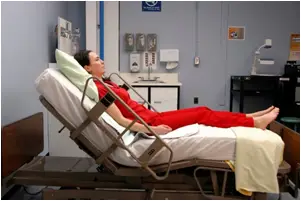
In the Fowler position, the patient sits on the examination table with the head of the table elevated 90 degrees. This position is useful for examinations and treatments of the head, neck, and chest and for patients who have difficulty breathing while lying down. Drape placement varies depending on the type of physical examination done and the need to maintain the patient’s modesty.
Semi-fowler position
The semi-Fowler position is a modification of the Fowler position. The head of the table is positioned at a 45-degree angle instead of at a full 90-degree angle. This position is useful for postoperative examinations, patients with breathing disorders, and patients suffering from head trauma or pain. The drape or gown should cover the entire patient from the nipple line down.
Supine (horizontal recumbent) position
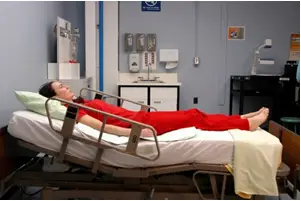
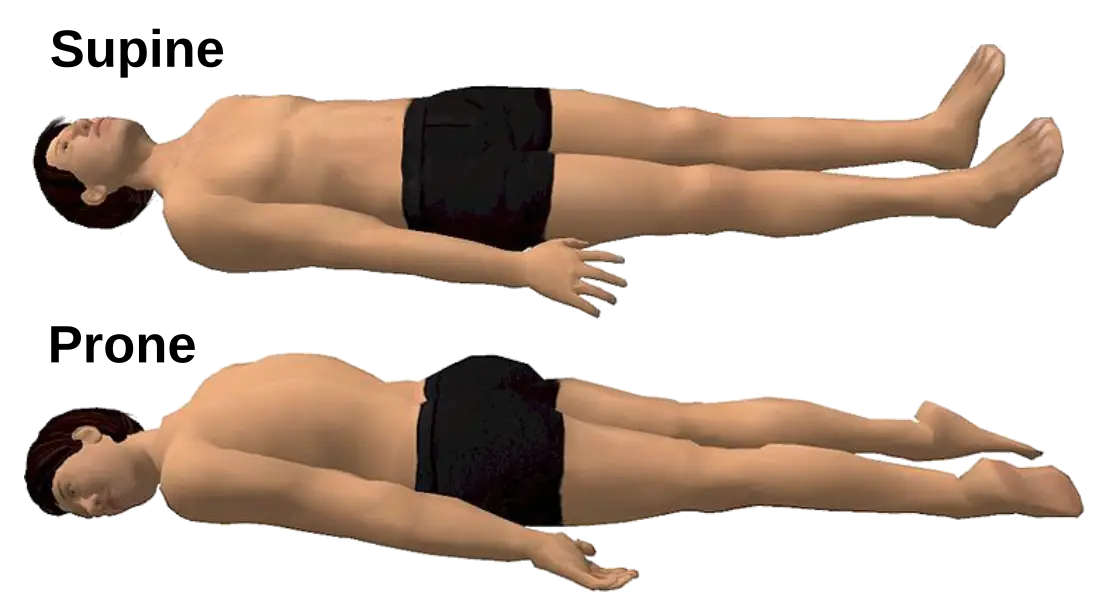
In the supine position, the patient lies flat with the face upward and the lower legs supported by the table extension. This position is used to examine the front of the body, including the heart, breasts, and abdominal organs. The patient’s gown should open down the front, and the drape should be placed over any exposed area that is not being examined.
Trendelenburg position
The Trendelenburg position is a modification of the supine position. The patient lies flat on the back and the entire table is tilted so that the head is lower than the feet. It is used to increase blood flow to the brain in the treatment of shock and low blood pressure, and to improve access during some abdominal and pelvic surgical procedures. Draping follows the supine position.
Prone position
In the prone position, the patient lies face down on the table on the ventral surface of the body. This is the opposite of the supine position and is another of the recumbent positions. The drape should cover from the middle of the back to below the knees, with the gown opening in the back. This position is used to examine the back and for certain surgical procedures.
Dorsal recumbent position
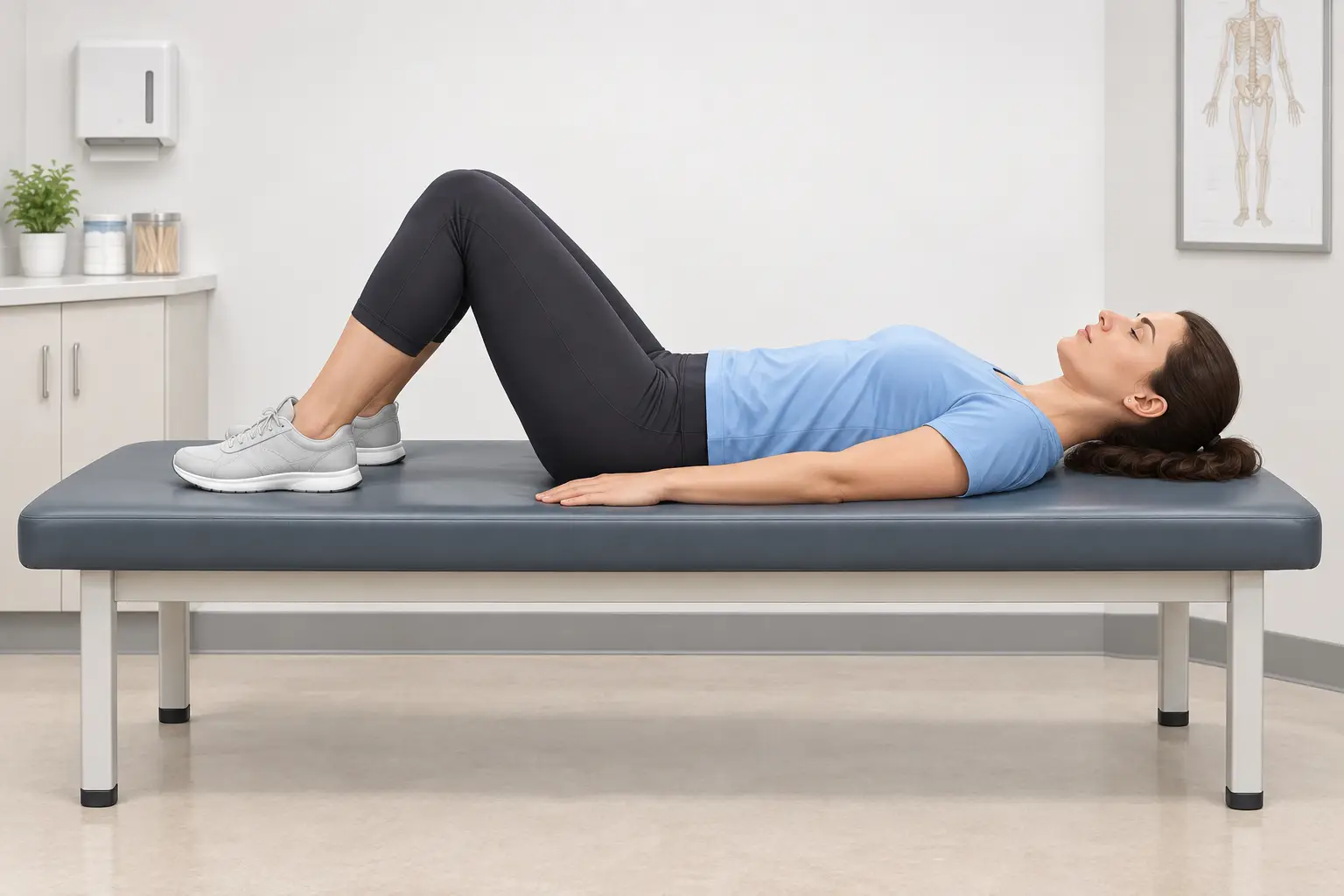
In the dorsal recumbent position, the patient lies face upward, with the weight distributed primarily to the surface of the back. This is accomplished by flexing the knees so that the feet are flat on the table. This position relieves muscle tension in the abdomen and may be used for examination or inspection of the rectal, vaginal, and perineal areas. It may also be used if the patient experiences back discomfort when lying supine. This position can be used for digital examination of the vagina and rectum, but it is not used if an instrument such as a speculum is needed. It is important to keep the patient completely draped, with the drape in a diamond shape, to ensure the patient’s privacy, until the provider is present.
Lithotomy position
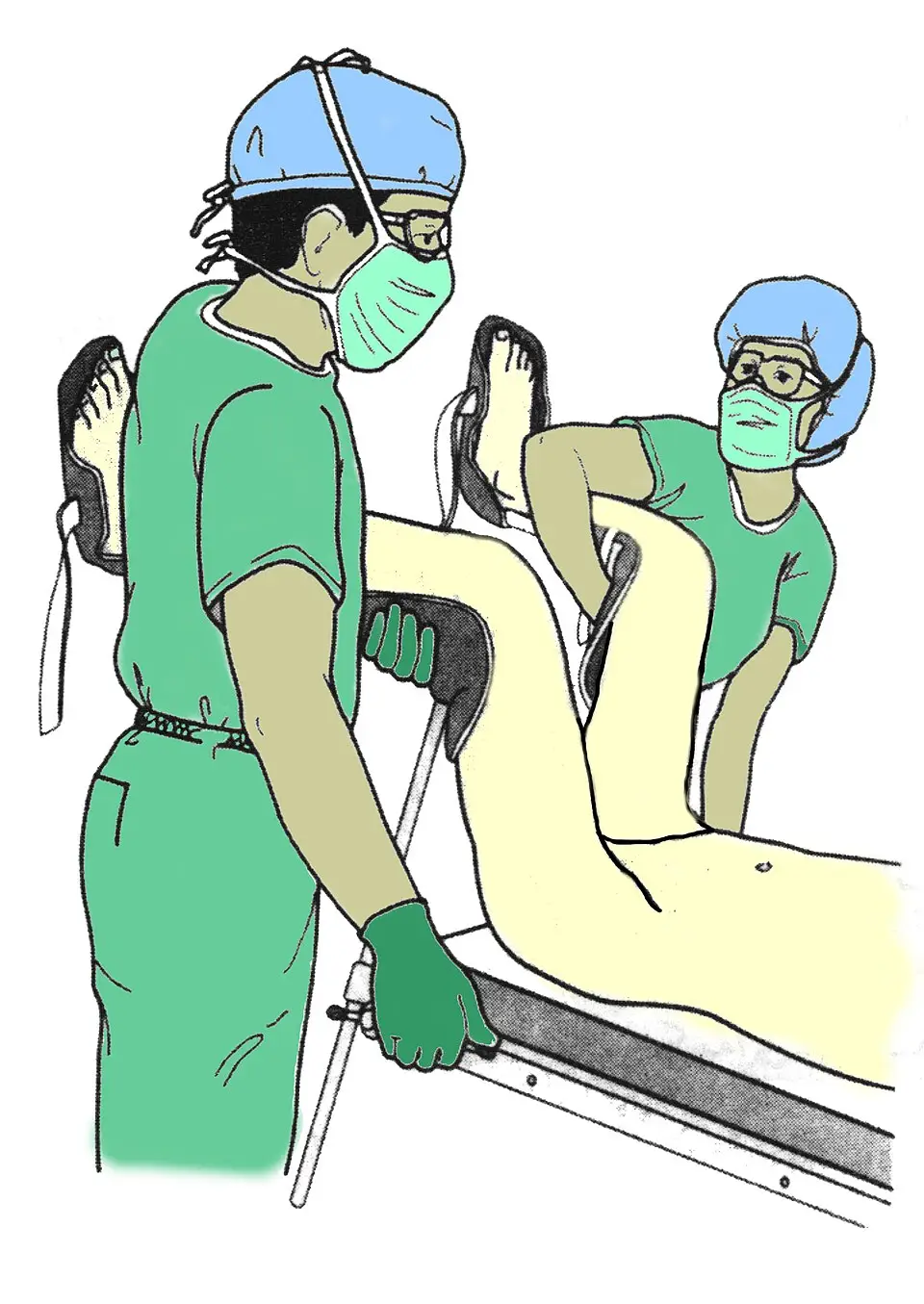
The patient should not be placed in the lithotomy position until the provider is in the examination room and is ready for this part of the examination. Place the patient on his or her back with the knees sharply flexed and the arms at the sides or folded over the chest; have the patient slide the buttocks down to the bottom edge of the table. Support the feet in stirrups placed wide apart and somewhat away from the table, with the stirrup arms extended to match the length of the patient’s legs. If the heels are too close to the buttocks, the possibility of leg cramps increases, and it is more difficult for the patient to relax the abdominal muscles. Make sure the stirrups are locked in place. Place a drape diagonally over the patient’s abdomen and knees. The drape must be long enough to cover the knees and touch the ankles and wide enough to prevent the sides of the thighs from being exposed. The provider lifts the drape away from the pubic area when the examination begins. The lithotomy position is used primarily for vaginal examinations that require the use of a speculum and for Pap tests.
Left lateral (Sims’) position
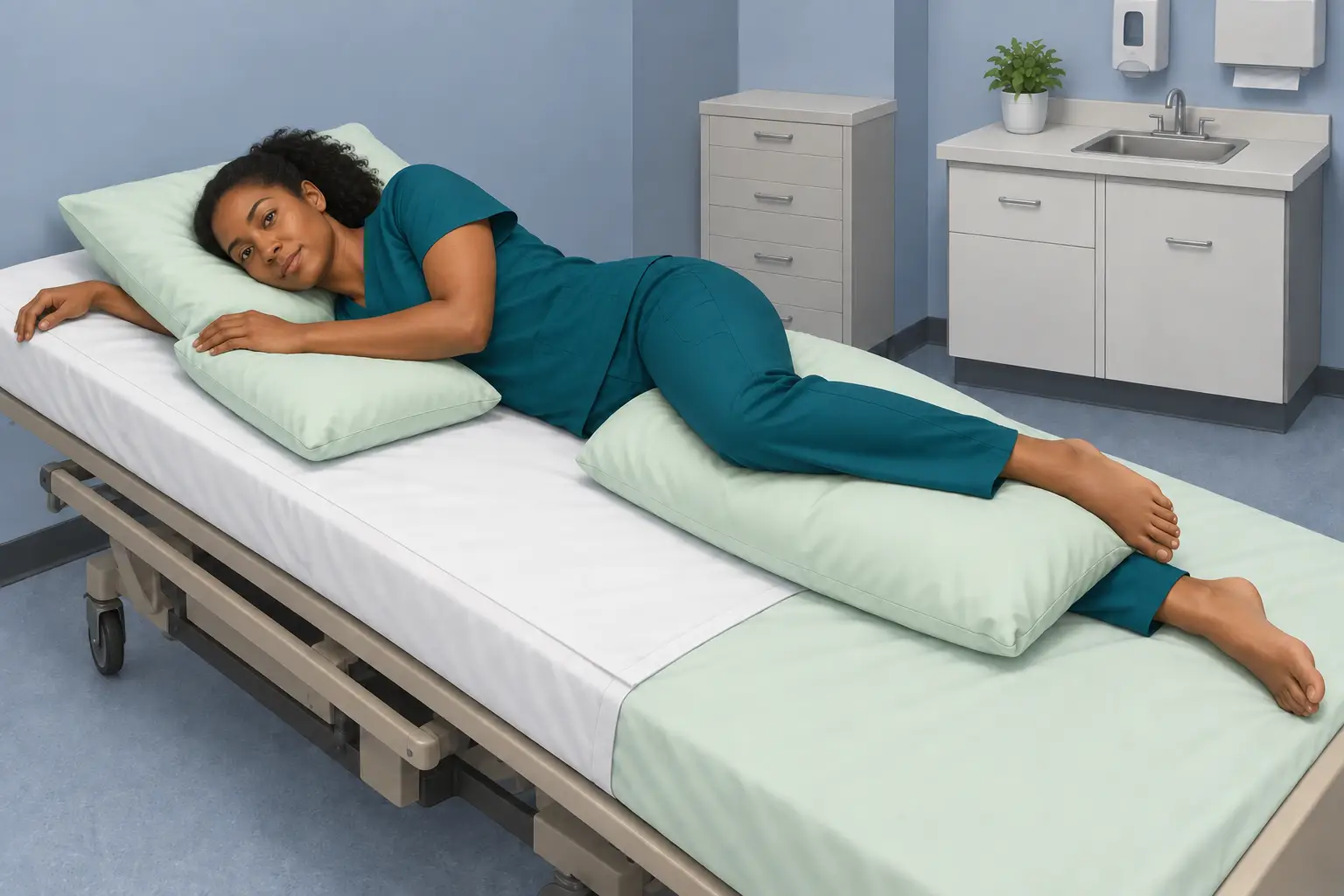
The patient is placed on the left side; the left arm and shoulder are drawn back behind the body so that the body’s weight is predominantly on the chest. The right arm is flexed upward for support. The left leg is slightly flexed, and the buttocks are pulled to the edge of the table. The right leg is sharply flexed upward. The drape extends diagonally from under the arms to below the knees. The provider can raise a small portion of the sheet from the back of the patient to expose the rectum sufficiently. The remaining portion of the sheet covers the patient’s chest area and thighs. This position is used for rectal examinations, for instillation of rectal medication, and for some perineal and pelvic examinations.
Knee-chest position
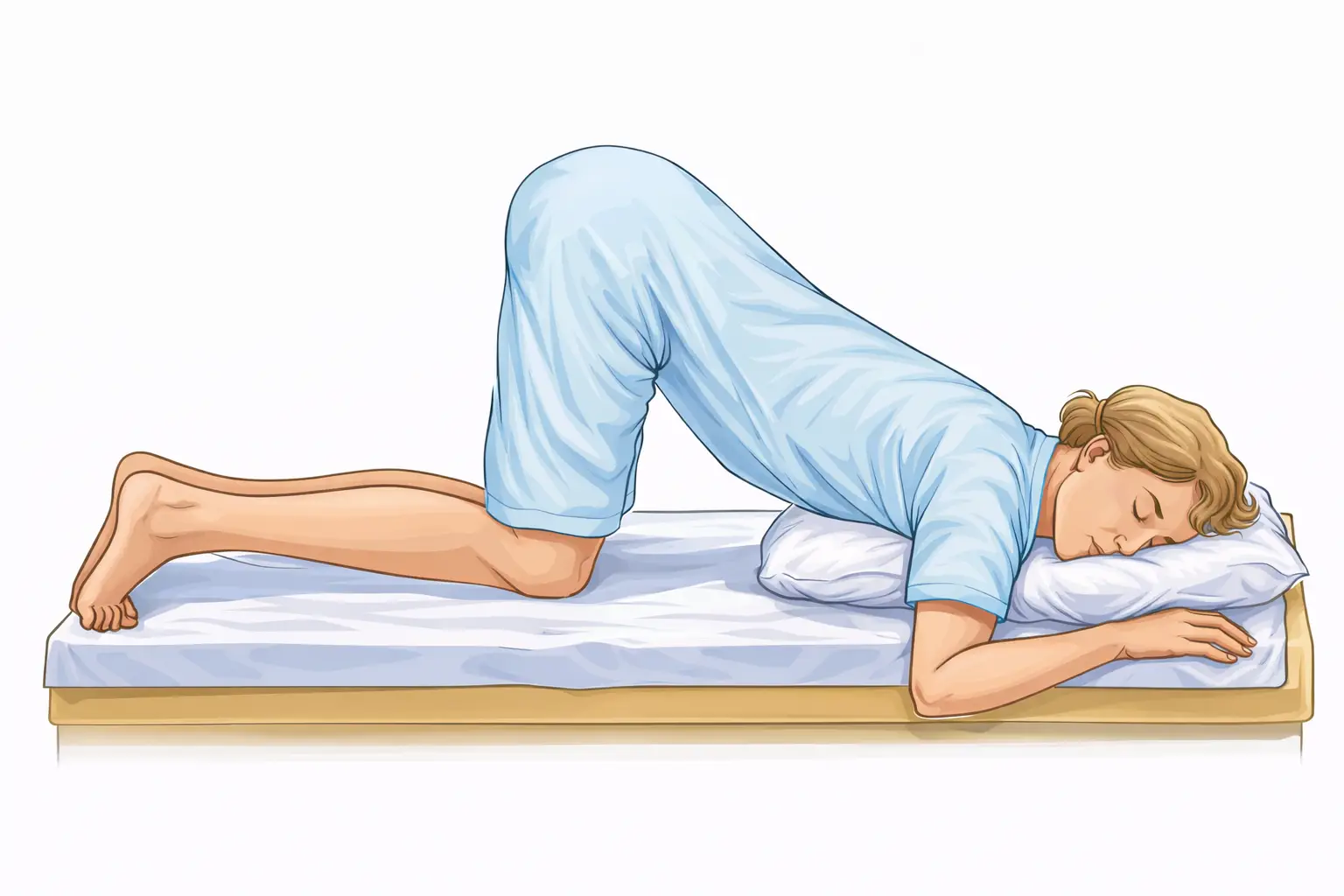
For the knee-chest position, the patient rests on the knees, and the chest with the head turned to one side. The arms can be placed under the head for support and comfort, or they can be bent and placed at the sides of the table near the head. The thighs are perpendicular to the table and slightly separated. The buttocks extend up into the air, and the back should be straight. The patient will need assistance to assume the knee-chest position correctly. Most patients have difficulty maintaining this position, so they should not be placed into it until it is required. The medical assistant must remain next to the patient for assistance and support the entire time the knee-chest position is needed. If the correct knee-chest position cannot be obtained, the patient may need to be placed in a knee-elbow position. This position puts less strain on the patient and is easier to maintain. These positions are used for proctologic examination and for sigmoid, rectal, and occasionally vaginal examinations. The patient’s gown should open in the back, and a fenestrated (opening) drape or a single sheet should be draped diagonally over the patient’s back at the sacral area.