



Endocrine physiology and pituitary gland disorders
The physiology of the endocrine system
The physiology of the endocrine system involves hormone regulation, target cells, hormone action, and prostaglandins. These topics are discussed in depth in the following sections.
Mechanisms of hormone regulation
The goal of hormone regulation is to maintain homeostasis. Nervous system stimulation, endocrine control, and feedback systems regulate hormone secretion. The following examples demonstrate these three mechanisms:
- Nervous system regulation: During a stressful event, the adrenal medulla releases adrenaline (epinephrine) in response to stimulation from the sympathetic nervous system.
- Endocrine control regulation: TSH from the anterior pituitary stimulates the thyroid to secrete T3 and T4. (A hormone from one gland stimulates another gland to secrete a hormone.)
- Feedback system regulation: A negative feedback loop system example: If the calcium blood level falls below normal, the parathyroid glands are stimulated to release PTH. PTH increases blood calcium levels by stimulating the absorption of calcium from the intestines or by chemically breaking down bone to release stored calcium into the blood. The change in the blood calcium level is detected by the parathyroid gland, which then stops production of PTH. (An imbalance activates the endocrine gland, which acts to correct the imbalance by stopping the hormone secretion process.)
Target cells
Each hormone released into the bloodstream has specific target cells for action. The target cells have receptors that attract only certain hormones. The cell membrane only lets selected hormones pass into the cell and affect cellular action.
Hormone action
There are two categories of hormones: nonsteroid hormones and steroid hormones. All hormones are messengers, but how they deliver their message is where they differ. Both types of hormones maintain homeostasis.
Nonsteroid hormones are made up of protein or amino acids. This type of hormone attaches to a target cell membrane. Another molecule takes the message from the nonsteroid hormone and carries it to the target cell nucleus or organelle, which puts the message into action in the cell.
Steroid hormones are small lipid-soluble (fat-soluble) molecules that attach to a target cell membrane and then pass directly into the target cell. Once inside the target cell, steroid hormones travel to and enter the nucleus. They bind to a receptor site, which creates a hormone-receptor site complex. This complex communicates its message with deoxyribonucleic acid (DNA) in the nucleus, and the DNA tells the cell how to put the hormone’s message into action.
Prostaglandins
Prostaglandins (PGs), also known as tissue hormones, are substances found in many body tissues. PGs are produced in tissues and diffuse only a short distance to affect cells in their local area. They help regulate processes such as respiration, blood pressure, digestive system secretions, and reproductive functions. They are powerful molecules that are made locally and act locally.
Life span changes
Changes in hormone levels vary with age. Some increase and others decrease. The following hormones decrease with age:
- Estrogen: In females, the declining level leads to menopause.
- Testosterone: In males, levels gradually decrease.
- Growth hormone.
- Melatonin: Older adults may experience a loss of the normal sleep/wake cycles.
- Cortisol, insulin, and thyroid hormone usually remain unchanged or slightly decrease with age. Norepinephrine, epinephrine, parathyroid hormone, follicle-stimulating hormone, and luteinizing hormone may increase with age.
Common signs and symptoms of endocrine conditions
Many diseases affect the endocrine system. Most of the pathology of the endocrine system is the result of either hyper- (excessive) or hypo- (deficient) hormonal secretion. Here are the common signs and symptoms of endocrine conditions:
Diseases and disorders of the endocrine system
Pituitary gland disorders
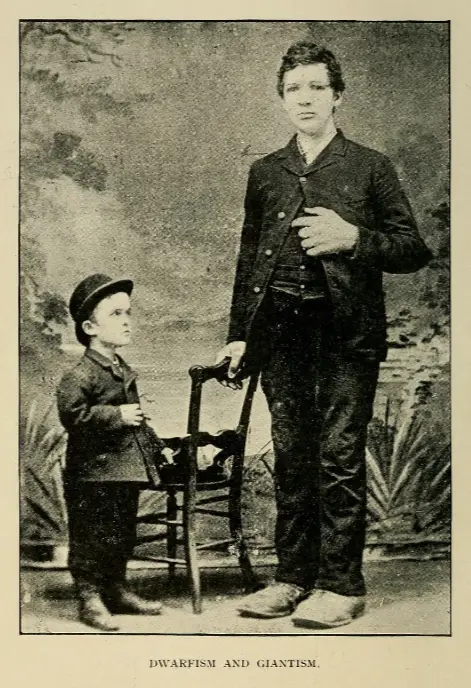
Anterior pituitary gland dysfunction can lead to several diseases and disorders. Hypersecretion of growth hormone causes acromegaly and gigantism, whereas hyposecretion causes dwarfism. Additional anterior pituitary disorders - prolactinoma and panhypopituitarism - are described in the Additional pituitary gland disorders section below.
Posterior pituitary gland disorders include diabetes insipidus, discussed below, and SIADH, described in the Additional pituitary gland disorders section below. The following sections discuss the more common pituitary diseases.
Acromegaly
Acromegaly is a rare condition in which there is too much growth hormone in the body. It is seen after normal bone growth has stopped (end of puberty).
Acromegaly is caused when the pituitary gland makes too much growth hormone. Usually, a benign tumor in the pituitary gland releases too much GH. Acromegaly can cause the following:
- Excessive sweating and body odor
- Decrease in muscle strength, carpal tunnel syndrome, and joint pain and swelling
- Large bones of the face, jaw, feet, and hands
- Hirsutism, high blood pressure, and weight gain
- Decreased peripheral vision, headache, hoarseness, and sleep apnea
Diagnosis relies on blood tests for growth hormone (GH), GH suppression, and insulin-like growth factor 1 (IGF-1), along with an MRI of the brain to locate the pituitary tumor. Treatment consists of surgery to remove the tumor, radiation, and medication to block GH production.
Gigantism
Gigantism is a rare condition in which there is too much growth hormone in the body during childhood.
Gigantism is caused when the pituitary gland makes too much growth hormone. Usually, a benign tumor of the pituitary gland releases too much GH. Gigantism can also be caused by rare genetic diseases. The child will grow extremely large for his or her age. Additional signs and symptoms include the following:
- Delayed puberty and irregular periods (menstruation)
- Double vision, difficulty with peripheral vision, and voice changes
- Large hands and feet, thickening of facial features, and prominent forehead and jaw
- Joint pain, weakness, and gaps between teeth
- Increased sweating and headaches
Diagnosis relies on blood tests for IGF-1, growth hormone, and a GH suppression test, along with a CT or MRI scan of the head. Surgery can cure many cases; if the tumor cannot be completely removed, medications that suppress GH release can be given.
Dwarfism
Dwarfism is also known as “short stature,” and someone with this condition may be referred to as a “little person.” The person has a short stature or an adult height of under 4 feet 10 inches (58 inches). Dwarfism does not affect intelligence. It can occur in families with average-height parents. There are two types of dwarfism:
- Disproportionate dwarfism, which occurs when some parts of the body are small, whereas others are average or above-average size.
- Proportionate dwarfism, which occurs when the parts of the body are proportionate. Usually, medical conditions in early childhood that limit growth and development cause proportionate dwarfism.
Most types of dwarfism are caused by a genetic mutation. There are more than 300 different conditions that cause dwarfism, with achondroplasia being the most common. Achondroplasia, a genetic condition, causes the arms and legs to be short compared to the head and trunk. Metabolism problems, hormones, kidney disease, and other genetic conditions can also cause dwarfism. Besides a short stature, the signs and symptoms vary based on the condition causing the dwarfism. People with disproportionate dwarfism may have the following characteristics:
- Short fingers, arms, and legs; limited mobility at the elbows; bowed legs; and swayed lower back
- Average-size trunk
- Disproportionately large head with a prominent forehead
People with proportionate dwarfism have a height below the third percentile on growth charts. Their growth rate is slower than expected for their age. Sexual development is delayed or absent during the teen years.
Dwarfism can be diagnosed during pregnancy or early in life as the child’s growth slows. Measurements and appearance, along with imaging technology (e.g., x-rays), genetic testing, and hormone tests, are used. Treatment is focused on maximizing functioning and independence. Most treatments do not increase the stature but rather correct problems caused by complications. For some patients, growth hormone therapy can be given to help increase stature. Daily injections may be needed for several years until the child stops growing.
Diabetes insipidus
Diabetes insipidus (DI) is caused by a hyposecretion of ADH. The hypothalamus does not produce enough of the hormone, or the posterior pituitary gland does not release a sufficient amount of it.
There are several types of DI, and the causes vary, including genetics, a tumor, trauma, or pituitary gland surgery. Diabetes insipidus can also occur if there is an inadequate response to ADH in the renal tubules of the nephrons due to kidney disease or certain medications. The signs and symptoms usually have an acute onset and include the following:
- Polydipsia, polyuria, nocturia (frequent urination at night), and very dilute urine
- Trouble sleeping, fussiness, and irritability
- Fever, vomiting, diarrhea, and hypotension (low blood pressure)
- Delayed growth and weight loss in children
Complications, such as hypernatremia (abnormally high blood sodium level), severe dehydration, electrolyte imbalance, and hypotension may occur.
The provider will do a physical exam and may order laboratory tests, including a urinalysis and blood tests. A water deprivation test and imaging tests can also be done. Diabetes insipidus can be fatal if not adequately treated. Treatment focuses on the cause of the condition. Medications such as a synthetic ADH hormone (desmopressin [DDAVP]) and diuretics may be given.
Additional pituitary gland disorders
Additional pituitary gland diseases include the following:
- Prolactinoma: A benign tumor of the pituitary gland that causes the hypersecretion of prolactin. Women have abnormal lactation and abnormal menstrual cycles. Men experience impotence.
- Panhypopituitarism: Caused by the hyposecretion of all anterior pituitary hormones, which results from the destruction or deficiency of the entire anterior lobe. It is most common in women. It causes hypotension, weight loss, weakness, and loss of libido.
- Syndrome of inappropriate antidiuretic hormone (SIADH): Caused by the hypersecretion of ADH. SIADH causes an inability to produce and secrete diluted urine. Water retention, hyponatremia (a low blood sodium level), and weight gain are seen - the opposite pattern from DI’s dilute urine and hypernatremia.