


Achievable logoAchievable logo
CCMA
Sign in
Sign up
Purchase
Textbook
Practice exams
Support
How it works
Exam catalog
Mountain with a flag at the peak
Textbook
1. Medical assistant
2. Electronic records
3. Medical terminology and anatomy
4. The fundamentals of infection control
5. Introduction to vital signs
6. The patient interview and history
7. The physical examination
8. Appointment scheduling
9. Insurance billing
10. Diagnostic coding and the ICD-10-CM System
11. Procedural coding
12. Medical billing and reimbursement essentials
13. Assisting with medical specialties
14. Assisting with the musculoskeletal system
15. Assisting with the cardiovascular system
16. Assisting with the respiratory system
17. Assisting with the nervous system
18. Anatomy and physiology of the urinary system
19. Assisting in obstetrics and gynecology
20. Assisting in endocrinology
21. Assisting in ophthalmology & otolaryngology
22. Assisting in gastroenterology
22.1 Assisting in gastroenterology
22.2 The anatomy of the gastrointestinal tract and accessory organs
22.3 Chronic intestinal disorders, accessory organ diseases, and GI cancers
22.4 Additional digestive system diseases and disorders
22.5 Diseases and disorders of the upper GI tract and acute intestinal conditions
22.6 The medical assistant’s role in examinations, procedures, and treatments
23. Assisting in the immune & lymphatic systems
24. Assisting in pediatrics: the developmental stages and care
25. The medical assistant’s role in caring for the older patient
26. The role of the medical assistant in physical therapy examination and assessment
27. Preparing for minor surgery: room, solutions, and supplies
28. Introduction to the clinical laboratory
29. Urinalysis
30. Blood collection
31. Analysis of blood
32. Electrocardiography and heart structure
33. The principles of pharmacology
34. Essential calculations and measurement systems
35. Solid, liquid, & solutions medication doses
36. Administering medications
37. Metabolism and core nutrient roles
38. Medical emergencies in the healthcare setting
Achievable logoAchievable logo
22.2 The anatomy of the gastrointestinal tract and accessory organs
Achievable CCMA
22. Assisting in gastroenterology
Our CCMA course is currently in development and is a work-in-progress.

The anatomy of the gastrointestinal tract and accessory organs

9 min read
Font
Discuss
Share
Feedback

Accessory organs

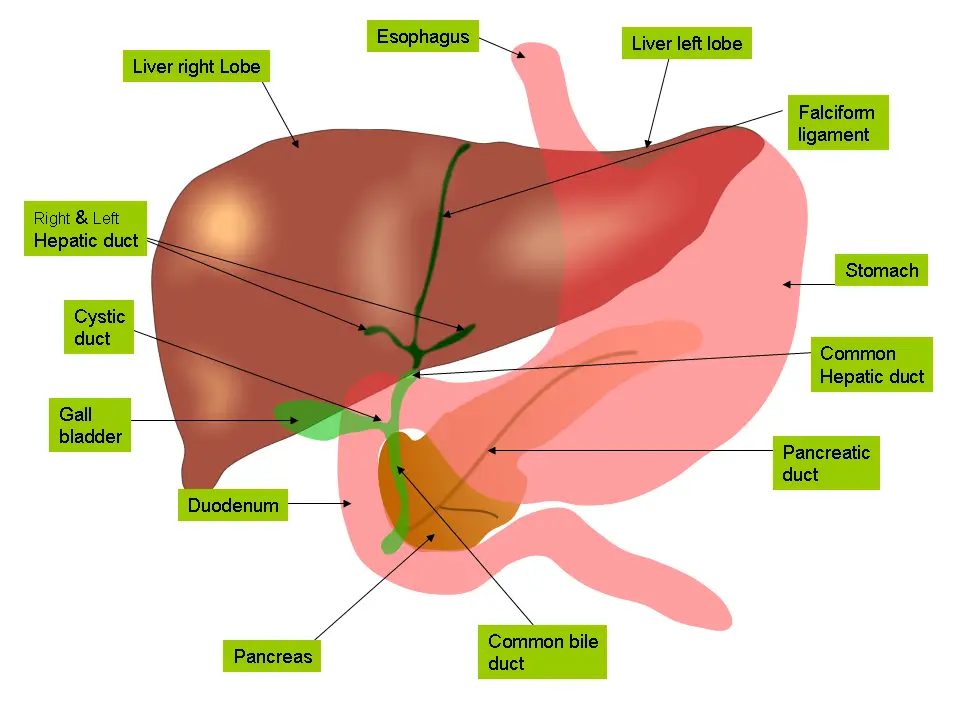
Accessory organs have a role in digestive activities, though they are not part of the gastrointestinal tract. Accessory organs include the salivary glands, liver, gallbladder, and pancreas. These structures secrete fluids into the GI tract, aiding in digestion. Each of these accessory organs will be discussed in the following sections.

Salivary glands

Three pairs of salivary glands are found in the mouth. The parotid glands are near the ear in the cheeks. The submandibular glands are on the floor of the mouth, and the sublingual glands are under the tongue. These glands produce and secrete saliva, which mixes with the food eaten. Saliva not only moistens the food but also aids in the breakdown and swallowing of food. Saliva contains salivary amylase, an enzyme that will be discussed later in the chapter.

Liver

The liver is one of the largest organs in the body and is located just below the diaphragm, in the right hypochondriac and epigastric regions. The liver is divided into two major lobes and two smaller lobes.

The hepatic artery brings oxygenated blood to the liver. The hepatic portal vein brings blood from the digestive tract, which can contain nutrients, medications, alcohol, and toxic substances. These substances are filtered from the blood and are processed, stored, changed, detoxified, and returned to the blood or eliminated in the stool. Besides these roles, the liver has additional important functions:

  • Producing plasma proteins (e.g., albumin and blood clotting factors).
  • Breaking down old or damaged blood cells.
  • Breaking down proteins and fats and producing energy.
  • Producing up to a liter of bile a day. Bile contains bilirubin (a breakdown product of red blood cells), bile acids or salts, cholesterol, water, salts (e.g., sodium, potassium), and metals (e.g., copper). Bile is stored in the gallbladder until it is secreted into the duodenum. Bile breaks down fats into fatty acids.
  • Removing extra minerals (e.g., iron and copper), vitamins (B12, A, D, and K), and glucose from the blood and storing them in the liver. The liver releases them into the blood when needed. (For instance, the liver stores extra glucose as glycogen. When the blood glucose level decreases, the liver breaks down the glycogen and releases the glucose into the blood.)
  • Manufacturing triglycerides and cholesterol.

Gallbladder

The gallbladder (GB) is found in a small area on the underside of the liver. The gallbladder stores and concentrates bile. The bile is made by the liver and then flows through the common bile duct to smaller ducts before going into the gallbladder, where it is stored. When a person eats, the gallbladder contracts and squeezes the bile through the bile duct and into the common bile duct before emptying into the duodenum. If gallbladder emptying is delayed (as in pregnancy), gallstone formation can occur.

Pancreas

The pancreas is a gland found behind the stomach and in front of the spine. It is about 6 to 10 inches long. The pancreas has two main roles:

  • Exocrine function: About 95% of the pancreas is made up of exocrine tissue that produces digestive enzymes. These enzymes are released into the duodenum.
  • Endocrine function: About 5% of the pancreas is made up of endocrine cells, called islets of Langerhans, which make hormones (e.g., insulin) that regulate blood sugar and pancreatic secretions.

The pancreatic enzymes created in the exocrine tissue include trypsin, chymotrypsin, amylase, and lipase. When food enters the stomach, pancreatic enzymes and sodium bicarbonate are released into the main pancreatic duct. This duct joins the common bile duct to form the ampulla of Vater (also called the hepatopancreatic duct or ampulla), which is located at the duodenum.

Anatomy of the stomach and small intestine labeled
Small intestine and stomach
Wikimedia Commons
/
CC BY-SA 4.0

Physiology of the gastrointestinal system

The role of the digestive system is to provide nutrients to the cells of the body. Four processes occur in the digestive system:

  • Ingestion: The intake of food and liquids into the body
  • Digestion: The breakdown of food into chemical substances
  • Absorption: The passage of substances and liquids through the lining of the GI tract into the body fluids and tissues
  • Excretion: The elimination of indigestible materials and waste products of metabolism

The following sections focus on the digestion, absorption, and elimination processes in the body.

Digestion

Once food is ingested, it must be digested for absorption to occur. Two digestive processes happen to break down food into chemical substances:

  • Mechanical digestion: The breakdown of food into smaller particles. This process starts in the mouth as the food is being chewed. The smooth muscles in the stomach provide the churning and mixing action, which also aids in the breakdown of the food.
  • Chemical digestion: The smaller particles of food are broken down into small molecules that can be absorbed.

Chemical digestion

Chemical digestion starts in the mouth. During mastication (the process of chewing), saliva moistens and aids in the breakdown and swallowing (deglutition) of food. Saliva contains an enzyme called salivary amylase, which starts to break down complex carbohydrates.

In the stomach, hydrochloric acid softens and breaks down proteins and other foods. The pH of hydrochloric acid also kills many pathogens (e.g., bacteria) that are consumed. Pepsin, an enzyme found in the gastric juices, breaks down proteins into amino acids.

Hydrochloric acid, amino acids, or fatty acids in the stomach or duodenum stimulate the small intestine to secrete cholecystokinin (CCK), a hormone. CCK causes the gallbladder to contract and release bile into the duodenum through the common bile duct. Bile from the liver is also secreted in the duodenum and emulsifies fats. CCK also increases secretion of pancreatic juices, which contain the following enzymes:

  • Trypsin and chymotrypsin: Break down proteins into amino acids
  • Amylase: Breaks down carbohydrates into sugars
  • Lipase: Breaks down fats into fatty acids and glycerol

Pancreatic juices also contain sodium bicarbonate, which helps to neutralize the acidity of the chyme in the duodenum.

In the small intestine, brush-border enzymes (sucrase, lactase, and maltase) are found in the microvilli. These enzymes help with the final breakdown of carbohydrates:

  • Sucrase: Breaks down sucrose (or cane sugar) into glucose and fructose.
  • Lactase: Breaks down lactose (found in milk) into galactose and glucose.
  • Maltase: Breaks down maltose (from starches) into glucose.

Absorption and excretion

Once chemical digestion is complete, small nutrient molecules move from the small intestines into the bloodstream through the process of absorption. As mentioned earlier, the villi and microvilli in the small intestine increase the surface area, which makes the absorption of nutrients more efficient. The lacteal in the villus absorbs lipids, and the capillary absorbs glucose and amino acids. Chemical digestion and nutrient absorption are completed by the time chyme leaves the small intestine.

As chyme moves through the large intestine, water and electrolytes are reabsorbed to prevent dehydration. The consistency of chyme changes to a soft-formed solid, called feces, which is excreted. The composition of feces is water, bacteria, undigested carbohydrates, fiber, and some protein and fat.

Life span changes of the gastrointestinal system

Throughout life, changes occur in both the GI tract and the accessory organs. The following sections discuss the changes that occur with age and pregnancy.

Changes with the GI tract

At birth, the baby’s digestive system is not fully mature. The infant does not have teeth to help break down food. Salivary secretions (which start starch breakdown) are insufficient until about 6 months of age. Pancreatic amylase levels may not be sufficient until 12 to 18 months of age. Bile salts and lipase levels are not sufficient until 6 to 9 months of age.

During pregnancy, progesterone (a hormone) causes the smooth muscles to relax. This causes less peristalsis in the digestive system, thus slowing digestion. Gallbladder emptying may be delayed, leading to gallstone formation. Morning sickness, constipation, and heartburn can result from digestive system changes.

With age, the stomach cannot accommodate as much food because of decreased elasticity. The stomach empties more slowly. The lactase levels also decrease with age, leading to lactose intolerance (milk products). Bacterial overgrowth (excessive growth of certain intestinal bacteria) is more common with age and leads to bloating, weight loss, and pain. Bacterial overgrowth can also lead to reduced absorption of certain nutrients (e.g., iron, calcium, and vitamin B12). With aging, constipation is more common and can be caused by many factors, including the following:

  • Slowing of fecal contents through the large intestine, allowing for more water absorption
  • Increased use of drugs that can cause constipation
  • Decreased physical activity and fluid intake

Changes with the accessory organs

Age-related changes can be seen with the accessory organs. A decrease of salivary flow is not related to age, although it is common in older adults. It is related to diseases, medications, and head and neck radiation therapy (used for cancers). The pancreas decreases in weight as some tissue is replaced with scar tissue, although these changes do not affect the organ’s ability to produce digestive enzymes and sodium bicarbonate. With age, the liver gets smaller, and blood flow decreases. Liver function test results, however, are unchanged. Metabolism of many substances decreases, which affects drug metabolism; thus, older adults may experience dose-related side effects. The production and flow of bile decrease with age, leading to more gallstones.

Common signs and symptoms of gastrointestinal disorders:

  • Constipation, diarrhea, hematochezia (bloody stool), and melena (black, tarry stools)
  • Pyrosis (heartburn), dyspepsia (indigestion), and flatus (gas)
  • Halitosis (bad-smelling breath)
  • Nausea, vomiting, and hematemesis (vomiting of blood)
  • Jaundice (yellowing of the skin and whites of the eyes caused by elevated bilirubin levels)

Accessory organs

  • Include salivary glands, liver, gallbladder, pancreas
  • Secrete fluids aiding digestion
  • Not part of GI tract but essential for digestive processes

Salivary glands

  • Three pairs: parotid, submandibular, sublingual
  • Produce saliva containing salivary amylase
  • Functions: moisten food, aid breakdown and swallowing

Liver

  • Largest internal organ, located below diaphragm
  • Functions:
    • Filters/processes blood from GI tract (nutrients, toxins)
    • Produces bile (emulsifies fats), plasma proteins, triglycerides, cholesterol
    • Stores vitamins, minerals, glucose (as glycogen)
    • Breaks down old blood cells, proteins, fats

Gallbladder

  • Stores and concentrates bile from liver
  • Releases bile into duodenum during digestion
  • Delayed emptying can cause gallstones

Pancreas

  • Located behind stomach; both exocrine and endocrine functions
    • Exocrine: produces digestive enzymes (trypsin, chymotrypsin, amylase, lipase)
    • Endocrine: islets of Langerhans produce hormones (insulin)
  • Enzymes and bicarbonate released into duodenum via pancreatic duct

Physiology of the gastrointestinal system

  • Four main processes:
    • Ingestion: intake of food/liquids
    • Digestion: breakdown of food
    • Absorption: nutrients enter body fluids/tissues
    • Excretion: elimination of waste

Digestion

  • Mechanical digestion: physical breakdown (chewing, stomach churning)
  • Chemical digestion: enzymatic breakdown into absorbable molecules

Chemical digestion

  • Begins in mouth with salivary amylase (carbohydrate breakdown)
  • Stomach: hydrochloric acid (protein breakdown, pathogen destruction), pepsin (proteins to amino acids)
  • Small intestine:
    • Cholecystokinin (CCK) triggers bile and pancreatic enzyme release
    • Pancreatic enzymes:
      • Trypsin/chymotrypsin: proteins → amino acids
      • Amylase: carbohydrates → sugars
      • Lipase: fats → fatty acids/glycerol
    • Sodium bicarbonate neutralizes chyme
    • Brush-border enzymes (sucrase, lactase, maltase) complete carbohydrate digestion

Absorption and excretion

  • Nutrients absorbed in small intestine via villi/microvilli
    • Lacteals absorb lipids; capillaries absorb glucose/amino acids
  • Large intestine reabsorbs water/electrolytes
  • Feces: water, bacteria, undigested carbohydrates, fiber, some protein/fat

Life span changes of the gastrointestinal system

Changes with the GI tract

  • Infants: immature digestion (low enzyme levels, no teeth)
  • Pregnancy: slowed peristalsis, delayed gallbladder emptying, increased constipation/heartburn
  • Aging: decreased stomach elasticity, slower emptying, reduced lactase (lactose intolerance), increased bacterial overgrowth, constipation

Changes with the accessory organs

  • Salivary flow decrease due to disease/medications, not age
  • Pancreas: decreased weight, some tissue replaced by scar, enzyme production maintained
  • Liver: smaller size, decreased blood flow, slower metabolism (affects drug processing), decreased bile production/flow (more gallstones)

Common signs and symptoms of gastrointestinal disorders

  • Constipation, diarrhea, hematochezia, melena
  • Heartburn (pyrosis), indigestion (dyspepsia), gas (flatus)
  • Halitosis (bad breath)
  • Nausea, vomiting, hematemesis
  • Jaundice (elevated bilirubin)

Sign up for free to take 28 quiz questions on this topic

Previous
Next  | 22.3 Chronic intestinal disorders, accessory organ diseases, and GI cancers
All rights reserved ©2016 - 2026 Achievable, Inc.

The anatomy of the gastrointestinal tract and accessory organs

Accessory organs

Accessory organs have a role in digestive activities, though they are not part of the gastrointestinal tract. Accessory organs include the salivary glands, liver, gallbladder, and pancreas. These structures secrete fluids into the GI tract, aiding in digestion. Each of these accessory organs will be discussed in the following sections.

Salivary glands

Three pairs of salivary glands are found in the mouth. The parotid glands are near the ear in the cheeks. The submandibular glands are on the floor of the mouth, and the sublingual glands are under the tongue. These glands produce and secrete saliva, which mixes with the food eaten. Saliva not only moistens the food but also aids in the breakdown and swallowing of food. Saliva contains salivary amylase, an enzyme that will be discussed later in the chapter.

Liver

The liver is one of the largest organs in the body and is located just below the diaphragm, in the right hypochondriac and epigastric regions. The liver is divided into two major lobes and two smaller lobes.

The hepatic artery brings oxygenated blood to the liver. The hepatic portal vein brings blood from the digestive tract, which can contain nutrients, medications, alcohol, and toxic substances. These substances are filtered from the blood and are processed, stored, changed, detoxified, and returned to the blood or eliminated in the stool. Besides these roles, the liver has additional important functions:

  • Producing plasma proteins (e.g., albumin and blood clotting factors).
  • Breaking down old or damaged blood cells.
  • Breaking down proteins and fats and producing energy.
  • Producing up to a liter of bile a day. Bile contains bilirubin (a breakdown product of red blood cells), bile acids or salts, cholesterol, water, salts (e.g., sodium, potassium), and metals (e.g., copper). Bile is stored in the gallbladder until it is secreted into the duodenum. Bile breaks down fats into fatty acids.
  • Removing extra minerals (e.g., iron and copper), vitamins (B12, A, D, and K), and glucose from the blood and storing them in the liver. The liver releases them into the blood when needed. (For instance, the liver stores extra glucose as glycogen. When the blood glucose level decreases, the liver breaks down the glycogen and releases the glucose into the blood.)
  • Manufacturing triglycerides and cholesterol.

Gallbladder

The gallbladder (GB) is found in a small area on the underside of the liver. The gallbladder stores and concentrates bile. The bile is made by the liver and then flows through the common bile duct to smaller ducts before going into the gallbladder, where it is stored. When a person eats, the gallbladder contracts and squeezes the bile through the bile duct and into the common bile duct before emptying into the duodenum. If gallbladder emptying is delayed (as in pregnancy), gallstone formation can occur.

Pancreas

The pancreas is a gland found behind the stomach and in front of the spine. It is about 6 to 10 inches long. The pancreas has two main roles:

  • Exocrine function: About 95% of the pancreas is made up of exocrine tissue that produces digestive enzymes. These enzymes are released into the duodenum.
  • Endocrine function: About 5% of the pancreas is made up of endocrine cells, called islets of Langerhans, which make hormones (e.g., insulin) that regulate blood sugar and pancreatic secretions.

The pancreatic enzymes created in the exocrine tissue include trypsin, chymotrypsin, amylase, and lipase. When food enters the stomach, pancreatic enzymes and sodium bicarbonate are released into the main pancreatic duct. This duct joins the common bile duct to form the ampulla of Vater (also called the hepatopancreatic duct or ampulla), which is located at the duodenum.

Physiology of the gastrointestinal system

The role of the digestive system is to provide nutrients to the cells of the body. Four processes occur in the digestive system:

  • Ingestion: The intake of food and liquids into the body
  • Digestion: The breakdown of food into chemical substances
  • Absorption: The passage of substances and liquids through the lining of the GI tract into the body fluids and tissues
  • Excretion: The elimination of indigestible materials and waste products of metabolism

The following sections focus on the digestion, absorption, and elimination processes in the body.

Digestion

Once food is ingested, it must be digested for absorption to occur. Two digestive processes happen to break down food into chemical substances:

  • Mechanical digestion: The breakdown of food into smaller particles. This process starts in the mouth as the food is being chewed. The smooth muscles in the stomach provide the churning and mixing action, which also aids in the breakdown of the food.
  • Chemical digestion: The smaller particles of food are broken down into small molecules that can be absorbed.

Chemical digestion

Chemical digestion starts in the mouth. During mastication (the process of chewing), saliva moistens and aids in the breakdown and swallowing (deglutition) of food. Saliva contains an enzyme called salivary amylase, which starts to break down complex carbohydrates.

In the stomach, hydrochloric acid softens and breaks down proteins and other foods. The pH of hydrochloric acid also kills many pathogens (e.g., bacteria) that are consumed. Pepsin, an enzyme found in the gastric juices, breaks down proteins into amino acids.

Hydrochloric acid, amino acids, or fatty acids in the stomach or duodenum stimulate the small intestine to secrete cholecystokinin (CCK), a hormone. CCK causes the gallbladder to contract and release bile into the duodenum through the common bile duct. Bile from the liver is also secreted in the duodenum and emulsifies fats. CCK also increases secretion of pancreatic juices, which contain the following enzymes:

  • Trypsin and chymotrypsin: Break down proteins into amino acids
  • Amylase: Breaks down carbohydrates into sugars
  • Lipase: Breaks down fats into fatty acids and glycerol

Pancreatic juices also contain sodium bicarbonate, which helps to neutralize the acidity of the chyme in the duodenum.

In the small intestine, brush-border enzymes (sucrase, lactase, and maltase) are found in the microvilli. These enzymes help with the final breakdown of carbohydrates:

  • Sucrase: Breaks down sucrose (or cane sugar) into glucose and fructose.
  • Lactase: Breaks down lactose (found in milk) into galactose and glucose.
  • Maltase: Breaks down maltose (from starches) into glucose.

Absorption and excretion

Once chemical digestion is complete, small nutrient molecules move from the small intestines into the bloodstream through the process of absorption. As mentioned earlier, the villi and microvilli in the small intestine increase the surface area, which makes the absorption of nutrients more efficient. The lacteal in the villus absorbs lipids, and the capillary absorbs glucose and amino acids. Chemical digestion and nutrient absorption are completed by the time chyme leaves the small intestine.

As chyme moves through the large intestine, water and electrolytes are reabsorbed to prevent dehydration. The consistency of chyme changes to a soft-formed solid, called feces, which is excreted. The composition of feces is water, bacteria, undigested carbohydrates, fiber, and some protein and fat.

Life span changes of the gastrointestinal system

Throughout life, changes occur in both the GI tract and the accessory organs. The following sections discuss the changes that occur with age and pregnancy.

Changes with the GI tract

At birth, the baby’s digestive system is not fully mature. The infant does not have teeth to help break down food. Salivary secretions (which start starch breakdown) are insufficient until about 6 months of age. Pancreatic amylase levels may not be sufficient until 12 to 18 months of age. Bile salts and lipase levels are not sufficient until 6 to 9 months of age.

During pregnancy, progesterone (a hormone) causes the smooth muscles to relax. This causes less peristalsis in the digestive system, thus slowing digestion. Gallbladder emptying may be delayed, leading to gallstone formation. Morning sickness, constipation, and heartburn can result from digestive system changes.

With age, the stomach cannot accommodate as much food because of decreased elasticity. The stomach empties more slowly. The lactase levels also decrease with age, leading to lactose intolerance (milk products). Bacterial overgrowth (excessive growth of certain intestinal bacteria) is more common with age and leads to bloating, weight loss, and pain. Bacterial overgrowth can also lead to reduced absorption of certain nutrients (e.g., iron, calcium, and vitamin B12). With aging, constipation is more common and can be caused by many factors, including the following:

  • Slowing of fecal contents through the large intestine, allowing for more water absorption
  • Increased use of drugs that can cause constipation
  • Decreased physical activity and fluid intake

Changes with the accessory organs

Age-related changes can be seen with the accessory organs. A decrease of salivary flow is not related to age, although it is common in older adults. It is related to diseases, medications, and head and neck radiation therapy (used for cancers). The pancreas decreases in weight as some tissue is replaced with scar tissue, although these changes do not affect the organ’s ability to produce digestive enzymes and sodium bicarbonate. With age, the liver gets smaller, and blood flow decreases. Liver function test results, however, are unchanged. Metabolism of many substances decreases, which affects drug metabolism; thus, older adults may experience dose-related side effects. The production and flow of bile decrease with age, leading to more gallstones.

Common signs and symptoms of gastrointestinal disorders:

  • Constipation, diarrhea, hematochezia (bloody stool), and melena (black, tarry stools)
  • Pyrosis (heartburn), dyspepsia (indigestion), and flatus (gas)
  • Halitosis (bad-smelling breath)
  • Nausea, vomiting, and hematemesis (vomiting of blood)
  • Jaundice (yellowing of the skin and whites of the eyes caused by elevated bilirubin levels)
Key points

Accessory organs

  • Include salivary glands, liver, gallbladder, pancreas
  • Secrete fluids aiding digestion
  • Not part of GI tract but essential for digestive processes

Salivary glands

  • Three pairs: parotid, submandibular, sublingual
  • Produce saliva containing salivary amylase
  • Functions: moisten food, aid breakdown and swallowing

Liver

  • Largest internal organ, located below diaphragm
  • Functions:
    • Filters/processes blood from GI tract (nutrients, toxins)
    • Produces bile (emulsifies fats), plasma proteins, triglycerides, cholesterol
    • Stores vitamins, minerals, glucose (as glycogen)
    • Breaks down old blood cells, proteins, fats

Gallbladder

  • Stores and concentrates bile from liver
  • Releases bile into duodenum during digestion
  • Delayed emptying can cause gallstones

Pancreas

  • Located behind stomach; both exocrine and endocrine functions
    • Exocrine: produces digestive enzymes (trypsin, chymotrypsin, amylase, lipase)
    • Endocrine: islets of Langerhans produce hormones (insulin)
  • Enzymes and bicarbonate released into duodenum via pancreatic duct

Physiology of the gastrointestinal system

  • Four main processes:
    • Ingestion: intake of food/liquids
    • Digestion: breakdown of food
    • Absorption: nutrients enter body fluids/tissues
    • Excretion: elimination of waste

Digestion

  • Mechanical digestion: physical breakdown (chewing, stomach churning)
  • Chemical digestion: enzymatic breakdown into absorbable molecules

Chemical digestion

  • Begins in mouth with salivary amylase (carbohydrate breakdown)
  • Stomach: hydrochloric acid (protein breakdown, pathogen destruction), pepsin (proteins to amino acids)
  • Small intestine:
    • Cholecystokinin (CCK) triggers bile and pancreatic enzyme release
    • Pancreatic enzymes:
      • Trypsin/chymotrypsin: proteins → amino acids
      • Amylase: carbohydrates → sugars
      • Lipase: fats → fatty acids/glycerol
    • Sodium bicarbonate neutralizes chyme
    • Brush-border enzymes (sucrase, lactase, maltase) complete carbohydrate digestion

Absorption and excretion

  • Nutrients absorbed in small intestine via villi/microvilli
    • Lacteals absorb lipids; capillaries absorb glucose/amino acids
  • Large intestine reabsorbs water/electrolytes
  • Feces: water, bacteria, undigested carbohydrates, fiber, some protein/fat

Life span changes of the gastrointestinal system

Changes with the GI tract

  • Infants: immature digestion (low enzyme levels, no teeth)
  • Pregnancy: slowed peristalsis, delayed gallbladder emptying, increased constipation/heartburn
  • Aging: decreased stomach elasticity, slower emptying, reduced lactase (lactose intolerance), increased bacterial overgrowth, constipation

Changes with the accessory organs

  • Salivary flow decrease due to disease/medications, not age
  • Pancreas: decreased weight, some tissue replaced by scar, enzyme production maintained
  • Liver: smaller size, decreased blood flow, slower metabolism (affects drug processing), decreased bile production/flow (more gallstones)

Common signs and symptoms of gastrointestinal disorders

  • Constipation, diarrhea, hematochezia, melena
  • Heartburn (pyrosis), indigestion (dyspepsia), gas (flatus)
  • Halitosis (bad breath)
  • Nausea, vomiting, hematemesis
  • Jaundice (elevated bilirubin)

More from Assisting in gastroenterology

  • Assisting in gastroenterology
  • Chronic intestinal disorders, accessory organ diseases, and GI cancers
  • Additional digestive system diseases and disorders
  • Diseases and disorders of the upper GI tract and acute intestinal conditions
  • The medical assistant’s role in examinations, procedures, and treatments