
Achievable logoAchievable logo
CA Code and Ethics
Sign in
Sign up
Purchase
Textbook
Practice exams
Support
How it works
Exam catalog
Mountain with a flag at the peak
Textbook
Introduction
1. Basic insurance concepts and principles
2. The insurance marketplace
2.1 Introduction and learning objectives
2.2 Insurance distribution channels
2.3 Producers
2.4 Errors & omissions insurance
2.5 Insurers
2.6 Market regulation - General
2.6.1 Regulatory framework
2.6.2 Insurance code and regulations
2.7 Fair claims settlement practices and regulations
3. Required fraud training — CDI
Wrapping up
Achievable logoAchievable logo
2.6.1 Regulatory framework
CA Code and Ethics
2. The insurance marketplace
2.6. Market regulation - General
Our California Insurance Code and Ethics course is currently in development and is a work-in-progress.

Regulatory framework

4 min read
Font
Discuss
Share
Feedback

In California, the Insurance Commissioner isn’t an appointed bureaucrat - they’re elected directly by voters. That makes California one of the few states where the public chooses the top insurance regulator, creating direct accountability to the people rather than to elected officials who make appointments or to industry influence.

The Commissioner has two core roles:

  • Regulator: Oversees the insurance marketplace by making sure insurers, agents, and brokers are properly licensed and follow California’s insurance laws and regulations.
  • Consumer advocate: Protects policyholders by reviewing rates for fairness (in certain lines), investigating fraud, and responding to consumer complaints.

The Commissioner also has meaningful authority over rates in certain lines, such as auto and homeowners insurance. That means the Commissioner’s decisions can directly affect how much Californians pay for coverage.

California’s insurance regulation system is designed to balance three goals: consumer protection, insurer solvency, and fair competition. This framework relies on both statutory law and administrative rules, backed by strong enforcement authority granted to the California Department of Insurance (CDI).

Understanding statutory language is essential because legal terms often have specific meanings that don’t match everyday usage. Some common terms in the California Insurance Code include:

  • “Shall” (CIC §16) = Mandatory action.
  • “May” (CIC §16) = Discretionary action.
  • “Person” (CIC §19) = Broad term that includes individuals, associations, corporations, and partnerships.
  • Notice by mail (CIC §38) = If properly addressed and postage paid, notice is considered legally served even if the recipient does not physically receive it.

California Insurance Code (CIC)

Definitions
CIC (California Insurance Code)
The CIC is a comprehensive set of laws enacted by the California Legislature to govern all aspects of insurance within the state.
  • Scope of coverage:

    • Licensing requirements for agents, brokers, and insurers
    • Solvency standards and capital requirements for insurers
    • Rules for insurance contracts and disclosures
    • Claims handling and fair claims settlement practices
    • Anti-fraud provisions (e.g., mandatory SIUs, fraud warning statements)
    • Consumer protections, including privacy and unfair practice prohibitions
  • Living law:

    • The CIC evolves continuously through legislative updates, ballot initiatives, and regulatory amendments.
    • This helps the law respond to emerging risks (e.g., wildfire coverage rules, cyber insurance, consumer privacy).

Example: CIC requires that every insurance policy contain certain elements (CIC §381), including the parties, subject of insurance, risks insured, coverage period, and premium basis.

California Code of Regulations (CCR), Title 10, Chapter 5

Definitions
CCR (California Code of Regulations)
The CCR is a set of administrative regulations adopted by the CDI under the authority of the CIC.
  • Purpose:

    • The CIC explains what the law requires.
    • The CCR provides the detailed rules on how to comply.
  • Enforcement role:

    • Failure to comply with CCR requirements can result in regulatory penalties, fines, or license suspension.
    • Insurers and agents are held accountable not only to the CIC’s broad requirements, but also to the CCR’s technical standards.

Example: CIC requires insurers to maintain Special Investigation Units (SIUs) (Cal. Ins. Code §§1875.20-1875.23).

CCR Title 10, Chapter 5 (e.g., §2698.30 et seq.) specifies minimum SIU standards, including staffing, training, and referral procedures to CDI.

California Insurance Regulation: CIC vs. CCR

Category California Insurance Code (CIC) California Code of Regulations (CCR), Title 10, Chapter 5
What it is Statutory law enacted by the California Legislature Administrative rules issued by the California Department of Insurance (CDI)
Purpose Defines the legal requirements governing the business of insurance Explains how to comply with the CIC’s requirements in detail
Authority Legislative authority (laws passed by elected officials) Regulatory authority (rules created by CDI under CIC delegation)
Scope Covers procedures, operational standards, and invalidation Covers procedures, operational standards, reporting rules, and enforcement practices
Enforcement Violations can lead to fines, rescission, and policy invalidation Violations can lead to administrative penalties, sanctions, or loss of license
Update process Changed through legislation or ballot initiatives Updated by CDI rulemaking (with public notice and comment)

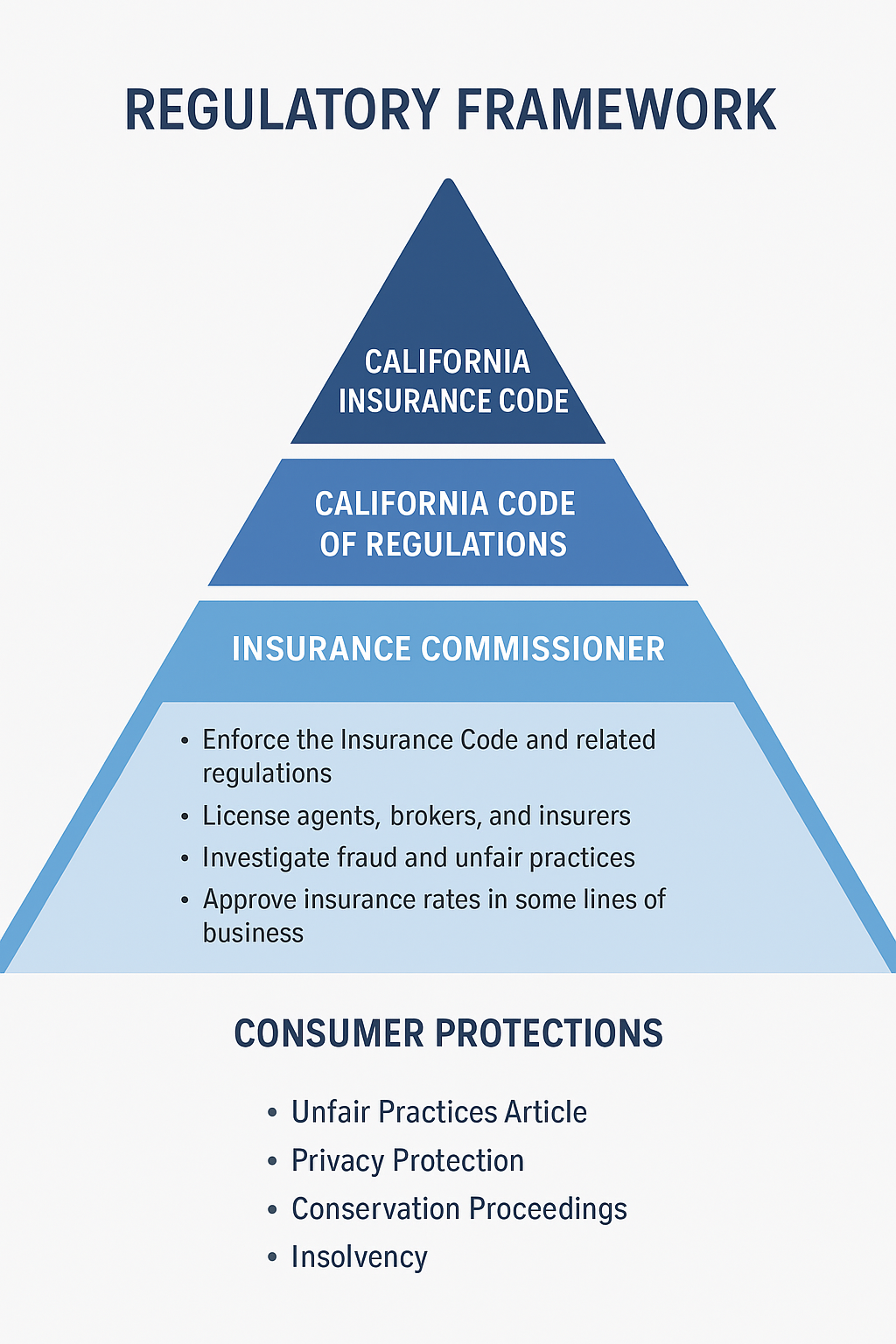
Regulatory Framework

CID = Regulatory “who”

CIC = Legislative “what”

CCR = Administrative “how”

Together, they form the backbone of California’s insurance regulatory framework.

Sign up for free to take 5 quiz questions on this topic

All rights reserved ©2016 - 2026 Achievable, Inc.

Regulatory framework

In California, the Insurance Commissioner isn’t an appointed bureaucrat - they’re elected directly by voters. That makes California one of the few states where the public chooses the top insurance regulator, creating direct accountability to the people rather than to elected officials who make appointments or to industry influence.

The Commissioner has two core roles:

  • Regulator: Oversees the insurance marketplace by making sure insurers, agents, and brokers are properly licensed and follow California’s insurance laws and regulations.
  • Consumer advocate: Protects policyholders by reviewing rates for fairness (in certain lines), investigating fraud, and responding to consumer complaints.

The Commissioner also has meaningful authority over rates in certain lines, such as auto and homeowners insurance. That means the Commissioner’s decisions can directly affect how much Californians pay for coverage.

California’s insurance regulation system is designed to balance three goals: consumer protection, insurer solvency, and fair competition. This framework relies on both statutory law and administrative rules, backed by strong enforcement authority granted to the California Department of Insurance (CDI).

Understanding statutory language is essential because legal terms often have specific meanings that don’t match everyday usage. Some common terms in the California Insurance Code include:

  • “Shall” (CIC §16) = Mandatory action.
  • “May” (CIC §16) = Discretionary action.
  • “Person” (CIC §19) = Broad term that includes individuals, associations, corporations, and partnerships.
  • Notice by mail (CIC §38) = If properly addressed and postage paid, notice is considered legally served even if the recipient does not physically receive it.

California Insurance Code (CIC)

Definitions
CIC (California Insurance Code)
The CIC is a comprehensive set of laws enacted by the California Legislature to govern all aspects of insurance within the state.
  • Scope of coverage:

    • Licensing requirements for agents, brokers, and insurers
    • Solvency standards and capital requirements for insurers
    • Rules for insurance contracts and disclosures
    • Claims handling and fair claims settlement practices
    • Anti-fraud provisions (e.g., mandatory SIUs, fraud warning statements)
    • Consumer protections, including privacy and unfair practice prohibitions
  • Living law:

    • The CIC evolves continuously through legislative updates, ballot initiatives, and regulatory amendments.
    • This helps the law respond to emerging risks (e.g., wildfire coverage rules, cyber insurance, consumer privacy).

Example: CIC requires that every insurance policy contain certain elements (CIC §381), including the parties, subject of insurance, risks insured, coverage period, and premium basis.

California Code of Regulations (CCR), Title 10, Chapter 5

Definitions
CCR (California Code of Regulations)
The CCR is a set of administrative regulations adopted by the CDI under the authority of the CIC.
  • Purpose:

    • The CIC explains what the law requires.
    • The CCR provides the detailed rules on how to comply.
  • Enforcement role:

    • Failure to comply with CCR requirements can result in regulatory penalties, fines, or license suspension.
    • Insurers and agents are held accountable not only to the CIC’s broad requirements, but also to the CCR’s technical standards.

Example: CIC requires insurers to maintain Special Investigation Units (SIUs) (Cal. Ins. Code §§1875.20-1875.23).

CCR Title 10, Chapter 5 (e.g., §2698.30 et seq.) specifies minimum SIU standards, including staffing, training, and referral procedures to CDI.

California Insurance Regulation: CIC vs. CCR

Category California Insurance Code (CIC) California Code of Regulations (CCR), Title 10, Chapter 5
What it is Statutory law enacted by the California Legislature Administrative rules issued by the California Department of Insurance (CDI)
Purpose Defines the legal requirements governing the business of insurance Explains how to comply with the CIC’s requirements in detail
Authority Legislative authority (laws passed by elected officials) Regulatory authority (rules created by CDI under CIC delegation)
Scope Covers procedures, operational standards, and invalidation Covers procedures, operational standards, reporting rules, and enforcement practices
Enforcement Violations can lead to fines, rescission, and policy invalidation Violations can lead to administrative penalties, sanctions, or loss of license
Update process Changed through legislation or ballot initiatives Updated by CDI rulemaking (with public notice and comment)

Regulatory Framework

Key points

CID = Regulatory “who”

CIC = Legislative “what”

CCR = Administrative “how”

Together, they form the backbone of California’s insurance regulatory framework.

More from Market regulation - General

  • Insurance code and regulations