Core information
Patient safety on the PTCE is taught across six pages. Those pages are High-alert and look-alike/sound-alike medications, Error prevention strategies, Issues that require pharmacist intervention, Event reporting procedures, Types of prescription errors, and Infection prevention and cleaning standards. This page covers the background those pages build on: LASA medications and who is most at risk, how medication and dispensing errors are classified, NDC numbers, and how errors are reported.
Look-alike/sound-alike (LASA) medications
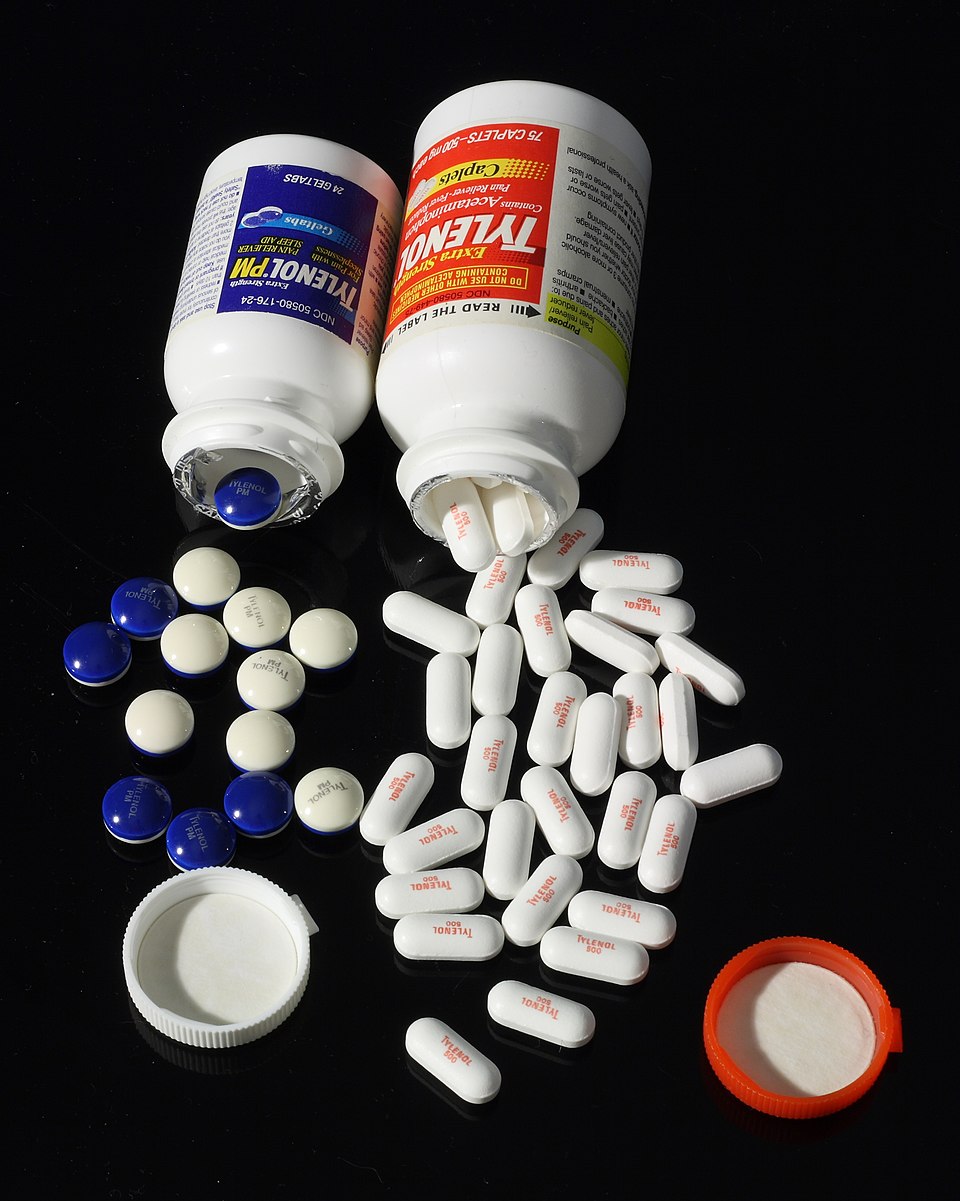
Look-alike, sound-alike (LASA) medications are drugs that can be confused with each other because they:
- Look similar (packaging, color, size, or shape)
- Sound similar (names that are pronounced similarly)
- Have similar doses or strengths
These mix-ups can cause errors during ordering, prescribing, filling, dispensing, or use. Errors caused by these similarities are called LASA errors. A LASA error is a type of medication error.
Examples of sound-alike medications include oxycodone and OxyContin, and bupropion and buspirone.
Confusion can also happen between different strengths of the same medication. For example, warfarin tablets come in strengths from 1 to 10 mg. A misread or miscommunicated strength can lead to an overdose or an underdose. Either outcome can cause serious harm.
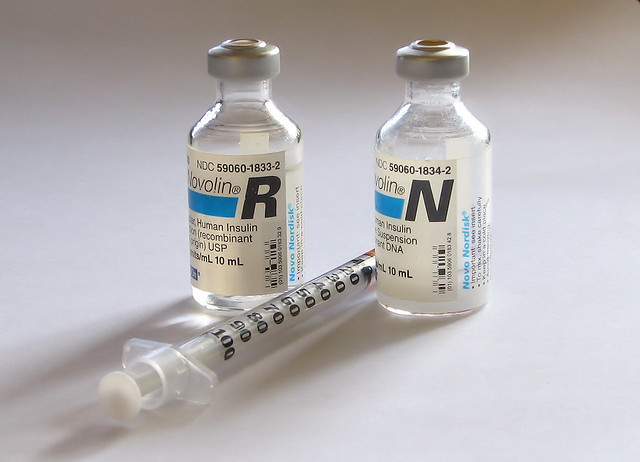
Another common source of LASA errors is mixing up different forms of insulin, such as:
- HumuLIN® R U-500 (Regular insulin human)
- HumuLIN® N NPH (human insulin isophane)
Similar packaging, labeling, and coloring can also cause errors. In previously reported LASA errors, vials of tranexamic acid (used to control bleeding) were confused with bupivacaine or ropivacaine. The bottles were similar in size and had blue caps. These errors are especially common with anesthetic drugs.
LASA errors can have severe outcomes, including overdosing, underdosing, or unintended use of a medication. The risk is especially serious in:
- Pregnant patients
- Older adults
- Very young patients
- Patients with organ dysfunction
Other factors that increase LASA risk include illegible handwriting and having multiple dosage forms (for example, slow-release vs normal release).
The following steps can help prevent LASA errors:
- Use “tall man” lettering on labels and packaging of error-prone medications, e.g., buPROPion and busPIRone, metFORMIN and metroNIDAZOLE, or hydrALAZINE and hydrOXYzine.
- Use color coding for different strengths of the same medication, e.g., warfarin 2.5 mg tablet is green while warfarin 4 mg tablet is blue.
- Write prescriptions with details like indication, diagnosis, dose, strength, route of administration, and formulation so the pharmacist can easily verify them.
- Store LASA medications in separate locations or non-alphabetically. Label bins or shelves with brand names for LASA medications.
High-alert and look-alike/sound-alike medications and Error prevention strategies cover other safeguards, such as double-check systems, barcode scanning, and patient education.
Medication and dispensing errors
Medication errors: Medication errors are any preventable events that may cause or lead to inappropriate medication use or patient harm while the medication is controlled by a healthcare professional, patient, or consumer. Medication errors can occur at any stage, including ordering, prescribing, transcribing, dispensing, administering, or monitoring a drug.
Dispensing errors: Dispensing errors are medication errors linked to the pharmacy (or to the healthcare professional who dispenses the medication). A dispensing error causes a deviation from the prescription and can be classified as follows -
- Dose/item error - when the wrong drug or strength is selected
- Labeling error - incorrect labeling
- Documentation error - correct medication is dispensed, but there are errors in the documentation.
Common dispensing errors
| Type | Example |
|---|---|
| Trailing zero | 1.0 mg read as 10 mg |
| Decimal point error | 0.5 mg read as 5 mg |
| Abbreviation errors | AZT (zidovudine) mistaken as azathioprine |
| Sig abbreviations | Misinterpreting “qod” to “qd” or “AD” to “OD” |
To prevent these errors, always write a leading zero before a decimal (0.5 mg, not .5 mg), never write a trailing zero (1 mg, not 1.0 mg), and avoid error-prone abbreviations such as qd, qod and AD/OD.
Common reasons for medication and dispensing errors include:
- Failure to communicate drug orders
- Illegible handwriting
- Distractions
- Wrong drug selection from a drop-down menu
- Confusion over similarly named drugs
- Confusion due to similar packaging between products
- Compounding errors
- Errors involving dosing units or weight
Identifying high-alert medications is part of error prevention, since errors involving them can cause serious harm or death. These medications require barcode scanning in hospitalized patients to verify the drug, dose, route, patient, and time before delivery, and include anticoagulants (warfarin, heparin), insulin, IV antiarrhythmics (amiodarone, lidocaine), and magnesium sulfate injection, per the ISMP List of High-Alert Medications in Acute Care Settings (2024).
NDC number and UPC code
NDC stands for National drug code, a unique 10-digit number assigned to prescription and over-the-counter drugs. It helps pharmacy professionals, healthcare providers, and insurance companies identify drugs.
The 10-digit NDC appears in one of the following configurations:
- 4-4-2
- 5-3-2
- 5-4-1
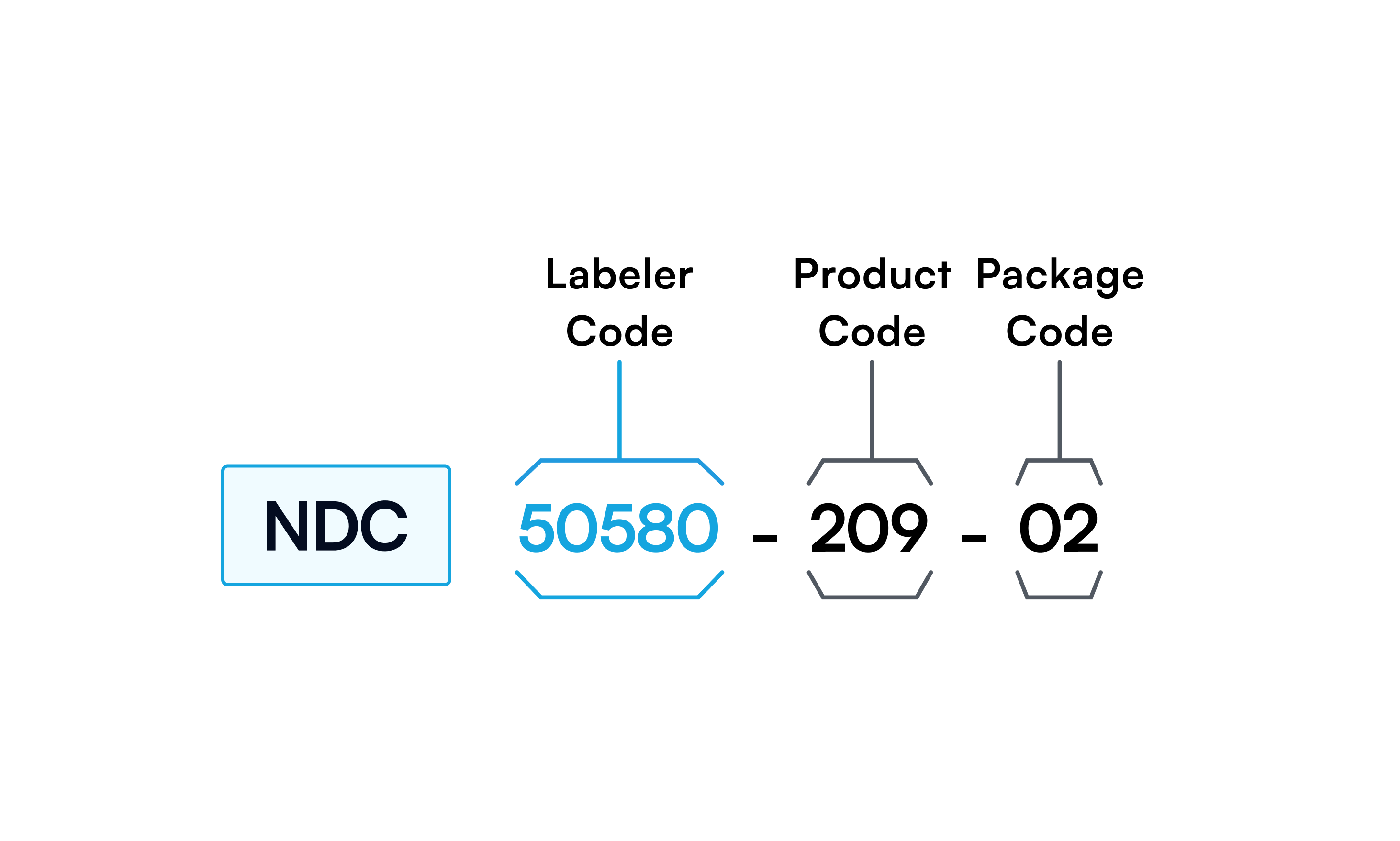
The NDC has three segments:
- Labeler code (first segment, assigned by the FDA)
- Product code (second segment)
- Package code (third segment)
The product code indicates the drug’s strength, form, and formulation. The package code indicates the package form and size.
The NDC helps choose the correct drug and strength. It can also help identify drug-drug interactions, reduce errors, and facilitate processing drug returns.
Generally, the NDC number on the package is a 10-digit number and must be expanded to 11 digits by inserting a “0” in the appropriate spot for insurance and billing purposes. Which spot depends on the package’s configuration:
- 4-4-2 → add the zero to the start of the labeler segment:
- 5-3-2 → add the zero to the start of the product segment:
- 5-4-1 → add the zero to the start of the package segment:
Example: Converting an NDC for billing
The NDC in the figure is 50580-209-02, a 5-3-2 configuration. Add a zero to the start of the product segment: 50580-0209-02 (11 digits).
The NDC can be converted into a scannable barcode, known as a UPC code. The UPC code is a 12-digit number.
Event reporting
Healthcare professionals and patients can voluntarily report medication errors and adverse events to the FDA. A near miss is an error caught before it reached the patient. A near miss is still worth reporting, since it reveals the same system weaknesses that a harmful error would.
FDA MedWatch: Patients and healthcare practitioners use FDA MedWatch to report medication errors, drug adverse events, and product quality or integrity problems. MedWatch does not take vaccine adverse events.
VAERS: The vaccine adverse event reporting system (VAERS) is used to report vaccine-related adverse events. It is co-administered by the FDA and CDC.
AEMS (formerly FAERS): The FDA Adverse Event Monitoring System (AEMS), formerly the FDA Adverse Event Reporting System (FAERS), is the database that stores the adverse event and medication error reports submitted through MedWatch. Healthcare professionals, consumers, and manufacturers can also submit reports directly to AEMS.
See Event reporting procedures for full detail on these reporting systems.
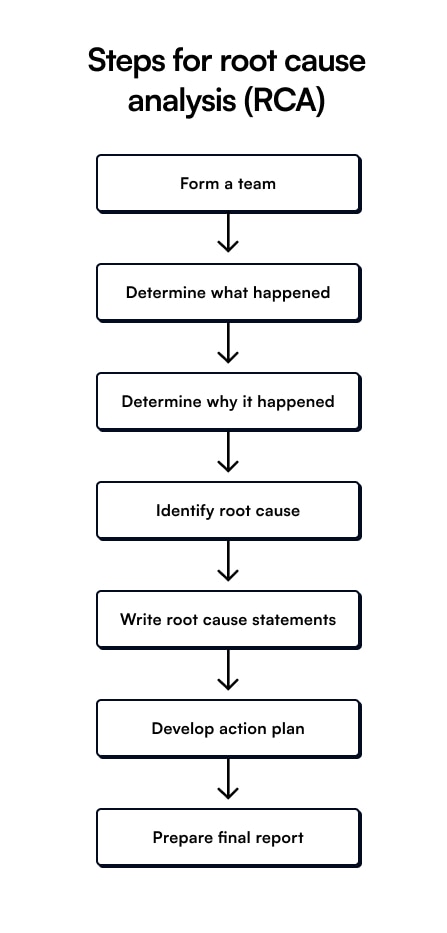
Root-cause analysis (RCA)
Root cause analysis (RCA) consists of procedures used to identify the cause of an error, such as a medication error, and to suggest ways to prevent it. A sentinel event is a patient safety event that reaches the patient and results in death, permanent harm, or severe harm. The Joint Commission requires an RCA (or similar systematic analysis) after every sentinel event.
Continuous quality improvement (CQI) is the ongoing process of using error reports and root cause analyses to improve pharmacy systems and prevent future errors.