



Achievable logoAchievable logo
CMA Part 1
Sign in
Sign up
Purchase
Textbook
Practice exams
Support
How it works
Exam catalog
Mountain with a flag at the peak
Textbook
1. External financial reporting decisions
2. Planning, budgeting, and forecasting
3. Performance management
4. Cost management
5. Internal control
6. Technology and analytics
Achievable logoAchievable logo
6.2.1.3 Innovative applications
Achievable CMA Part 1
6. Technology and analytics
6.2. Data governance
6.2.1. Technology-enabled finance transformation
Our CMA Part 1 course is currently in development and is a work-in-progress.

Innovative applications

9 min read
Font
Discuss
Share
Feedback

Learning outcome statements

The learning outcome statements relevant for this section are:

  1. evaluate where technologies can improve efficiency and effectiveness of processing accounting data and information (e.g., artificial intelligence (AI))
  2. define cloud computing and describe how it can improve efficiency
  3. define software-as-a-service (SaaS) and explain its advantages and disadvantages
  4. recognize potential applications of blockchain, distributed ledger, and smart contracts
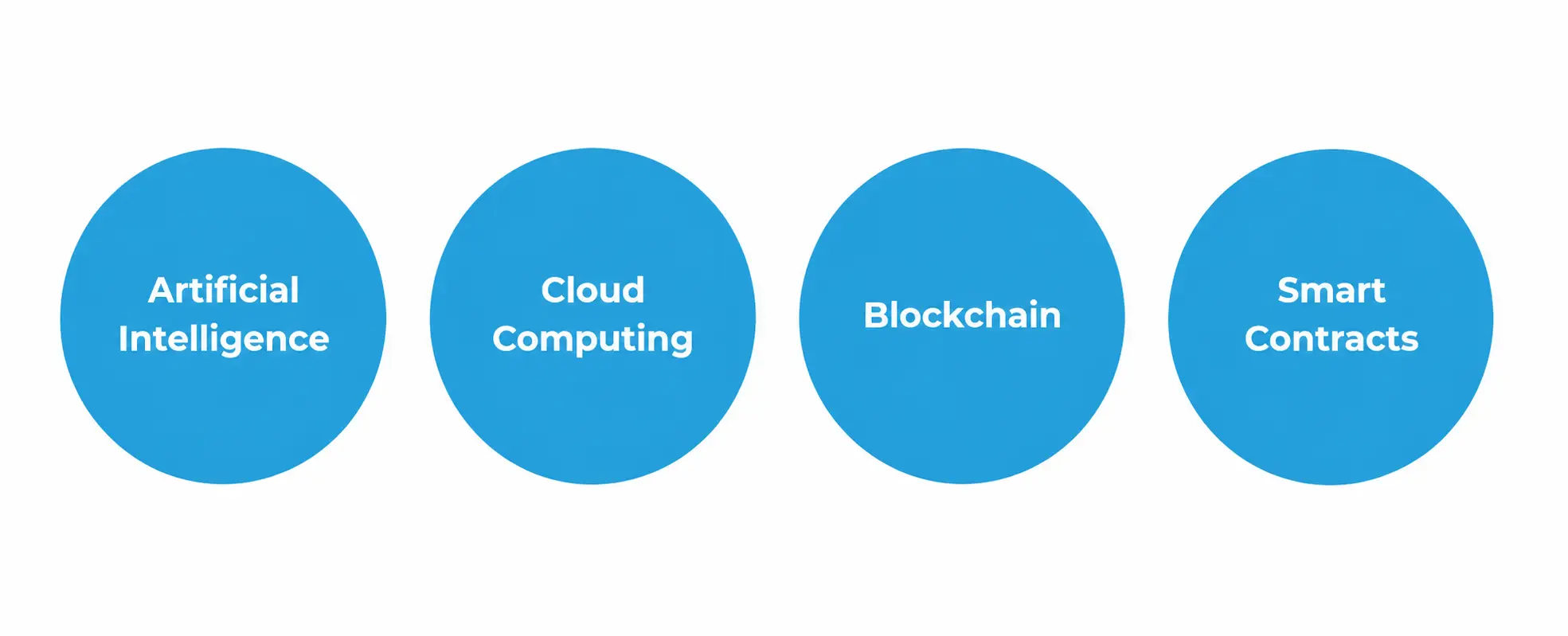
Four circles listing innovative applications: artificial intelligence, cloud computing, blockchain, and smart contracts.
Innovative Technology Applications

Artificial Intelligence

Definitions
Artificial Intelligence (AI)
The simulation of human intelligence in machines that are capable of performing tasks that typically require human cognition, such as problem-solving, learning, decision-making, and language processing.

AI systems use data, algorithms, and computational power to improve their performance over time, making them an essential part of modern technological advancements. AI is generally categorized into three types based on its capabilities:

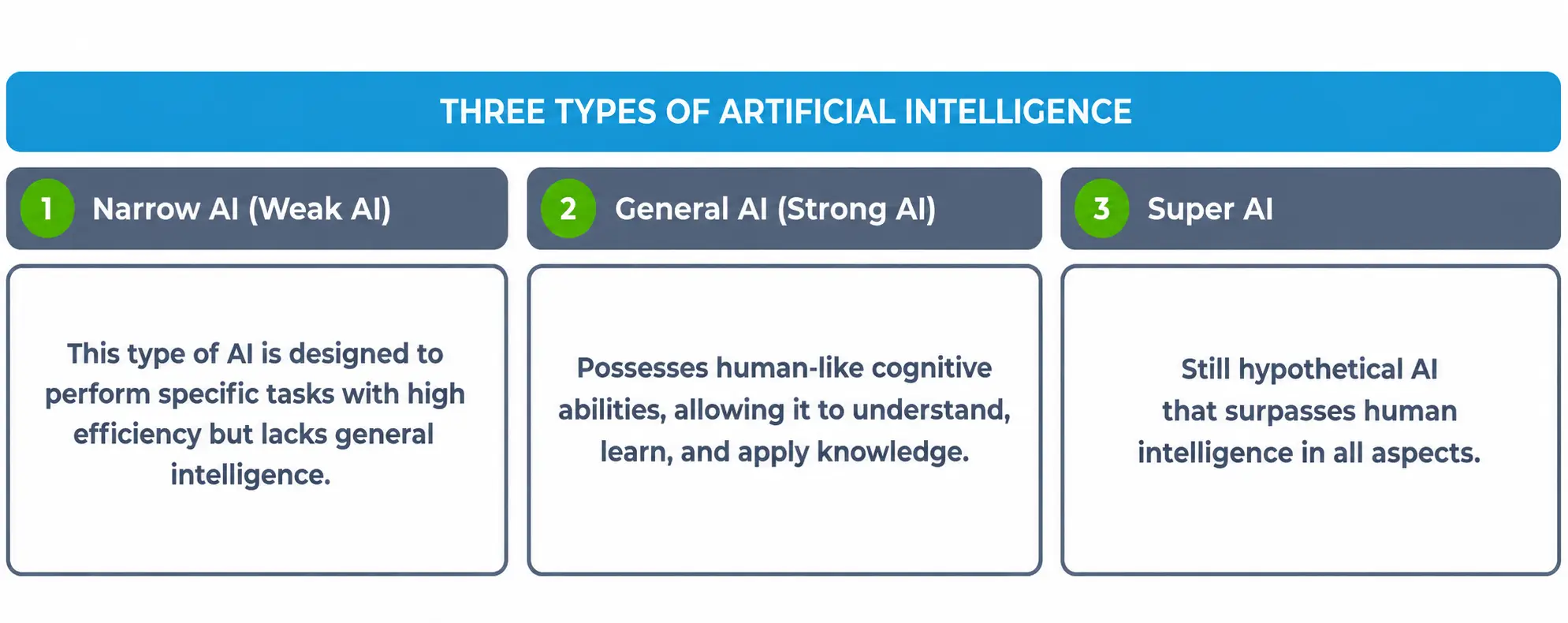
Describing three types of artificial intelligence: narrow, general, and super AI.
Types Of AI
  1. Narrow AI (Weak AI): This type of AI is designed to perform specific tasks with high efficiency but lacks general intelligence. Examples include virtual assistants like Siri and Alexa, recommendation systems, and facial recognition software.
  2. General AI (Strong AI): General AI possesses human-like cognitive abilities, allowing it to understand, learn, and apply knowledge across different domains. While still theoretical, it represents AI systems that can autonomously perform any intellectual task a human can.
  3. Super AI: A hypothetical stage where AI surpasses human intelligence in all aspects, exhibiting self-awareness, advanced problem-solving, and independent reasoning. This level of AI remains a subject of research and speculation.

AI has transformed various industries by enhancing efficiency, automation, and data-driven decision-making. Some key applications include:

  • Finance: AI-powered algorithms assist in fraud detection, algorithmic trading, risk assessment, and customer service automation.
  • Healthcare: AI is used in medical imaging, predictive analytics for disease diagnosis, robotic surgeries, and personalized treatment recommendations.
  • Retail: AI-driven chatbots, demand forecasting, and personalized marketing enhance the shopping experience and optimize supply chains.
  • Manufacturing: AI-enabled predictive maintenance, robotics, and quality control systems improve production efficiency and reduce operational costs.
  • Transportation: Autonomous vehicles, traffic management systems, and AI-powered logistics optimization contribute to smarter mobility solutions.
  • Education: AI-powered tutoring systems, automated grading, and personalized learning platforms enhance educational experiences and student engagement.

As AI continues to evolve, its applications across industries will further expand, driving innovation and business transformation.

Cloud computing

Definitions
Cloud computing
The delivery of computing services (including servers, storage, databases, networking, software, and analytics) over the internet (the “cloud”) instead of local servers or personal computers.

Cloud computing enables organizations to access computing resources on-demand, scale operations efficiently, and reduce the costs associated with maintaining physical infrastructure.

Cloud computing significantly enhances efficiency in various ways:

  • Scalability: Businesses can scale their computing resources up or down based on demand without the need for costly hardware investments.
  • Cost savings: Organizations reduce expenses by paying only for the resources they use, eliminating upfront capital costs for IT infrastructure.
  • Remote accessibility: Employees and stakeholders can access applications and data from anywhere, increasing flexibility and enabling remote work.
  • Enhanced collaboration: Cloud platforms facilitate seamless collaboration through real-time data sharing and synchronized workflows.
  • Security and reliability: Leading cloud providers offer robust security measures, automated backups, and disaster recovery solutions to protect critical data.

By leveraging cloud computing, businesses improve agility, reduce IT overhead, and enhance operational efficiency, making it a fundamental component of modern finance and technology transformation.

Cloud computing service models

Cloud computing services are generally categorized into three primary models, each offering different levels of control, flexibility, and management:

  1. Infrastructure as a Service (IaaS)
  2. Platform as a Service (PaaS)
  3. Software as a Service (SaaS)
Cloud computing service models

1. Infrastructure as a Service (IaaS)

Provides virtualized computing resources over the internet, including virtual machines, storage, and networking. Examples of IaaS providers include:

  • Amazon Web Services (AWS)
  • Microsoft Azure, and
  • Google Cloud Platform (GCP).

It allows businesses to build and manage their own applications while outsourcing hardware maintenance, reducing infrastructure costs and improving operational scalability.

2. Platform as a Service (PaaS)

Offers a cloud-based platform that includes development tools, database management, and operating systems, enabling developers to build, test, and deploy applications without worrying about the underlying infrastructure.

Examples of PaaS providers include:

  • Google App Engine
  • Microsoft Azure App Services, and
  • AWS Elastic Beanstalk,

which allow developers to focus on writing code without managing servers and infrastructure.

3. Software as a Service (SaaS)

Delivers software applications over the internet on a subscription basis, eliminating the need for installation and maintenance. SaaS applications are hosted on cloud servers, allowing users to access them through web browsers without needing to install software on their local devices.

Examples include cloud-based CRM (Customer Relationship Management) systems such as:

  • Salesforce
  • HubSpot
  • Zoho CRM, and
  • Microsoft Dynamics

Other examples are accounting softwares such as:

  • QuickBooks
  • Xero
  • NetSuite, and
  • FreshBooks, and
  • collaboration tools like Google Workspace and Microsoft 365.

SaaS has been identified in the learning outcomes statements as a specific learning item with regards to its advantages and disadvantages.

Advantages of SaaS

  • Cost-effective: Eliminates upfront costs for hardware and software licenses, operating on a subscription-based pricing model.
  • Scalability: Allows businesses to easily scale their software usage based on changing demands.
  • Accessibility: Users can access applications from anywhere with an internet connection, improving flexibility and remote work capabilities.
  • Automatic updates: Software providers handle updates and maintenance, ensuring security and compliance without user intervention.
  • Integration capabilities: Many SaaS applications offer APIs and third-party integrations, enhancing system connectivity across different business functions.

Disadvantages of SaaS

  • Internet dependency: Requires a stable internet connection for optimal performance, making it vulnerable to connectivity issues.
  • Limited customization: Unlike on-premises software, SaaS applications may have restrictions on customization based on vendor limitations.
  • Data security concerns: Sensitive business data is stored on third-party servers, raising concerns about data privacy and regulatory compliance.
  • Vendor lock-in: Businesses may become reliant on a particular SaaS provider, making migration to another platform costly or complex.

Despite these challenges, SaaS continues to revolutionize business operations by offering flexible, scalable, and cost-effective software solutions, making it a key component of cloud computing services.

Blockchain

Definitions
Blockchain
A decentralized digital ledger technology that records transactions in a secure, transparent, and tamper-proof manner. It operates as a distributed database across multiple nodes (computers), where each transaction is stored in a block that is linked to previous blocks, forming an immutable chain.

Blockchain is a decentralized digital ledger technology that records transactions across multiple computers in a secure, transparent, and tamper-proof manner. Each transaction is stored in a block, linked to the previous one, forming a continuous chain. The decentralized nature of blockchain eliminates the need for intermediaries, reduces fraud, and enhances transparency in financial transactions.

Blockchain technology eliminates the need for intermediaries, enhances security, and provides a reliable system for tracking and verifying transactions.

Advantages of Blockchain

  • Enhanced security: Transactions are encrypted and immutable, reducing the risk of fraud and cyberattacks.
  • Transparency: Decentralized ledgers allow all participants to verify transactions, improving trust and accountability.
  • Efficiency and speed: Transactions are processed in real-time without intermediaries, reducing delays and transaction costs.
  • Cost reduction: Eliminates third-party intermediaries, reducing administrative and processing costs.
  • Decentralization: No single entity controls the network, reducing the risk of manipulation and failures.

Disadvantages of Blockchain

  • High energy consumption: Some blockchain networks, such as Bitcoin, require significant computational power, increasing operational costs.
  • Scalability issues: Processing speeds can be slower for large-scale applications due to consensus mechanisms like Proof of Work.
  • Regulatory uncertainty: Varying legal frameworks make widespread adoption challenging in some industries.
  • Complex implementation: Requires specialized knowledge and infrastructure, making adoption costly and technically demanding.
  • Data immutability: While an advantage in preventing fraud, errors in transactions cannot be easily corrected.

Blockchain is transforming financial processes by increasing security and reducing inefficiencies, but organizations must weigh its benefits against potential challenges when implementing blockchain-based solutions.

Application in Finance Transformation:

  • Cryptocurrencies: Digital currencies like Bitcoin and Ethereum use blockchain for secure, transparent transactions without central banking authorities.
  • Cross-Border Payments: Blockchain enables faster and cost-effective international payments by reducing dependency on traditional banking intermediaries.
  • Fraud Prevention: Immutable transaction records enhance security, reducing fraudulent activities in financial transactions.

Smart contracts

Definitions
Smart contracts
Self-executing contracts with predefined rules encoded within blockchain technology. These contracts automatically enforce and execute agreements when predetermined conditions are met, eliminating the need for intermediaries.

Application in Finance Transformation:

  • Automated loan processing: Smart contracts enable instant loan approvals and disbursements based on pre-set criteria, reducing processing time.
  • Insurance claims processing: Automates claims verification and payouts, ensuring faster and more accurate settlements.
  • Trade finance: Facilitates secure and automated payments in international trade, reducing paperwork and delays.

Artificial Intelligence (AI)

  • Simulates human intelligence for tasks like problem-solving and decision-making
  • Types:
    • Narrow AI: task-specific, high efficiency (e.g., Siri, Alexa)
    • General AI: human-like cognition (theoretical)
    • Super AI: surpasses human intelligence (hypothetical)
  • Key applications: finance (fraud detection), healthcare (diagnostics), retail (chatbots), manufacturing (predictive maintenance), transportation (autonomous vehicles), education (automated grading)

Cloud Computing

  • Delivers computing services (servers, storage, software) over the internet
  • Improves efficiency via:
    • Scalability (on-demand resources)
    • Cost savings (pay-as-you-go, no upfront hardware)
    • Remote access and collaboration
    • Enhanced security and reliability

Cloud Computing Service Models

  • Infrastructure as a Service (IaaS): virtualized hardware resources (e.g., AWS, Azure)
  • Platform as a Service (PaaS): cloud-based development platforms (e.g., Google App Engine)
  • Software as a Service (SaaS): software delivered online via subscription (e.g., Salesforce, QuickBooks)

Software as a Service (SaaS)

  • Advantages:
    • Cost-effective (subscription, no hardware)
    • Scalable and accessible from anywhere
    • Automatic updates and integration capabilities
  • Disadvantages:
    • Requires stable internet
    • Limited customization
    • Data security and vendor lock-in concerns

Blockchain

  • Decentralized, tamper-proof digital ledger technology
  • Advantages:
    • Enhanced security and transparency
    • Real-time, efficient transactions without intermediaries
    • Cost reduction and decentralization
  • Disadvantages:
    • High energy use, scalability issues
    • Regulatory uncertainty, complex implementation
    • Data immutability (errors hard to correct)
  • Applications: cryptocurrencies, cross-border payments, fraud prevention

Smart Contracts

  • Self-executing contracts on blockchain with automated enforcement
  • Applications:
    • Automated loan approvals and disbursements
    • Insurance claims automation
    • Secure, automated trade finance payments

Sign up for free to take 21 quiz questions on this topic

Previous
Next  | 6.2.2 Data policies and procedures
All rights reserved ©2016 - 2026 Achievable, Inc.

Innovative applications

Learning outcome statements

The learning outcome statements relevant for this section are:

  1. evaluate where technologies can improve efficiency and effectiveness of processing accounting data and information (e.g., artificial intelligence (AI))
  2. define cloud computing and describe how it can improve efficiency
  3. define software-as-a-service (SaaS) and explain its advantages and disadvantages
  4. recognize potential applications of blockchain, distributed ledger, and smart contracts

Artificial Intelligence

Definitions
Artificial Intelligence (AI)
The simulation of human intelligence in machines that are capable of performing tasks that typically require human cognition, such as problem-solving, learning, decision-making, and language processing.

AI systems use data, algorithms, and computational power to improve their performance over time, making them an essential part of modern technological advancements. AI is generally categorized into three types based on its capabilities:

  1. Narrow AI (Weak AI): This type of AI is designed to perform specific tasks with high efficiency but lacks general intelligence. Examples include virtual assistants like Siri and Alexa, recommendation systems, and facial recognition software.
  2. General AI (Strong AI): General AI possesses human-like cognitive abilities, allowing it to understand, learn, and apply knowledge across different domains. While still theoretical, it represents AI systems that can autonomously perform any intellectual task a human can.
  3. Super AI: A hypothetical stage where AI surpasses human intelligence in all aspects, exhibiting self-awareness, advanced problem-solving, and independent reasoning. This level of AI remains a subject of research and speculation.

AI has transformed various industries by enhancing efficiency, automation, and data-driven decision-making. Some key applications include:

  • Finance: AI-powered algorithms assist in fraud detection, algorithmic trading, risk assessment, and customer service automation.
  • Healthcare: AI is used in medical imaging, predictive analytics for disease diagnosis, robotic surgeries, and personalized treatment recommendations.
  • Retail: AI-driven chatbots, demand forecasting, and personalized marketing enhance the shopping experience and optimize supply chains.
  • Manufacturing: AI-enabled predictive maintenance, robotics, and quality control systems improve production efficiency and reduce operational costs.
  • Transportation: Autonomous vehicles, traffic management systems, and AI-powered logistics optimization contribute to smarter mobility solutions.
  • Education: AI-powered tutoring systems, automated grading, and personalized learning platforms enhance educational experiences and student engagement.

As AI continues to evolve, its applications across industries will further expand, driving innovation and business transformation.

Cloud computing

Definitions
Cloud computing
The delivery of computing services (including servers, storage, databases, networking, software, and analytics) over the internet (the “cloud”) instead of local servers or personal computers.

Cloud computing enables organizations to access computing resources on-demand, scale operations efficiently, and reduce the costs associated with maintaining physical infrastructure.

Cloud computing significantly enhances efficiency in various ways:

  • Scalability: Businesses can scale their computing resources up or down based on demand without the need for costly hardware investments.
  • Cost savings: Organizations reduce expenses by paying only for the resources they use, eliminating upfront capital costs for IT infrastructure.
  • Remote accessibility: Employees and stakeholders can access applications and data from anywhere, increasing flexibility and enabling remote work.
  • Enhanced collaboration: Cloud platforms facilitate seamless collaboration through real-time data sharing and synchronized workflows.
  • Security and reliability: Leading cloud providers offer robust security measures, automated backups, and disaster recovery solutions to protect critical data.

By leveraging cloud computing, businesses improve agility, reduce IT overhead, and enhance operational efficiency, making it a fundamental component of modern finance and technology transformation.

Cloud computing service models

Cloud computing services are generally categorized into three primary models, each offering different levels of control, flexibility, and management:

  1. Infrastructure as a Service (IaaS)
  2. Platform as a Service (PaaS)
  3. Software as a Service (SaaS)

1. Infrastructure as a Service (IaaS)

Provides virtualized computing resources over the internet, including virtual machines, storage, and networking. Examples of IaaS providers include:

  • Amazon Web Services (AWS)
  • Microsoft Azure, and
  • Google Cloud Platform (GCP).

It allows businesses to build and manage their own applications while outsourcing hardware maintenance, reducing infrastructure costs and improving operational scalability.

2. Platform as a Service (PaaS)

Offers a cloud-based platform that includes development tools, database management, and operating systems, enabling developers to build, test, and deploy applications without worrying about the underlying infrastructure.

Examples of PaaS providers include:

  • Google App Engine
  • Microsoft Azure App Services, and
  • AWS Elastic Beanstalk,

which allow developers to focus on writing code without managing servers and infrastructure.

3. Software as a Service (SaaS)

Delivers software applications over the internet on a subscription basis, eliminating the need for installation and maintenance. SaaS applications are hosted on cloud servers, allowing users to access them through web browsers without needing to install software on their local devices.

Examples include cloud-based CRM (Customer Relationship Management) systems such as:

  • Salesforce
  • HubSpot
  • Zoho CRM, and
  • Microsoft Dynamics

Other examples are accounting softwares such as:

  • QuickBooks
  • Xero
  • NetSuite, and
  • FreshBooks, and
  • collaboration tools like Google Workspace and Microsoft 365.

SaaS has been identified in the learning outcomes statements as a specific learning item with regards to its advantages and disadvantages.

Advantages of SaaS

  • Cost-effective: Eliminates upfront costs for hardware and software licenses, operating on a subscription-based pricing model.
  • Scalability: Allows businesses to easily scale their software usage based on changing demands.
  • Accessibility: Users can access applications from anywhere with an internet connection, improving flexibility and remote work capabilities.
  • Automatic updates: Software providers handle updates and maintenance, ensuring security and compliance without user intervention.
  • Integration capabilities: Many SaaS applications offer APIs and third-party integrations, enhancing system connectivity across different business functions.

Disadvantages of SaaS

  • Internet dependency: Requires a stable internet connection for optimal performance, making it vulnerable to connectivity issues.
  • Limited customization: Unlike on-premises software, SaaS applications may have restrictions on customization based on vendor limitations.
  • Data security concerns: Sensitive business data is stored on third-party servers, raising concerns about data privacy and regulatory compliance.
  • Vendor lock-in: Businesses may become reliant on a particular SaaS provider, making migration to another platform costly or complex.

Despite these challenges, SaaS continues to revolutionize business operations by offering flexible, scalable, and cost-effective software solutions, making it a key component of cloud computing services.

Blockchain

Definitions
Blockchain
A decentralized digital ledger technology that records transactions in a secure, transparent, and tamper-proof manner. It operates as a distributed database across multiple nodes (computers), where each transaction is stored in a block that is linked to previous blocks, forming an immutable chain.

Blockchain is a decentralized digital ledger technology that records transactions across multiple computers in a secure, transparent, and tamper-proof manner. Each transaction is stored in a block, linked to the previous one, forming a continuous chain. The decentralized nature of blockchain eliminates the need for intermediaries, reduces fraud, and enhances transparency in financial transactions.

Blockchain technology eliminates the need for intermediaries, enhances security, and provides a reliable system for tracking and verifying transactions.

Advantages of Blockchain

  • Enhanced security: Transactions are encrypted and immutable, reducing the risk of fraud and cyberattacks.
  • Transparency: Decentralized ledgers allow all participants to verify transactions, improving trust and accountability.
  • Efficiency and speed: Transactions are processed in real-time without intermediaries, reducing delays and transaction costs.
  • Cost reduction: Eliminates third-party intermediaries, reducing administrative and processing costs.
  • Decentralization: No single entity controls the network, reducing the risk of manipulation and failures.

Disadvantages of Blockchain

  • High energy consumption: Some blockchain networks, such as Bitcoin, require significant computational power, increasing operational costs.
  • Scalability issues: Processing speeds can be slower for large-scale applications due to consensus mechanisms like Proof of Work.
  • Regulatory uncertainty: Varying legal frameworks make widespread adoption challenging in some industries.
  • Complex implementation: Requires specialized knowledge and infrastructure, making adoption costly and technically demanding.
  • Data immutability: While an advantage in preventing fraud, errors in transactions cannot be easily corrected.

Blockchain is transforming financial processes by increasing security and reducing inefficiencies, but organizations must weigh its benefits against potential challenges when implementing blockchain-based solutions.

Application in Finance Transformation:

  • Cryptocurrencies: Digital currencies like Bitcoin and Ethereum use blockchain for secure, transparent transactions without central banking authorities.
  • Cross-Border Payments: Blockchain enables faster and cost-effective international payments by reducing dependency on traditional banking intermediaries.
  • Fraud Prevention: Immutable transaction records enhance security, reducing fraudulent activities in financial transactions.

Smart contracts

Definitions
Smart contracts
Self-executing contracts with predefined rules encoded within blockchain technology. These contracts automatically enforce and execute agreements when predetermined conditions are met, eliminating the need for intermediaries.

Application in Finance Transformation:

  • Automated loan processing: Smart contracts enable instant loan approvals and disbursements based on pre-set criteria, reducing processing time.
  • Insurance claims processing: Automates claims verification and payouts, ensuring faster and more accurate settlements.
  • Trade finance: Facilitates secure and automated payments in international trade, reducing paperwork and delays.
Key points

Artificial Intelligence (AI)

  • Simulates human intelligence for tasks like problem-solving and decision-making
  • Types:
    • Narrow AI: task-specific, high efficiency (e.g., Siri, Alexa)
    • General AI: human-like cognition (theoretical)
    • Super AI: surpasses human intelligence (hypothetical)
  • Key applications: finance (fraud detection), healthcare (diagnostics), retail (chatbots), manufacturing (predictive maintenance), transportation (autonomous vehicles), education (automated grading)

Cloud Computing

  • Delivers computing services (servers, storage, software) over the internet
  • Improves efficiency via:
    • Scalability (on-demand resources)
    • Cost savings (pay-as-you-go, no upfront hardware)
    • Remote access and collaboration
    • Enhanced security and reliability

Cloud Computing Service Models

  • Infrastructure as a Service (IaaS): virtualized hardware resources (e.g., AWS, Azure)
  • Platform as a Service (PaaS): cloud-based development platforms (e.g., Google App Engine)
  • Software as a Service (SaaS): software delivered online via subscription (e.g., Salesforce, QuickBooks)

Software as a Service (SaaS)

  • Advantages:
    • Cost-effective (subscription, no hardware)
    • Scalable and accessible from anywhere
    • Automatic updates and integration capabilities
  • Disadvantages:
    • Requires stable internet
    • Limited customization
    • Data security and vendor lock-in concerns

Blockchain

  • Decentralized, tamper-proof digital ledger technology
  • Advantages:
    • Enhanced security and transparency
    • Real-time, efficient transactions without intermediaries
    • Cost reduction and decentralization
  • Disadvantages:
    • High energy use, scalability issues
    • Regulatory uncertainty, complex implementation
    • Data immutability (errors hard to correct)
  • Applications: cryptocurrencies, cross-border payments, fraud prevention

Smart Contracts

  • Self-executing contracts on blockchain with automated enforcement
  • Applications:
    • Automated loan approvals and disbursements
    • Insurance claims automation
    • Secure, automated trade finance payments

More from Technology-enabled finance transformation

  • System development life cycle
  • Process automation