


Achievable logoAchievable logo
CCMA
Sign in
Sign up
Purchase
Textbook
Practice exams
Support
How it works
Resources
Exam catalog
Mountain with a flag at the peak
Textbook
Introduction
1. Medical assistant
2. Electronic records
3. Medical terminology and anatomy
4. The fundamentals of infection control
4.1 The cycle of infection
4.2 The body’s defense mechanisms and types of infection
4.3 Infection control
4.3.1 The role of the medical assistant
4.3.2 Workplace safety and protective measures
4.3.3 Infection control and OSHA standards in healthcare
4.3.4 Waste disposal, vaccination, and exposure protocols
5. Introduction to vital signs
6. The patient interview and history
7. The physical examination
8. Appointment scheduling
9. Insurance billing
10. Diagnostic coding and the ICD-10-CM System
11. Procedural coding
12. Medical billing and reimbursement essentials
13. Assisting with medical specialties
14. Assisting with the musculoskeletal system
15. Assisting with the cardiovascular system
16. Assisting with the respiratory system
17. Assisting with the nervous system
18. Anatomy and physiology of the urinary system
19. Assisting in obstetrics and gynecology
20. Assisting in endocrinology
21. Assisting in ophthalmology & otolaryngology
22. Assisting in gastroenterology
23. Assisting in the immune & lymphatic systems
24. Assisting in pediatrics: the developmental stages and care
25. The medical assistant’s role in caring for the older patient
26. The role of the medical assistant in physical therapy examination and assessment
27. Preparing for minor surgery: room, solutions, and supplies
28. Introduction to the clinical laboratory
29. Urinalysis
30. Blood collection
31. Analysis of blood
32. Electrocardiography and heart structure
33. The principles of pharmacology
34. Essential calculations and measurement systems
35. Solid, liquid, & solutions medication doses
36. Administering medications
37. Metabolism and core nutrient roles
38. Medical emergencies in the healthcare setting
Achievable logoAchievable logo
4.3.2 Workplace safety and protective measures
Achievable CCMA
4. The fundamentals of infection control
4.3. Infection control

Workplace safety and protective measures

10 min read
Font
Discuss
Share
Feedback

Infection control and workplace safety

Preventing the spread of disease starts with understanding how infections are transmitted and how the body responds to them. One of the easiest ways to prevent the spread of disease is to wash your hands or use alcohol-based hand sanitizers. Every procedure must begin and end with hand hygiene practices. Making sure that sterile technique is used is another huge component of infection control. The fundamental concepts of this chapter should be used whenever you are faced with an infection control issue.

Definitions
Sterile technique (surgical asepsis)
Practices that destroy all microorganisms, including spores, on an object or area before it contacts the body’s normally sterile tissues, such as during surgery or injections.
Medical asepsis (clean technique)
Practices, such as handwashing and routine cleaning, that reduce the number of microorganisms present and limit their spread, without necessarily eliminating them entirely.

Hand hygiene and proper sterile technique are two of the most effective ways to prevent the spread of infection in healthcare settings.

The guidelines established by the Occupational Safety and Health Administration (OSHA) also have stated this. The guidelines in this chapter are basic to all clinical skills, and following them can reduce the transmission of disease organisms and lessen the severity of disease. These guidelines also may save a patient’s or co-worker’s life, or even your own.

The Occupational Safety and Health Administration (OSHA) mission is to “assure safe and healthful working conditions for working men and women by setting and enforcing standards and by providing training, outreach, education, and assistance.” Healthcare workers face safety challenges specific to caring for the sick and injured.

For this reason, the Centers for Disease Control and Prevention (CDC) works closely with OSHA to ensure that these workers have documented best practices to follow. The CDC makes recommendations and guidelines regarding specific health and safety practices, and OSHA makes and enforces regulations based on these recommendations. Both the employer and employee have responsibilities that must be abided by when it comes to safety in the workplace.

Employer responsibilities

Employers have a legal responsibility to provide a safe working environment. In order to fulfill this responsibility, employers must:

  • Ensure that the workplace is free from serious recognized hazards and comply with OSHA rules and regulations.
  • Inspect workplace conditions, confirming they conform to OSHA standards.
  • Provide safe and properly maintained equipment.
  • Maintain operating procedures and communicate new and updated procedures to employees.
  • Provide accessible safety training to all workers.

Employee responsibilities

Healthcare workers must follow regulations related to workplace safety, including chemical exposure, fire safety, electrical safety, and ergonomics and physical safety. In order to protect yourself, your coworkers, and your patients, you must follow the procedures, guidelines, and regulations outlined in the facility’s infection control plan.

Before you can understand the elements of an infection control plan, you first must understand how infections are transmitted.

Standard precautions apply to the care of every patient, regardless of diagnosis, and assume that blood and body fluids may be infectious. Transmission-based precautions (contact, droplet, and airborne) are layered on top of standard precautions when a patient has a known or suspected infectious organism. The next chapter covers these categories, and the specific PPE and room requirements each one calls for, in detail.

Personal protective equipment

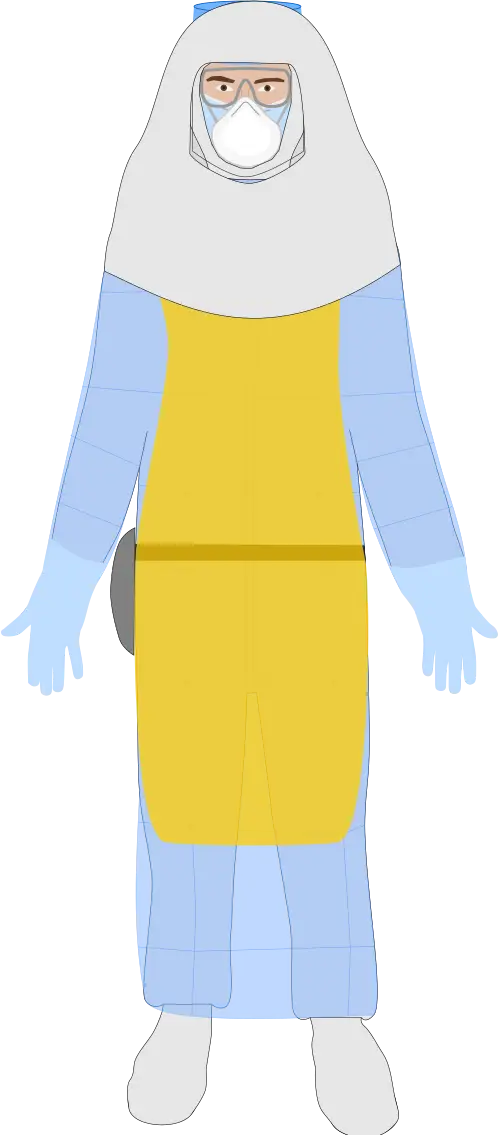
Personal protective equipment (PPE) should be used when contact with blood or other potentially infectious materials (OPIM) is expected. PPE includes specialized clothing or equipment that prevents the healthcare worker from coming in contact with blood or OPIM. This prevents or minimizes the entry of infectious material into the body.

Types of PPE used in the healthcare setting include gloves, gowns/aprons, shoe covers, laboratory coats, masks and respirators, protective eyewear, and face shields.

Gloves are the most commonly used PPE in a healthcare facility. Gloves must be worn if the medical assistant is at all likely to be involved in any of the following activities:

  • Touching a patient’s blood, body fluids, mucous membranes, or skin that is not intact.
  • Handling items and surfaces contaminated with blood and body fluids.
  • Performing venipuncture, fingerstick/capillary puncture, injections, and other vascular procedures.
  • Assisting with any surgical procedure. If a glove is torn during the procedure, the glove should be removed, the hands washed carefully, and new gloves put on as soon as possible.
  • Handling, processing, and disposing of all blood and body fluid specimens.
  • Cleaning and decontaminating spills of blood or other body fluids.

A new pair of disposable gloves must be used for each patient. Gloves should never be reused between patients.

Which of these procedures a medical assistant may perform is delegated by the supervising provider under state law, and for laboratory testing, is further bounded by the test’s CLIA complexity category. The CLIA chapter later in this course covers that boundary in detail.

Personal protective equipment used in clinical settings displayed
PPE
Wikimedia Commons
/
CC BY-SA 4.0

Donning and doffing PPE

The order in which PPE goes on and comes off is what keeps contamination off the skin and away from the face. Perform hand hygiene before donning and immediately after doffing.

Donning, in this order:

  1. Gown: Fasten at the neck and the waist, with the back closed. The gown should cover the torso and reach the wrist.
  2. Mask or respirator: Secure the ties or the elastic bands, fit the flexible band to the bridge of the nose, and check the seal of a respirator.
  3. Goggles or face shield: Place over the face and eyes and adjust to fit.
  4. Gloves: Put on last, and pull them over the cuffs of the gown.

Doffing, in this order:

  1. Gloves: The outside is contaminated. Grasp the outside of one glove at the palm and peel it off, holding it in the gloved hand. Slide the fingers of the ungloved hand under the remaining glove at the wrist and peel it off over the first.
  2. Goggles or face shield: The outside is contaminated. Handle by the headband or the earpieces only.
  3. Gown: The front and the sleeves are contaminated. Unfasten the ties, pull the gown away from the neck and shoulders touching the inside only, turn it inside out, and roll it into a bundle.
  4. Mask or respirator: The front is contaminated, so do not touch it. Untie or lift the bottom tie or band first, then the top, and pull the mask away from the face.
  5. Hand hygiene: Perform immediately after removing all PPE.

The reason for the order is worth remembering rather than memorizing: the most contaminated item comes off first, and the mask or respirator stays on until last because the air in the room is the last hazard the healthcare worker leaves behind.

Environmental protection plan

Environmental protection plan (EPP) refers to minimizing the risk of injury by isolating or removing any physical or mechanical health hazard in the workplace.

Every medical assistant must adhere to these safety rules:

  • Read warning labels on biohazard waste containers and equipment.
  • Minimize splashing or spraying of OPIM. Blood that splatters onto exposed areas of the skin or mucous membranes is a proven mode of HBV transmission.
  • Bandage any breaks or lesions on your hands before gloving.
  • If any body surface is exposed to potentially infectious material, scrub the area with soap and tepid (lukewarm), running water as soon as possible after the exposure.
  • If your eyes come in contact with body fluids, continuously flush them with water as soon as possible for a minimum of 15 minutes using an eyewash unit. A stationary unit connected to tepid (lukewarm), running water is the best method for properly flushing potentially infectious material out of the eyes.
  • Contaminated needles and other sharps must never be broken or sheared, and must not be recapped, bent, or removed unless no alternative is feasible or a procedure requires it (and then only with a mechanical device or a one-handed technique); needle units must have protective safety devices to cover the contaminated needle after injection.
  • Contaminated sharp instruments, such as operating scissors, should not be processed in a way that requires employees to reach into containers to grasp them.
  • Immediately after use, dispose of syringes and needles, scalpel blades, and other disposable sharp items in a labeled, leakproof, puncture-resistant biohazard container. The container must be located as close as possible to the area where the item is used.
  • All specimens must be placed in a container that prevents leakage during collection, handling, processing, storage, transport, and shipping. Avoid contaminating the outside of the container or the label with the specimen substance. The container must have a biohazard label to alert others that it holds potentially infectious material. Gloves should be worn throughout this procedure.
  • Equipment requiring repair that has been contaminated with blood or body fluids should be decontaminated before being repaired in the office or transported for repair.
  • Smoking, eating, drinking, applying cosmetics or lip balm, and handling contact lenses are prohibited in work areas where there is a reasonable likelihood of contamination by pathogens.
  • Food and beverages cannot be kept in refrigerators, freezers, or cabinets or on countertops where infectious materials could be present.

Housekeeping controls

The Bloodborne Pathogens Standard requires certain housekeeping measures to ensure a sanitary work area. A schedule must be posted for the cleaning and decontaminating of each work area where exposures could occur. Documentation of these procedures must include information about the surface cleaned, the type of waste encountered, and procedures performed in the designated area.

  • After accidental spills of blood or body fluids, at the end of each procedure and each shift, work surfaces must be immediately cleaned and then disinfected with a disinfectant registered with the Environmental Protection Agency (EPA).
  • All reusable containers must be disinfected and decontaminated on a routine basis.
  • Sharps containers must be kept as close as possible to the work area. Never attempt to reach inside a sharps container, and do not overfill them. Replace containers on a routine basis and be certain that the lid is closed securely before preparing them for biohazard waste disposal.
  • Never pick up spilled material or broken glassware with your hands. Brooms, brushes, dustpans, and pickup tongs or forceps should be used. The material should be placed immediately into an impervious biohazard waste container at the spill site. Use an absorbent, professional biohazard spill preparation as directed to decontaminate the site.
  • Handle soiled linen as little as possible, and always wear gloves or other protective equipment during disposal. Linens soiled with blood or body fluids should be double-bagged and transported in labeled, leakproof biohazard bags.
  • Contaminated materials and infectious waste must be handled with extreme caution to prevent exposure. Biohazard waste must be collected in impermeable, red polyethylene or polypropylene biohazard-labeled bags or containers and sealed.
Sidenote
Biohazard waste

Biohazard waste must be handled, transported, and disposed of according to federal, state, and local regulations to protect healthcare workers, patients, and the community.

This waste must be disposed of in accordance with all federal, state, and local regulations. Disposal methods include treatment by heat, incineration, steam sterilization, chemical treatment, or other equivalent methods that will render the waste inactive before it is placed in a landfill.

Infection Control Basics

  • Prevent disease spread via hand hygiene (washing, alcohol-based sanitizers)
  • Use sterile technique for all procedures
  • Fundamental concepts apply to all infection control issues

OSHA and CDC Roles

  • OSHA: sets/enforces workplace safety standards, provides training
  • CDC: develops health/safety recommendations, collaborates with OSHA
  • Both employer and employee share safety responsibilities

Employer Responsibilities

  • Maintain hazard-free workplace per OSHA regulations
  • Inspect and ensure compliance with safety standards
  • Provide safe, well-maintained equipment and updated procedures
  • Offer accessible safety training to all employees

Employee Responsibilities

  • Follow all workplace safety regulations (chemical, fire, electrical, ergonomic)
  • Adhere to facility’s infection control plan and guidelines
  • Protect self, coworkers, and patients by following established procedures

Sign up for free to take 22 quiz questions on this topic

Previous
Next  | 4.3.3 Infection control and OSHA standards in healthcare
All rights reserved ©2016 - 2026 Achievable, Inc.

Workplace safety and protective measures

Infection control and workplace safety

Preventing the spread of disease starts with understanding how infections are transmitted and how the body responds to them. One of the easiest ways to prevent the spread of disease is to wash your hands or use alcohol-based hand sanitizers. Every procedure must begin and end with hand hygiene practices. Making sure that sterile technique is used is another huge component of infection control. The fundamental concepts of this chapter should be used whenever you are faced with an infection control issue.

Definitions
Sterile technique (surgical asepsis)
Practices that destroy all microorganisms, including spores, on an object or area before it contacts the body’s normally sterile tissues, such as during surgery or injections.
Medical asepsis (clean technique)
Practices, such as handwashing and routine cleaning, that reduce the number of microorganisms present and limit their spread, without necessarily eliminating them entirely.

Hand hygiene and proper sterile technique are two of the most effective ways to prevent the spread of infection in healthcare settings.

The guidelines established by the Occupational Safety and Health Administration (OSHA) also have stated this. The guidelines in this chapter are basic to all clinical skills, and following them can reduce the transmission of disease organisms and lessen the severity of disease. These guidelines also may save a patient’s or co-worker’s life, or even your own.

The Occupational Safety and Health Administration (OSHA) mission is to “assure safe and healthful working conditions for working men and women by setting and enforcing standards and by providing training, outreach, education, and assistance.” Healthcare workers face safety challenges specific to caring for the sick and injured.

For this reason, the Centers for Disease Control and Prevention (CDC) works closely with OSHA to ensure that these workers have documented best practices to follow. The CDC makes recommendations and guidelines regarding specific health and safety practices, and OSHA makes and enforces regulations based on these recommendations. Both the employer and employee have responsibilities that must be abided by when it comes to safety in the workplace.

Employer responsibilities

Employers have a legal responsibility to provide a safe working environment. In order to fulfill this responsibility, employers must:

  • Ensure that the workplace is free from serious recognized hazards and comply with OSHA rules and regulations.
  • Inspect workplace conditions, confirming they conform to OSHA standards.
  • Provide safe and properly maintained equipment.
  • Maintain operating procedures and communicate new and updated procedures to employees.
  • Provide accessible safety training to all workers.

Employee responsibilities

Healthcare workers must follow regulations related to workplace safety, including chemical exposure, fire safety, electrical safety, and ergonomics and physical safety. In order to protect yourself, your coworkers, and your patients, you must follow the procedures, guidelines, and regulations outlined in the facility’s infection control plan.

Before you can understand the elements of an infection control plan, you first must understand how infections are transmitted.

Standard precautions apply to the care of every patient, regardless of diagnosis, and assume that blood and body fluids may be infectious. Transmission-based precautions (contact, droplet, and airborne) are layered on top of standard precautions when a patient has a known or suspected infectious organism. The next chapter covers these categories, and the specific PPE and room requirements each one calls for, in detail.

Personal protective equipment

Personal protective equipment (PPE) should be used when contact with blood or other potentially infectious materials (OPIM) is expected. PPE includes specialized clothing or equipment that prevents the healthcare worker from coming in contact with blood or OPIM. This prevents or minimizes the entry of infectious material into the body.

Types of PPE used in the healthcare setting include gloves, gowns/aprons, shoe covers, laboratory coats, masks and respirators, protective eyewear, and face shields.

Gloves are the most commonly used PPE in a healthcare facility. Gloves must be worn if the medical assistant is at all likely to be involved in any of the following activities:

  • Touching a patient’s blood, body fluids, mucous membranes, or skin that is not intact.
  • Handling items and surfaces contaminated with blood and body fluids.
  • Performing venipuncture, fingerstick/capillary puncture, injections, and other vascular procedures.
  • Assisting with any surgical procedure. If a glove is torn during the procedure, the glove should be removed, the hands washed carefully, and new gloves put on as soon as possible.
  • Handling, processing, and disposing of all blood and body fluid specimens.
  • Cleaning and decontaminating spills of blood or other body fluids.

A new pair of disposable gloves must be used for each patient. Gloves should never be reused between patients.

Which of these procedures a medical assistant may perform is delegated by the supervising provider under state law, and for laboratory testing, is further bounded by the test’s CLIA complexity category. The CLIA chapter later in this course covers that boundary in detail.

Donning and doffing PPE

The order in which PPE goes on and comes off is what keeps contamination off the skin and away from the face. Perform hand hygiene before donning and immediately after doffing.

Donning, in this order:

  1. Gown: Fasten at the neck and the waist, with the back closed. The gown should cover the torso and reach the wrist.
  2. Mask or respirator: Secure the ties or the elastic bands, fit the flexible band to the bridge of the nose, and check the seal of a respirator.
  3. Goggles or face shield: Place over the face and eyes and adjust to fit.
  4. Gloves: Put on last, and pull them over the cuffs of the gown.

Doffing, in this order:

  1. Gloves: The outside is contaminated. Grasp the outside of one glove at the palm and peel it off, holding it in the gloved hand. Slide the fingers of the ungloved hand under the remaining glove at the wrist and peel it off over the first.
  2. Goggles or face shield: The outside is contaminated. Handle by the headband or the earpieces only.
  3. Gown: The front and the sleeves are contaminated. Unfasten the ties, pull the gown away from the neck and shoulders touching the inside only, turn it inside out, and roll it into a bundle.
  4. Mask or respirator: The front is contaminated, so do not touch it. Untie or lift the bottom tie or band first, then the top, and pull the mask away from the face.
  5. Hand hygiene: Perform immediately after removing all PPE.

The reason for the order is worth remembering rather than memorizing: the most contaminated item comes off first, and the mask or respirator stays on until last because the air in the room is the last hazard the healthcare worker leaves behind.

Environmental protection plan

Environmental protection plan (EPP) refers to minimizing the risk of injury by isolating or removing any physical or mechanical health hazard in the workplace.

Every medical assistant must adhere to these safety rules:

  • Read warning labels on biohazard waste containers and equipment.
  • Minimize splashing or spraying of OPIM. Blood that splatters onto exposed areas of the skin or mucous membranes is a proven mode of HBV transmission.
  • Bandage any breaks or lesions on your hands before gloving.
  • If any body surface is exposed to potentially infectious material, scrub the area with soap and tepid (lukewarm), running water as soon as possible after the exposure.
  • If your eyes come in contact with body fluids, continuously flush them with water as soon as possible for a minimum of 15 minutes using an eyewash unit. A stationary unit connected to tepid (lukewarm), running water is the best method for properly flushing potentially infectious material out of the eyes.
  • Contaminated needles and other sharps must never be broken or sheared, and must not be recapped, bent, or removed unless no alternative is feasible or a procedure requires it (and then only with a mechanical device or a one-handed technique); needle units must have protective safety devices to cover the contaminated needle after injection.
  • Contaminated sharp instruments, such as operating scissors, should not be processed in a way that requires employees to reach into containers to grasp them.
  • Immediately after use, dispose of syringes and needles, scalpel blades, and other disposable sharp items in a labeled, leakproof, puncture-resistant biohazard container. The container must be located as close as possible to the area where the item is used.
  • All specimens must be placed in a container that prevents leakage during collection, handling, processing, storage, transport, and shipping. Avoid contaminating the outside of the container or the label with the specimen substance. The container must have a biohazard label to alert others that it holds potentially infectious material. Gloves should be worn throughout this procedure.
  • Equipment requiring repair that has been contaminated with blood or body fluids should be decontaminated before being repaired in the office or transported for repair.
  • Smoking, eating, drinking, applying cosmetics or lip balm, and handling contact lenses are prohibited in work areas where there is a reasonable likelihood of contamination by pathogens.
  • Food and beverages cannot be kept in refrigerators, freezers, or cabinets or on countertops where infectious materials could be present.

Housekeeping controls

The Bloodborne Pathogens Standard requires certain housekeeping measures to ensure a sanitary work area. A schedule must be posted for the cleaning and decontaminating of each work area where exposures could occur. Documentation of these procedures must include information about the surface cleaned, the type of waste encountered, and procedures performed in the designated area.

  • After accidental spills of blood or body fluids, at the end of each procedure and each shift, work surfaces must be immediately cleaned and then disinfected with a disinfectant registered with the Environmental Protection Agency (EPA).
  • All reusable containers must be disinfected and decontaminated on a routine basis.
  • Sharps containers must be kept as close as possible to the work area. Never attempt to reach inside a sharps container, and do not overfill them. Replace containers on a routine basis and be certain that the lid is closed securely before preparing them for biohazard waste disposal.
  • Never pick up spilled material or broken glassware with your hands. Brooms, brushes, dustpans, and pickup tongs or forceps should be used. The material should be placed immediately into an impervious biohazard waste container at the spill site. Use an absorbent, professional biohazard spill preparation as directed to decontaminate the site.
  • Handle soiled linen as little as possible, and always wear gloves or other protective equipment during disposal. Linens soiled with blood or body fluids should be double-bagged and transported in labeled, leakproof biohazard bags.
  • Contaminated materials and infectious waste must be handled with extreme caution to prevent exposure. Biohazard waste must be collected in impermeable, red polyethylene or polypropylene biohazard-labeled bags or containers and sealed.
Sidenote
Biohazard waste

Biohazard waste must be handled, transported, and disposed of according to federal, state, and local regulations to protect healthcare workers, patients, and the community.

This waste must be disposed of in accordance with all federal, state, and local regulations. Disposal methods include treatment by heat, incineration, steam sterilization, chemical treatment, or other equivalent methods that will render the waste inactive before it is placed in a landfill.

Key points

Infection Control Basics

  • Prevent disease spread via hand hygiene (washing, alcohol-based sanitizers)
  • Use sterile technique for all procedures
  • Fundamental concepts apply to all infection control issues

OSHA and CDC Roles

  • OSHA: sets/enforces workplace safety standards, provides training
  • CDC: develops health/safety recommendations, collaborates with OSHA
  • Both employer and employee share safety responsibilities

Employer Responsibilities

  • Maintain hazard-free workplace per OSHA regulations
  • Inspect and ensure compliance with safety standards
  • Provide safe, well-maintained equipment and updated procedures
  • Offer accessible safety training to all employees

Employee Responsibilities

  • Follow all workplace safety regulations (chemical, fire, electrical, ergonomic)
  • Adhere to facility’s infection control plan and guidelines
  • Protect self, coworkers, and patients by following established procedures

More from Infection control

  • The role of the medical assistant
  • Infection control and OSHA standards in healthcare
  • Waste disposal, vaccination, and exposure protocols