


Achievable logoAchievable logo
CCMA
Sign in
Sign up
Purchase
Textbook
Practice exams
Support
How it works
Exam catalog
Mountain with a flag at the peak
Textbook
1. Medical assistant
2. Electronic records
3. Medical terminology and anatomy
4. The fundamentals of infection control
5. Introduction to vital signs
6. The patient interview and history
7. The physical examination
8. Appointment scheduling
9. Insurance billing
10. Diagnostic coding and the ICD-10-CM System
11. Procedural coding
12. Medical billing and reimbursement essentials
13. Assisting with medical specialties
14. Assisting with the musculoskeletal system
15. Assisting with the cardiovascular system
16. Assisting with the respiratory system
17. Assisting with the nervous system
18. Anatomy and physiology of the urinary system
19. Assisting in obstetrics and gynecology
19.1 Assisting in obstetrics and gynecology
19.2 Female reproductive system infections and menopause
19.3 Contraception methods
19.4 Medical assistant's role in gynecologic examinations: setup and preparation
19.5 Prenatal and postpartum care
19.6 Obstetric history and the prenatal record
20. Assisting in endocrinology
21. Assisting in ophthalmology & otolaryngology
22. Assisting in gastroenterology
23. Assisting in the immune & lymphatic systems
24. Assisting in pediatrics: the developmental stages and care
25. The medical assistant’s role in caring for the older patient
26. The role of the medical assistant in physical therapy examination and assessment
27. Preparing for minor surgery: room, solutions, and supplies
28. Introduction to the clinical laboratory
29. Urinalysis
30. Blood collection
31. Analysis of blood
32. Electrocardiography and heart structure
33. The principles of pharmacology
34. Essential calculations and measurement systems
35. Solid, liquid, & solutions medication doses
36. Administering medications
37. Metabolism and core nutrient roles
38. Medical emergencies in the healthcare setting
Achievable logoAchievable logo
19.3 Contraception methods
Achievable CCMA
19. Assisting in obstetrics and gynecology
Our CCMA course is currently in development and is a work-in-progress.

Contraception methods

9 min read
Font
Discuss
Share
Feedback

Contraception

At the time of a gynecologic examination, a provider may discuss contraception with the patient. A woman’s choice of a contraceptive method is based on many factors. To make an informed choice, a patient should know the risks, benefits, side effects, costs, failure rates, and convenience of each available method. In addition, although condoms are only moderately successful at preventing pregnancy, they should be used consistently to prevent the transmission of STIs. The medical assistant may help provide patient education on contraceptive methods.

Barrier methods

Barrier methods of contraception either kill sperm (through the use of a chemical spermicide) or prevent them from entering the cervical os. These methods, which are relatively inexpensive, include the condom, diaphragm, and cervical cap or sponge. Each method must be used every time the person has intercourse, which means the patient must be motivated to follow through on using it. Patient education on the use of a diaphragm includes the following instructions:

  • Examine the diaphragm before each use by holding it up to a bright light to check for holes or cracks.
  • Place 1 to 2 tablespoons of spermicidal jelly or cream into the diaphragm dome before insertion.
  • Leave the diaphragm in place for 6 hours after intercourse; do not douche until after you have removed it.
  • Before repeated intercourse, add spermicide to the outside of the diaphragm with an applicator. Do not remove the diaphragm until 6 hours after the last intercourse.
  • After removal, wash the diaphragm with soap and water, allow it to air dry and inspect it for breaks or holes before storing.
  • Have the diaphragm refitted if the following occurs:
  • You gain or lose more than 10 to 15 pounds
  • You have a miscarriage, give birth, or undergo any type of pelvic surgery
  • You have difficulty voiding or moving your bowels with the diaphragm in place
  • The cervical cap is a thimble-sized, domed barrier device that fits over the end of the cervix. It also is used with spermicidal jelly.

If used properly, the cervical cap is 92% to 96% effective. An advantage of this barrier method is the cap can be inserted up to 12 hours before intercourse and can stay in place for up to 72 hours without a decrease in effectiveness or safety. The cervical sponge contains spermicide and can also be inserted hours before intercourse and is effective for 24 hours. If always used as directed, the sponge is 80% to 91% effective.

Hormonal contraceptives

Hormonal contraceptives are a highly effective and reversible form of contraception. They work by preventing ovulation, changing the cervical mucosa, affecting sperm mobility, and preventing the thickening of the endometrial wall. Hormonal contraceptives include the following:

  • Birth control pills or patch
  • Vaginal ring
  • Depo-Provera injections
  • Hormonal implants

Besides being a highly effective method of birth control, oral contraceptives can be used to treat a wide range of gynecologic conditions, including menstrual irregularities, premenstrual syndrome (PMS) symptoms, and anovulation . They also can be used to prevent ovarian cysts and may be prescribed to increase bone density. However, to be effective, the pills must be taken daily, at the same time each day. Failure rates are associated with noncompliance and can range from less than 1% (in highly compliant women) to greater than 15% (in those who do not take the pills as prescribed). Oral contraceptive pills (OCPs) can have serious side effects. Patients should be informed of conditions that require immediate medical attention. These can be remembered with the mnemonic ACHES: abdominal pain (new and severe), chest pain (new and severe), headaches (new or more frequent), eye problems (blurred vision or vision loss), and severe leg pain. These symptoms may indicate the formation of a blood clot in the abdomen, chest, or leg. They may also be signs of a stroke. Blood clot formation and stroke are the most serious complications of OCPs.

A type of oral contraception, the extended cycle pill, limits the number of menstrual periods to four a year. Patients are more likely to have spotting and breakthrough bleeding with this hormone therapy than with the traditional 28-day birth control pill. The extended cycle pill is designed to be taken once a day for 84 days, and then an inactive dose is taken for a week, during which the woman would menstruate. A combination birth control pill that contains both estrogen and progestin may be prescribed for women suffering from premenstrual dysphoric disorder (PMDD); it is also useful for treating acne in female patients at least 14 years of age who have started menstruating.

As mentioned, hormonal contraception also can be delivered via a transdermal patch. The patch is a 1¾-inch square that slowly releases estrogen and progestin through the skin into the bloodstream. It is considered as effective as oral contraceptives in women who weigh less than 198 pounds; however, the patch is still a very effective method for women who weigh more than that. Current research shows that the risk of blood clots with the contraceptive patch is similar to the risks observed with oral contraceptives. However, cigarette smoking increases the risk of serious cardiovascular side effects, especially if the patient is over age 35. Patients should be told not to apply any creams or oils at the application site, change the patch weekly for 3 consecutive weeks, and go patch free the fourth week, allowing menstruation to occur. The patch can be applied to the buttocks, lower abdomen, and upper body but not to the breasts. The woman can bathe, shower, and swim while wearing the patch, but if it comes off, it should be replaced immediately.

The vaginal ring contraceptive device is made of flexible plastic and is inserted into the vagina. The ring slowly releases estrogen and progestin to prevent pregnancy and provide effective contraceptive action for 1 month after insertion. The device is 2 inches in diameter and can be inserted anywhere in the vagina; however, the deeper it is placed, the less likely it is to be felt after insertion. Side effects of the vaginal ring are similar to those of other hormonal contraceptives, and it may increase the risk of heart attack, stroke, and blood clots. When the patient first starts using the ring, an additional method of birth control must be used for the first week. If the ring falls out, it should be rinsed with warm water and reinserted within 3 hours. If it is out for longer than 3 hours, contraception is not certain, and the patient should use another birth control method for 1 week.

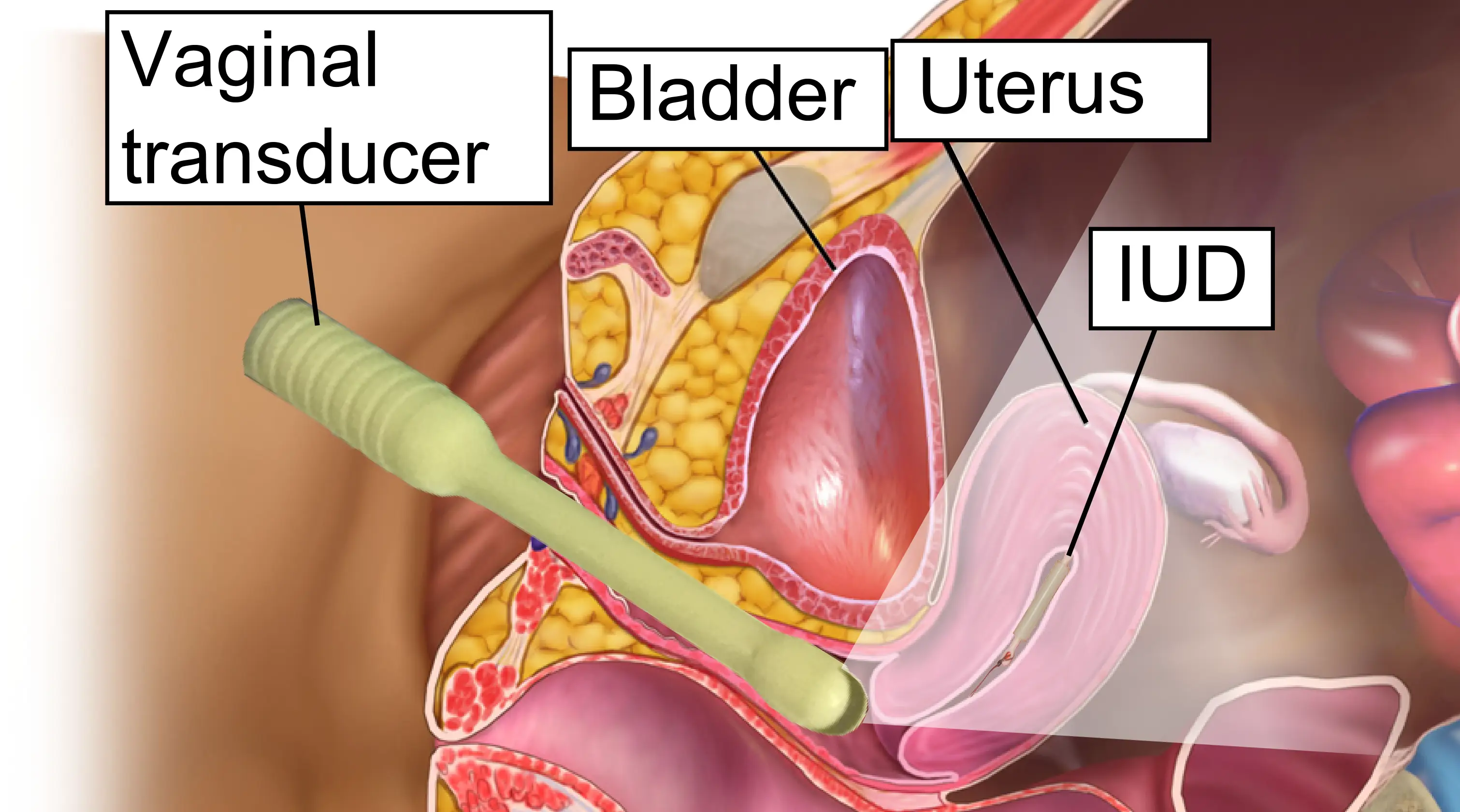
Uterus with an intrauterine device (IUD) in place
Uterus with intrauterine device
Wikimedia Commons
/
CC BY 3.0

Depo-Provera is an injectable contraceptive that contains high doses of progestin. Each dose prevents pregnancy for up to 3 months, but women must be compliant in returning to the healthcare facility for follow-up and repeat doses every 9 to 13 weeks. The first injection should be administered within the first 5 days of the menstrual period for birth control coverage. This is a highly effective method of contraception and is ideal for women who either do not comply with a birth control regimen or do not want to take a pill every day. However, using Depo-Provera for 2 years or longer may increase the risk of bone loss and the eventual development of osteoporosis. Almost all patients using the injections experience some menstrual irregularities, but these usually subside after two doses. Women using this form of hormonal contraception are not at risk for the side effects of estrogen exposure, such as the increased risk of blood clots and cardiovascular disease.

A birth control implant is a single, flexible rod, about the size of a match, that is inserted under the skin of the upper arm. The birth control implant releases a low, steady dose of progestin. This suppresses ovulation, thickens cervical mucus to block the passage of sperm, and thins the endometrial wall to prevent implantation. It prevents pregnancy for up to 3 years after insertion. Hormonal implants have risks and contraindications similar to those of other hormonal types of contraception.

Intrauterine devices

The intrauterine device (IUD) is a T-shaped plastic frame with threads attached that the provider inserts into the uterus to prevent pregnancy. Two general types of IUDs are available: the copper type and the hormonal type. Both products inhibit fertilization by blocking the sperm’s journey to the fallopian tubes, and if fertilization does occur, they prevent the embryo from implanting into the uterine wall. In addition, the copper type of IUD releases copper, which acts to slow sperm in the cervix. The hormonal types of IUDs release progestin, which reduces sperm mobility and prevents the thickening of the endometrial wall during the menstrual cycle. Both types of IUDs are extremely effective at preventing pregnancy (over 99%); the copper type can remain in place for as long as 10 years, whereas the hormonal type must be replaced every 3 to 5 years. The copper IUD may temporarily increase vaginal bleeding and menstrual pain. The hormonal IUD results in both decreased menstrual flow and cramping. To remove an IUD, the provider gently withdraws it by pulling on the IUD string. In rare instances, it must be removed surgically.

Permanent methods

Both male and female patients can undergo surgical procedures that are considered permanent contraceptive methods. Vasectomies in the male were addressed in Chapter 42. For the female, a bilateral tubal ligation can be performed in which a portion of both fallopian tubes is excised or ligated. The cost and rate of complications are higher for tubal ligations than for vasectomies. In addition, tubal ligations must be done on an outpatient basis with general anesthesia, so the woman has that additional risk. Both procedures can be reversed, but not always successfully.

Contraception: General Principles

  • Choice depends on risks, benefits, side effects, cost, failure rates, convenience
  • Condoms recommended for STI prevention
  • Patient education is essential for proper use

Barrier Methods

  • Types: condom, diaphragm, cervical cap, sponge (all used with spermicide)
  • Diaphragm: inspect for damage, use spermicide, leave in 6 hrs post-intercourse, refit after weight change, childbirth, or pelvic surgery
  • Cervical cap: 92–96% effective, insert up to 12 hrs before, leave up to 72 hrs; sponge: 80–91% effective, lasts 24 hrs

Hormonal Contraceptives

  • Types: pills, patch, vaginal ring, Depo-Provera injection, implant
  • Mechanisms: prevent ovulation, alter cervical mucus, affect endometrial wall
  • Oral contraceptives: treat PMS, PMDD, acne, menstrual irregularities; must be taken daily, risk of blood clots (ACHES mnemonic)
  • Patch: weekly change, avoid creams at site, similar risks as pills, less effective in women >198 lbs
  • Vaginal ring: monthly use, backup needed first week, reinsertion within 3 hrs if expelled
  • Depo-Provera: injection every 9–13 weeks, risk of bone loss with long-term use, menstrual irregularities common
  • Implant: 3 years protection, progestin only, similar risks as other hormonal methods

Intrauterine Devices (IUDs)

  • Types: copper (lasts 10 yrs), hormonal (lasts 3–5 yrs)
  • Mechanisms: inhibit fertilization, prevent implantation
  • Copper IUD: may increase bleeding/pain; hormonal IUD: decreases flow/cramping
  • Extremely effective (>99%), removal by pulling string or surgery if needed

Permanent Methods

  • Female: bilateral tubal ligation (fallopian tubes cut/ligated), higher cost/complications than vasectomy, requires general anesthesia
  • Male: vasectomy (see Ch. 42)
  • Both can be reversed, but not always successfully

Assisting with Diagnostic Procedures

  • Medical assistant aids in specimen collection and patient support

Specimen Collection

  • Pap test: screens for cervical cancer
  • Maturation index: evaluates endocrine function
  • Cultures/microscopy: diagnose vaginal infections

Pap Test Methods

  • Direct smear: cervical spatula, smear on slide, immediate fixative
  • Liquid-based: broom device, cells in preservative vial, results via Bethesda system

Vaginal Infections

  • Candidiasis: test for Candida albicans, KOH prep to visualize yeast
  • Trichomoniasis: saline prep, look for motile Trichomonas vaginalis
  • Chlamydia: swab endocervical canal, lab testing for Chlamydia trachomatis

Assisting with Treatments

  • Medical assistant supports procedures and patient care

Special Procedures

  • Cryotherapy: freezing cervix to treat chronic cervicitis/erosion, post-procedure discharge, avoid intercourse 1 month
  • Colposcopy: visual exam of cervix/vagina with magnification, acetic acid/iodine stains abnormal tissue, may include biopsy
  • LEEP: loop electrosurgical excision procedure for abnormal tissue removal

Colposcopy with Biopsy

  • Biopsy taken from abnormal areas, labeled by clock-face location
  • Hemostasis with silver nitrate or Monsel’s paste

Sign up for free to take 20 quiz questions on this topic

Previous
Next  | 19.4 Medical assistant's role in gynecologic examinations: setup and preparation
All rights reserved ©2016 - 2026 Achievable, Inc.

Contraception methods

Contraception

At the time of a gynecologic examination, a provider may discuss contraception with the patient. A woman’s choice of a contraceptive method is based on many factors. To make an informed choice, a patient should know the risks, benefits, side effects, costs, failure rates, and convenience of each available method. In addition, although condoms are only moderately successful at preventing pregnancy, they should be used consistently to prevent the transmission of STIs. The medical assistant may help provide patient education on contraceptive methods.

Barrier methods

Barrier methods of contraception either kill sperm (through the use of a chemical spermicide) or prevent them from entering the cervical os. These methods, which are relatively inexpensive, include the condom, diaphragm, and cervical cap or sponge. Each method must be used every time the person has intercourse, which means the patient must be motivated to follow through on using it. Patient education on the use of a diaphragm includes the following instructions:

  • Examine the diaphragm before each use by holding it up to a bright light to check for holes or cracks.
  • Place 1 to 2 tablespoons of spermicidal jelly or cream into the diaphragm dome before insertion.
  • Leave the diaphragm in place for 6 hours after intercourse; do not douche until after you have removed it.
  • Before repeated intercourse, add spermicide to the outside of the diaphragm with an applicator. Do not remove the diaphragm until 6 hours after the last intercourse.
  • After removal, wash the diaphragm with soap and water, allow it to air dry and inspect it for breaks or holes before storing.
  • Have the diaphragm refitted if the following occurs:
  • You gain or lose more than 10 to 15 pounds
  • You have a miscarriage, give birth, or undergo any type of pelvic surgery
  • You have difficulty voiding or moving your bowels with the diaphragm in place
  • The cervical cap is a thimble-sized, domed barrier device that fits over the end of the cervix. It also is used with spermicidal jelly.

If used properly, the cervical cap is 92% to 96% effective. An advantage of this barrier method is the cap can be inserted up to 12 hours before intercourse and can stay in place for up to 72 hours without a decrease in effectiveness or safety. The cervical sponge contains spermicide and can also be inserted hours before intercourse and is effective for 24 hours. If always used as directed, the sponge is 80% to 91% effective.

Hormonal contraceptives

Hormonal contraceptives are a highly effective and reversible form of contraception. They work by preventing ovulation, changing the cervical mucosa, affecting sperm mobility, and preventing the thickening of the endometrial wall. Hormonal contraceptives include the following:

  • Birth control pills or patch
  • Vaginal ring
  • Depo-Provera injections
  • Hormonal implants

Besides being a highly effective method of birth control, oral contraceptives can be used to treat a wide range of gynecologic conditions, including menstrual irregularities, premenstrual syndrome (PMS) symptoms, and anovulation . They also can be used to prevent ovarian cysts and may be prescribed to increase bone density. However, to be effective, the pills must be taken daily, at the same time each day. Failure rates are associated with noncompliance and can range from less than 1% (in highly compliant women) to greater than 15% (in those who do not take the pills as prescribed). Oral contraceptive pills (OCPs) can have serious side effects. Patients should be informed of conditions that require immediate medical attention. These can be remembered with the mnemonic ACHES: abdominal pain (new and severe), chest pain (new and severe), headaches (new or more frequent), eye problems (blurred vision or vision loss), and severe leg pain. These symptoms may indicate the formation of a blood clot in the abdomen, chest, or leg. They may also be signs of a stroke. Blood clot formation and stroke are the most serious complications of OCPs.

A type of oral contraception, the extended cycle pill, limits the number of menstrual periods to four a year. Patients are more likely to have spotting and breakthrough bleeding with this hormone therapy than with the traditional 28-day birth control pill. The extended cycle pill is designed to be taken once a day for 84 days, and then an inactive dose is taken for a week, during which the woman would menstruate. A combination birth control pill that contains both estrogen and progestin may be prescribed for women suffering from premenstrual dysphoric disorder (PMDD); it is also useful for treating acne in female patients at least 14 years of age who have started menstruating.

As mentioned, hormonal contraception also can be delivered via a transdermal patch. The patch is a 1¾-inch square that slowly releases estrogen and progestin through the skin into the bloodstream. It is considered as effective as oral contraceptives in women who weigh less than 198 pounds; however, the patch is still a very effective method for women who weigh more than that. Current research shows that the risk of blood clots with the contraceptive patch is similar to the risks observed with oral contraceptives. However, cigarette smoking increases the risk of serious cardiovascular side effects, especially if the patient is over age 35. Patients should be told not to apply any creams or oils at the application site, change the patch weekly for 3 consecutive weeks, and go patch free the fourth week, allowing menstruation to occur. The patch can be applied to the buttocks, lower abdomen, and upper body but not to the breasts. The woman can bathe, shower, and swim while wearing the patch, but if it comes off, it should be replaced immediately.

The vaginal ring contraceptive device is made of flexible plastic and is inserted into the vagina. The ring slowly releases estrogen and progestin to prevent pregnancy and provide effective contraceptive action for 1 month after insertion. The device is 2 inches in diameter and can be inserted anywhere in the vagina; however, the deeper it is placed, the less likely it is to be felt after insertion. Side effects of the vaginal ring are similar to those of other hormonal contraceptives, and it may increase the risk of heart attack, stroke, and blood clots. When the patient first starts using the ring, an additional method of birth control must be used for the first week. If the ring falls out, it should be rinsed with warm water and reinserted within 3 hours. If it is out for longer than 3 hours, contraception is not certain, and the patient should use another birth control method for 1 week.

Depo-Provera is an injectable contraceptive that contains high doses of progestin. Each dose prevents pregnancy for up to 3 months, but women must be compliant in returning to the healthcare facility for follow-up and repeat doses every 9 to 13 weeks. The first injection should be administered within the first 5 days of the menstrual period for birth control coverage. This is a highly effective method of contraception and is ideal for women who either do not comply with a birth control regimen or do not want to take a pill every day. However, using Depo-Provera for 2 years or longer may increase the risk of bone loss and the eventual development of osteoporosis. Almost all patients using the injections experience some menstrual irregularities, but these usually subside after two doses. Women using this form of hormonal contraception are not at risk for the side effects of estrogen exposure, such as the increased risk of blood clots and cardiovascular disease.

A birth control implant is a single, flexible rod, about the size of a match, that is inserted under the skin of the upper arm. The birth control implant releases a low, steady dose of progestin. This suppresses ovulation, thickens cervical mucus to block the passage of sperm, and thins the endometrial wall to prevent implantation. It prevents pregnancy for up to 3 years after insertion. Hormonal implants have risks and contraindications similar to those of other hormonal types of contraception.

Intrauterine devices

The intrauterine device (IUD) is a T-shaped plastic frame with threads attached that the provider inserts into the uterus to prevent pregnancy. Two general types of IUDs are available: the copper type and the hormonal type. Both products inhibit fertilization by blocking the sperm’s journey to the fallopian tubes, and if fertilization does occur, they prevent the embryo from implanting into the uterine wall. In addition, the copper type of IUD releases copper, which acts to slow sperm in the cervix. The hormonal types of IUDs release progestin, which reduces sperm mobility and prevents the thickening of the endometrial wall during the menstrual cycle. Both types of IUDs are extremely effective at preventing pregnancy (over 99%); the copper type can remain in place for as long as 10 years, whereas the hormonal type must be replaced every 3 to 5 years. The copper IUD may temporarily increase vaginal bleeding and menstrual pain. The hormonal IUD results in both decreased menstrual flow and cramping. To remove an IUD, the provider gently withdraws it by pulling on the IUD string. In rare instances, it must be removed surgically.

Permanent methods

Both male and female patients can undergo surgical procedures that are considered permanent contraceptive methods. Vasectomies in the male were addressed in Chapter 42. For the female, a bilateral tubal ligation can be performed in which a portion of both fallopian tubes is excised or ligated. The cost and rate of complications are higher for tubal ligations than for vasectomies. In addition, tubal ligations must be done on an outpatient basis with general anesthesia, so the woman has that additional risk. Both procedures can be reversed, but not always successfully.

Key points

Contraception: General Principles

  • Choice depends on risks, benefits, side effects, cost, failure rates, convenience
  • Condoms recommended for STI prevention
  • Patient education is essential for proper use

Barrier Methods

  • Types: condom, diaphragm, cervical cap, sponge (all used with spermicide)
  • Diaphragm: inspect for damage, use spermicide, leave in 6 hrs post-intercourse, refit after weight change, childbirth, or pelvic surgery
  • Cervical cap: 92–96% effective, insert up to 12 hrs before, leave up to 72 hrs; sponge: 80–91% effective, lasts 24 hrs

Hormonal Contraceptives

  • Types: pills, patch, vaginal ring, Depo-Provera injection, implant
  • Mechanisms: prevent ovulation, alter cervical mucus, affect endometrial wall
  • Oral contraceptives: treat PMS, PMDD, acne, menstrual irregularities; must be taken daily, risk of blood clots (ACHES mnemonic)
  • Patch: weekly change, avoid creams at site, similar risks as pills, less effective in women >198 lbs
  • Vaginal ring: monthly use, backup needed first week, reinsertion within 3 hrs if expelled
  • Depo-Provera: injection every 9–13 weeks, risk of bone loss with long-term use, menstrual irregularities common
  • Implant: 3 years protection, progestin only, similar risks as other hormonal methods

Intrauterine Devices (IUDs)

  • Types: copper (lasts 10 yrs), hormonal (lasts 3–5 yrs)
  • Mechanisms: inhibit fertilization, prevent implantation
  • Copper IUD: may increase bleeding/pain; hormonal IUD: decreases flow/cramping
  • Extremely effective (>99%), removal by pulling string or surgery if needed

Permanent Methods

  • Female: bilateral tubal ligation (fallopian tubes cut/ligated), higher cost/complications than vasectomy, requires general anesthesia
  • Male: vasectomy (see Ch. 42)
  • Both can be reversed, but not always successfully

Assisting with Diagnostic Procedures

  • Medical assistant aids in specimen collection and patient support

Specimen Collection

  • Pap test: screens for cervical cancer
  • Maturation index: evaluates endocrine function
  • Cultures/microscopy: diagnose vaginal infections

Pap Test Methods

  • Direct smear: cervical spatula, smear on slide, immediate fixative
  • Liquid-based: broom device, cells in preservative vial, results via Bethesda system

Vaginal Infections

  • Candidiasis: test for Candida albicans, KOH prep to visualize yeast
  • Trichomoniasis: saline prep, look for motile Trichomonas vaginalis
  • Chlamydia: swab endocervical canal, lab testing for Chlamydia trachomatis

Assisting with Treatments

  • Medical assistant supports procedures and patient care

Special Procedures

  • Cryotherapy: freezing cervix to treat chronic cervicitis/erosion, post-procedure discharge, avoid intercourse 1 month
  • Colposcopy: visual exam of cervix/vagina with magnification, acetic acid/iodine stains abnormal tissue, may include biopsy
  • LEEP: loop electrosurgical excision procedure for abnormal tissue removal

Colposcopy with Biopsy

  • Biopsy taken from abnormal areas, labeled by clock-face location
  • Hemostasis with silver nitrate or Monsel’s paste

More from Assisting in obstetrics and gynecology

  • Assisting in obstetrics and gynecology
  • Female reproductive system infections and menopause
  • Medical assistant's role in gynecologic examinations: setup and preparation
  • Prenatal and postpartum care
  • Obstetric history and the prenatal record