


This browser is too old to run Achievable.

Update it, or open this page in a current version of Chrome, Safari, Firefox or Edge. On an iPhone or iPad, update iOS: every browser there runs on the version of Safari that comes with it.

Achievable logoAchievable logo
ASVAB
Sign in
Sign up
Purchase
Textbook
Practice exams
Support
How it works
Resources
Exam catalog
Mountain with a flag at the peak
Textbook
Introduction
1. Word Knowledge
2. Mathematics Knowledge
3. Paragraph Comprehension
4. Arithmetic Reasoning
4.1 Word problem strategy
4.2 Percents, money, and rates
4.3 Ratios, measurement, and probability
5. General Science
6. Mechanical Comprehension
7. Electronics Information
8. Shop Information
9. Auto Information
10. Assembling Objects
Wrapping up
Achievable logoAchievable logo
4.1 Word problem strategy
Achievable ASVAB
4. Arithmetic Reasoning

Word problem strategy

8 min read
Font
Discuss
Share
Feedback

The arithmetic reasoning section of the ASVAB focuses on word problems. These questions test how well you can take a real-world situation and turn it into math you can solve.

Word problem strategy

Use these steps:

  1. Read carefully and recognize what the problem is really asking
  2. Identify your given information
  3. Draw it out!
  4. Write the equation (if needed)
  5. Solve

Let’s break down these steps even more.

Exam tip: No calculator is allowed on the ASVAB, so keep the arithmetic manageable. Simplify fractions before you multiply (reduce 104​ to 52​, or cancel common factors in a proportion like 34​=x16​ before cross-multiplying), estimate first to rule out answer choices, and keep awkward values as fractions instead of converting to long decimals.

Read carefully and identify what the problem is asking

It may seem obvious, but reading and understanding the question is the most important step in the Arithmetic Reasoning section. Take your time and read carefully without making assumptions.

The test will often word questions in a way that can be confusing or misleading. Sometimes it may seem like they’re asking for one thing, when they’re actually asking for something else. Always double-check what the question is really asking before you start solving.

On the CAT-ASVAB, you can’t skip a question or go back and change an answer once you confirm it, so do this checking before you lock in your choice. If you get stuck, rule out answer choices and make your best guess rather than leaving the question unanswered, since unanswered questions count against you.

Example:

A recipe uses a ratio of 4 cups of flour for every 3 cups of sugar. If a baker uses 16 cups of flour, how much more flour than sugar did they use?

A. 4 cups
B. 6 cups
C. 9 cups
D. 12 cups

Someone who didn’t read this question closely might assume the question is asking for the total cups of sugar used. If that were the case, they might pick D, 12 cups.

But that’s not what the question is asking.

The question is asking for the difference between flour and sugar.

So first, we need to find how much sugar was used.

The ratio is:

34​

We are told the baker used 16 cups of flour, so we set up a proportion:

34​​=x16​​

Here:

  • 16 is the flour used
  • x is the unknown amount of sugar

Now solve by cross multiplying:

4x4x​=3∗16=48​

Now divide both sides by 4:

x​=12​

So, the baker used 12 cups of sugar.

Now we know:

  • Flour = 16 cups
  • Sugar = 12 cups

The question asks for the difference, so subtract:

16−12=4

Answer: A

Identify your given information

No word problem exists in a vacuum. Every problem gives you some information and expects you to find what’s missing.

Your job is to identify what you know and what you’re trying to find, even if it’s not immediately obvious. Start by pulling out the given values and relationships before trying to solve.

Example:

A teacher gives group lessons that last 1 hour and private lessons that are half as long. She teaches 4 group lessons and 3 private lessons. How many hours does she teach?

A. 4
B. 5.5
C. 7
D. 8.5

Let’s break this down carefully.

  • Group lessons: 1 hour each, 4 lessons

1×4=4

  • Private lessons: half as long → 0.5 hours each, 3 lessons

0.5×3=1.5

Now add both parts:

4+1.5=5.5

Answer: B

Draw it out

Not every problem requires a diagram, but drawing or writing things out is a smart move when you feel stuck or unsure.

A quick sketch helps you keep track of multiple pieces of information and makes relationships easier to see. This is especially helpful for spatial or geometry problems.

The less you try to hold in your head, the fewer mistakes you’ll make. Let’s look at an example where drawing it out helps:

Example:

Kenny has a concrete patio that is 4 meters wide and 6 meters long. He wants to expand the patio by adding an additional 1 meter of concrete to each of the four sides. What is the new area of the patio?

A. 24m2
B. 35m2
C. 48m2
D. 72m2

If you don’t draw this out, it’s very easy to make a mistake.

A common error is to just add 1 to each dimension and say the new patio is 5 by 7:

5×7=35

This is incorrect.

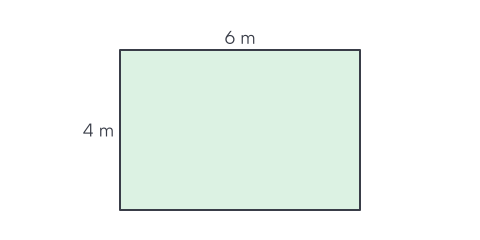
Let’s look at the original patio:

A rectangular patio 6 m long and 4 m wide.
Original patio diagram
Achievable
Image not to scale

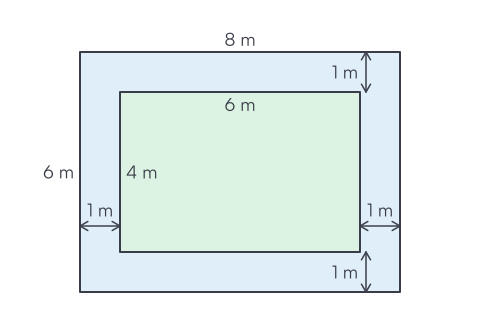
Now, Kenny is adding 1 meter to each side.

That means:

  • The width increases by 2 total (left + right)
  • The length increases by 2 total (top + bottom)

So the new dimensions are:

6×8

The 6 m by 4 m patio with 1 m of new concrete added on each of its four sides, making it 8 m long and 6 m wide.
Patio with addition
Achievable
Image not to scale

Now find the area:

6×8=48

The new area is 48m2.

Answer: C

Write the equation (if needed)

Once you understand what the question is asking and have identified your given information, the next step is to turn the words into math by writing an equation.

Not every problem requires a complex equation, but using algebra can help organize your thinking and make it easier to solve for the unknown.

Example:

On Monday, Savannah read the first three chapters of her book. Each chapter was one page longer than the one before it. If she read a total of 78 pages, how many pages were in the first chapter?

A. 25 pages
B. 30 pages
C. 35 pages
D. 40 pages

This problem involves consecutive values, since each chapter is one page longer than the previous one.

Let the first chapter be x.

Then:

  • Second chapter = x+1
  • Third chapter = x+2

We know all three add up to 78, so write the equation:

x+(x+1)+(x+2)=78

Now combine like terms and solve:

3x+33xx​=78=75=25​

Before finishing, double-check what the question is asking.

We are looking for the number of pages in the first chapter, and that is what x represents.

So the first chapter is 25 pages.

Answer: A

Solve

You’ve read the problem, identified the information, drawn it out, and (if needed) written an equation. Now it’s time to solve: carry out the math, then double-check that your answer actually answers the question being asked, not just a number you calculated along the way.

Example:

A 32 inch party sub is divided in half, and then each half is divided into fourths to make several equal portions. If Annabelle eats two portions of the sandwich, how many inches of sandwich did she eat?

A. 4 inches
B. 8 inches
C. 12 inches
D. 16 inches

Cutting the sub in half gives two 16 inch pieces, and cutting each half into fourths gives pieces that are 16÷4=4 inches long. Annabelle eats 2 of those pieces: 4×2=8 inches.

Answer: 8 inches (B)

Word problem strategy overview

  • Five-step approach: read carefully, identify given info, draw it out, write an equation (if needed), solve
  • No calculator allowed — simplify fractions early, estimate to rule out choices, keep values as fractions when possible
  • On CAT-ASVAB, answers are locked once confirmed and can’t be skipped or revisited — verify before confirming, never leave blank

Read carefully & identify what’s asked

  • Questions often word things to mislead; don’t assume what’s being asked
  • Double-check the actual question (e.g., “difference” vs. “total”) before finalizing an answer
  • Example: ratio/proportion problem — easy to answer a different question than the one asked (correct approach: set up 34​=x16​, cross-multiply, then subtract for the “difference”)

Identify given information

  • Pull out all known values and relationships before attempting to solve
  • Break multi-part problems into separate pieces, compute each, then combine
  • Example: lesson-length problem — calculate each lesson type separately (1×4=4, 0.5×3=1.5), then add for total

Draw it out

  • Sketching helps organize multi-step or spatial/geometry problems and prevents careless errors
  • Common pitfall: misapplying a single addition to both dimensions instead of accounting for both sides
  • Example: adding 1m border to all four sides increases each dimension by 2 (not 1), changing 4×6 to 6×8=48m2

Write the equation

  • Translate word relationships into algebra, especially for consecutive or unknown-value problems
  • Define variable for unknown, express related terms in terms of it, then combine like terms to solve
  • Example: consecutive chapter pages — x+(x+1)+(x+2)=78⇒x=25; confirm which value the question wants

Solve & verify

  • After computing, confirm the final number actually answers the specific question asked (not just an intermediate result)
  • Example: sub sandwich divided into eighths — each piece is 4 inches; eating 2 pieces equals 8 inches total

Sign up for free to take 7 quiz questions on this topic

Previous
Next  | 4.2 Percents, money, and rates
All rights reserved ©2016 - 2026 Achievable, Inc.

Word problem strategy

The arithmetic reasoning section of the ASVAB focuses on word problems. These questions test how well you can take a real-world situation and turn it into math you can solve.

Word problem strategy

Use these steps:

  1. Read carefully and recognize what the problem is really asking
  2. Identify your given information
  3. Draw it out!
  4. Write the equation (if needed)
  5. Solve

Let’s break down these steps even more.

Exam tip: No calculator is allowed on the ASVAB, so keep the arithmetic manageable. Simplify fractions before you multiply (reduce 104​ to 52​, or cancel common factors in a proportion like 34​=x16​ before cross-multiplying), estimate first to rule out answer choices, and keep awkward values as fractions instead of converting to long decimals.

Read carefully and identify what the problem is asking

It may seem obvious, but reading and understanding the question is the most important step in the Arithmetic Reasoning section. Take your time and read carefully without making assumptions.

The test will often word questions in a way that can be confusing or misleading. Sometimes it may seem like they’re asking for one thing, when they’re actually asking for something else. Always double-check what the question is really asking before you start solving.

On the CAT-ASVAB, you can’t skip a question or go back and change an answer once you confirm it, so do this checking before you lock in your choice. If you get stuck, rule out answer choices and make your best guess rather than leaving the question unanswered, since unanswered questions count against you.

Example:

A recipe uses a ratio of 4 cups of flour for every 3 cups of sugar. If a baker uses 16 cups of flour, how much more flour than sugar did they use?

A. 4 cups
B. 6 cups
C. 9 cups
D. 12 cups

Someone who didn’t read this question closely might assume the question is asking for the total cups of sugar used. If that were the case, they might pick D, 12 cups.

But that’s not what the question is asking.

The question is asking for the difference between flour and sugar.

So first, we need to find how much sugar was used.

The ratio is:

34​

We are told the baker used 16 cups of flour, so we set up a proportion:

34​​=x16​​

Here:

  • 16 is the flour used
  • x is the unknown amount of sugar

Now solve by cross multiplying:

4x4x​=3∗16=48​

Now divide both sides by 4:

x​=12​

So, the baker used 12 cups of sugar.

Now we know:

  • Flour = 16 cups
  • Sugar = 12 cups

The question asks for the difference, so subtract:

16−12=4

Answer: A

Identify your given information

No word problem exists in a vacuum. Every problem gives you some information and expects you to find what’s missing.

Your job is to identify what you know and what you’re trying to find, even if it’s not immediately obvious. Start by pulling out the given values and relationships before trying to solve.

Example:

A teacher gives group lessons that last 1 hour and private lessons that are half as long. She teaches 4 group lessons and 3 private lessons. How many hours does she teach?

A. 4
B. 5.5
C. 7
D. 8.5

Let’s break this down carefully.

  • Group lessons: 1 hour each, 4 lessons

1×4=4

  • Private lessons: half as long → 0.5 hours each, 3 lessons

0.5×3=1.5

Now add both parts:

4+1.5=5.5

Answer: B

Draw it out

Not every problem requires a diagram, but drawing or writing things out is a smart move when you feel stuck or unsure.

A quick sketch helps you keep track of multiple pieces of information and makes relationships easier to see. This is especially helpful for spatial or geometry problems.

The less you try to hold in your head, the fewer mistakes you’ll make. Let’s look at an example where drawing it out helps:

Example:

Kenny has a concrete patio that is 4 meters wide and 6 meters long. He wants to expand the patio by adding an additional 1 meter of concrete to each of the four sides. What is the new area of the patio?

A. 24m2
B. 35m2
C. 48m2
D. 72m2

If you don’t draw this out, it’s very easy to make a mistake.

A common error is to just add 1 to each dimension and say the new patio is 5 by 7:

5×7=35

This is incorrect.

Let’s look at the original patio:

Image not to scale

Now, Kenny is adding 1 meter to each side.

That means:

  • The width increases by 2 total (left + right)
  • The length increases by 2 total (top + bottom)

So the new dimensions are:

6×8

Image not to scale

Now find the area:

6×8=48

The new area is 48m2.

Answer: C

Write the equation (if needed)

Once you understand what the question is asking and have identified your given information, the next step is to turn the words into math by writing an equation.

Not every problem requires a complex equation, but using algebra can help organize your thinking and make it easier to solve for the unknown.

Example:

On Monday, Savannah read the first three chapters of her book. Each chapter was one page longer than the one before it. If she read a total of 78 pages, how many pages were in the first chapter?

A. 25 pages
B. 30 pages
C. 35 pages
D. 40 pages

This problem involves consecutive values, since each chapter is one page longer than the previous one.

Let the first chapter be x.

Then:

  • Second chapter = x+1
  • Third chapter = x+2

We know all three add up to 78, so write the equation:

x+(x+1)+(x+2)=78

Now combine like terms and solve:

3x+33xx​=78=75=25​

Before finishing, double-check what the question is asking.

We are looking for the number of pages in the first chapter, and that is what x represents.

So the first chapter is 25 pages.

Answer: A

Solve

You’ve read the problem, identified the information, drawn it out, and (if needed) written an equation. Now it’s time to solve: carry out the math, then double-check that your answer actually answers the question being asked, not just a number you calculated along the way.

Example:

A 32 inch party sub is divided in half, and then each half is divided into fourths to make several equal portions. If Annabelle eats two portions of the sandwich, how many inches of sandwich did she eat?

A. 4 inches
B. 8 inches
C. 12 inches
D. 16 inches

Cutting the sub in half gives two 16 inch pieces, and cutting each half into fourths gives pieces that are 16÷4=4 inches long. Annabelle eats 2 of those pieces: 4×2=8 inches.

Answer: 8 inches (B)

Key points

Word problem strategy overview

  • Five-step approach: read carefully, identify given info, draw it out, write an equation (if needed), solve
  • No calculator allowed — simplify fractions early, estimate to rule out choices, keep values as fractions when possible
  • On CAT-ASVAB, answers are locked once confirmed and can’t be skipped or revisited — verify before confirming, never leave blank

Read carefully & identify what’s asked

  • Questions often word things to mislead; don’t assume what’s being asked
  • Double-check the actual question (e.g., “difference” vs. “total”) before finalizing an answer
  • Example: ratio/proportion problem — easy to answer a different question than the one asked (correct approach: set up 34​=x16​, cross-multiply, then subtract for the “difference”)

Identify given information

  • Pull out all known values and relationships before attempting to solve
  • Break multi-part problems into separate pieces, compute each, then combine
  • Example: lesson-length problem — calculate each lesson type separately (1×4=4, 0.5×3=1.5), then add for total

Draw it out

  • Sketching helps organize multi-step or spatial/geometry problems and prevents careless errors
  • Common pitfall: misapplying a single addition to both dimensions instead of accounting for both sides
  • Example: adding 1m border to all four sides increases each dimension by 2 (not 1), changing 4×6 to 6×8=48m2

Write the equation

  • Translate word relationships into algebra, especially for consecutive or unknown-value problems
  • Define variable for unknown, express related terms in terms of it, then combine like terms to solve
  • Example: consecutive chapter pages — x+(x+1)+(x+2)=78⇒x=25; confirm which value the question wants

Solve & verify

  • After computing, confirm the final number actually answers the specific question asked (not just an intermediate result)
  • Example: sub sandwich divided into eighths — each piece is 4 inches; eating 2 pieces equals 8 inches total

More from Arithmetic Reasoning

  • Percents, money, and rates
  • Ratios, measurement, and probability