



Initial recognition of PPE
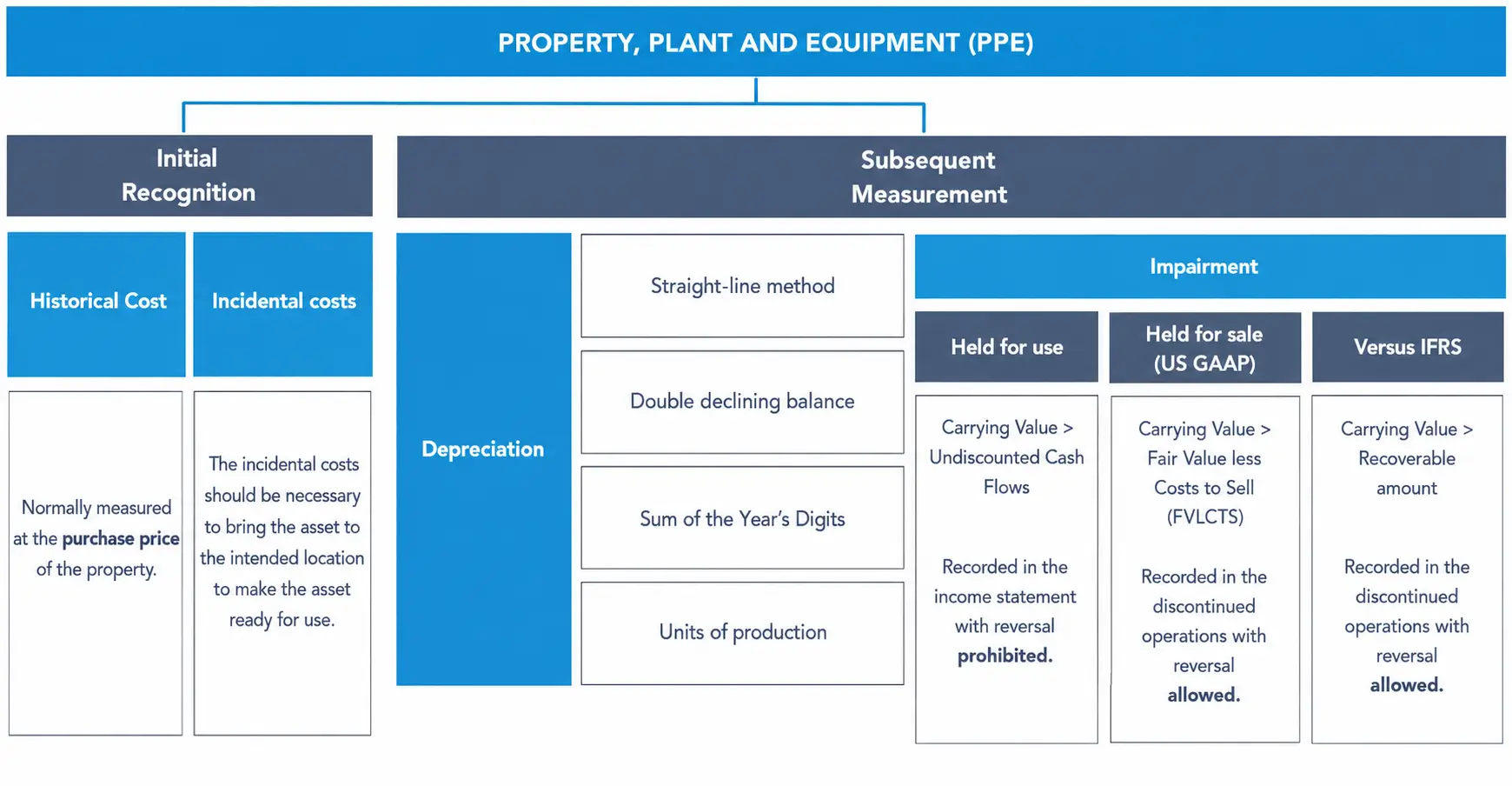
The concept map below summarizes the information about PPE accounting relevant for the CMA examinations:
Property, plant, and equipment are initially recorded at historical cost plus incidental costs necessary to bring the asset to its intended location and to make the asset ready for use. This may vary depending on the type of asset being accounted for.
Interest incurred to finance a self-constructed asset can also be capitalized, but this is not covered on the CMA exam.
Examples of capitalizable costs of different types of assets are shown below. Other types of costs may be incurred and should be analyzed individually.
Land
- Purchase price of land
- Legal fees
- Broker’s commission
- Obligations assumed by the buyer including delinquent taxes related to the land
- Surveying fees
- Demolition fees to remove an existing structure
- Sale of scrap from the demolition (this is a reduction in cost)
Buildings
- Purchase price
- Cost of renovations
- Architect fees
- Obligations assumed by the buyer including delinquent taxes related to the building
- If self-constructed, all materials, labor, and overhead connected to construction
- Insurance during construction
Equipment
- Purchase price, net of any purchase or cash discounts
- Freight-in
- Handling fees
- Installation cost
- Legal fees
- Sales and excise taxes
Example: Capitalized cost of equipment
A company buys a machine for $50,000, takes a 2% cash discount, and pays $1,200 freight-in and $800 installation; it also spends $500 training employees afterward. Net cost: $50,000 − $1,000 (discount) + $1,200 + $800 = $51,000. The $500 training cost is expensed, not capitalized.
Answer: $51,000 capitalized; $500 training cost expensed.