



Income taxes and interperiod tax allocations
Interperiod tax allocation means the allocation of income tax expense to the correct period through the accounting of current income taxes and deferred taxes. Income taxes are the amounts due to the tax authorities associated with the company’s income.
They can either be due in the current period (i.e., current income tax) or in a future period (i.e., deferred tax).
Tax reconciliation
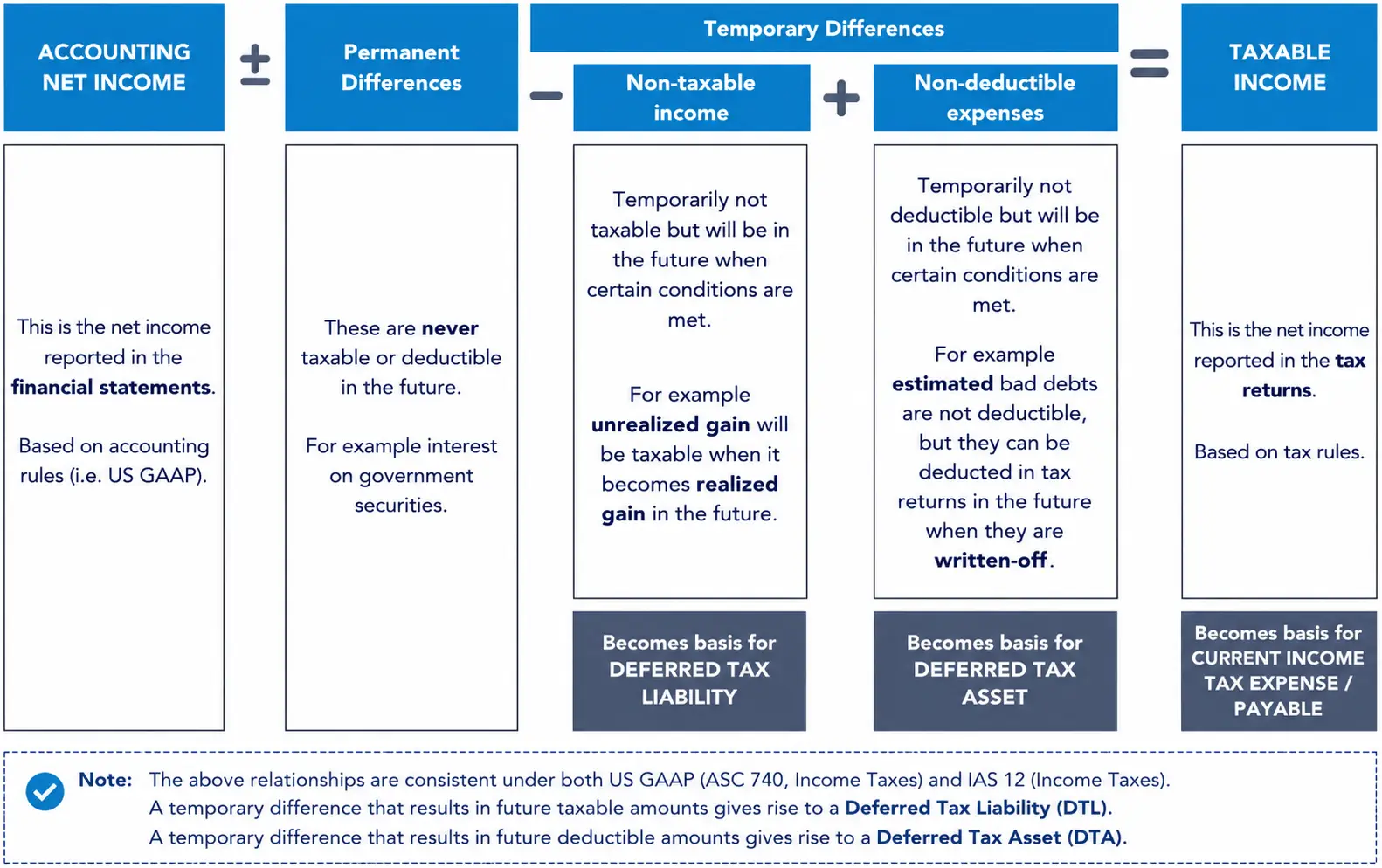
To understand the concepts of income tax better, it is best to be familiar with the two types of income and how they reconcile to each other.
Note 1: permanent differences
These are income and expenses that will never be taxable or deductible under income tax rules - for example, tax-exempt income or nondeductible expenses. Since they never affect taxable income, no deferred tax is recognized on them.
Note 2: temporary differences
These are income and expenses recognized in a different period for financial reporting than for tax purposes. Depending on the item, accounting income may recognize them first (as with an accrued expense not yet deductible), or the tax return may recognize them first (as with accelerated tax depreciation); either way, we adjust accounting income for these items when computing taxable income. They’re called “temporary differences” because they eventually reverse and even out over time. Finally, temporary differences, both taxable and deductible, become the basis for deferred tax accounting. These are discussed in more detail in succeeding sections.
Note 3: taxable temporary differences
These are temporary differences that will increase taxable income in a future period - for example, when tax depreciation is claimed faster than book depreciation. Taxable temporary differences become the basis for a deferred tax liability.
Note 4: deductible temporary differences
These are temporary differences that will decrease taxable income in a future period - for example, an expense accrued for book purposes but not deductible until it’s paid. Deductible temporary differences become the basis for a deferred tax asset.
Deferred income taxes - introduction and journal entries
These arise from temporary differences between the carrying amounts of assets and liabilities for financial reporting purposes and their tax bases. These differences can lead to either deferred tax liabilities or deferred tax assets, depending on their nature. This concept aligns with the accrual basis of accounting, where income taxes are recognized in the period the related transaction affects the income statement, regardless of when the tax payment is due.
For instance, if a transaction is recognized in the current period’s income statement but is taxable in a future period, the associated tax effect is already accrued in the current period, even though the taxes are not payable until a later period. This approach ensures that the financial statements accurately reflect the company’s tax obligations corresponding to its reported earnings.
For example, say accounting income is , taxed at an enacted rate of . It includes of tax-exempt interest (a permanent difference), of excess tax depreciation (a taxable temporary difference reversing later), and a warranty expense accrued for book purposes that isn’t deductible until paid (a deductible temporary difference reversing later). Taxable income removes the permanent difference and the taxable temporary difference, then adds back the deductible temporary difference, since it’s already expensed in the books but not yet allowed on the tax return:
Current tax expense is . Since the difference will increase taxable income later, it also creates a deferred tax liability of . The journal entry to record the deferred portion is:
| Account | Debit | Credit | Financial statement element |
| Deferred tax expense | $10,500 | Expense | |
| Deferred tax liability | $10,500 | Liability | |
| To record deferred tax liability from a $50,000 taxable temporary difference (excess tax depreciation) | |||
The deferred tax liability represents future income tax payable. The logic reverses for deductible temporary differences: the warranty accrual will decrease taxable income later, when it’s paid, creating a deferred tax asset of :
| Account | Debit | Credit | Financial statement element |
| Deferred tax asset | $6,300 | Asset | |
| Deferred tax expense | $6,300 | Expense | |
| To record deferred tax asset from a $30,000 deductible temporary difference (warranty accrual) | |||
The deferred tax asset represents future deductible amounts.
Putting the current and deferred pieces together, total income tax expense is , which equals accounting income excluding the permanent difference, taxed at the enacted rate: .
Deferred tax is measured using the tax rate expected to apply in the period each temporary difference reverses; this example assumes the enacted rate stays the same, so the same rate applies to both the current and deferred computations.
Specific sources of deferred tax liabilities and assets are covered in the chapters that follow.
Temporary differences
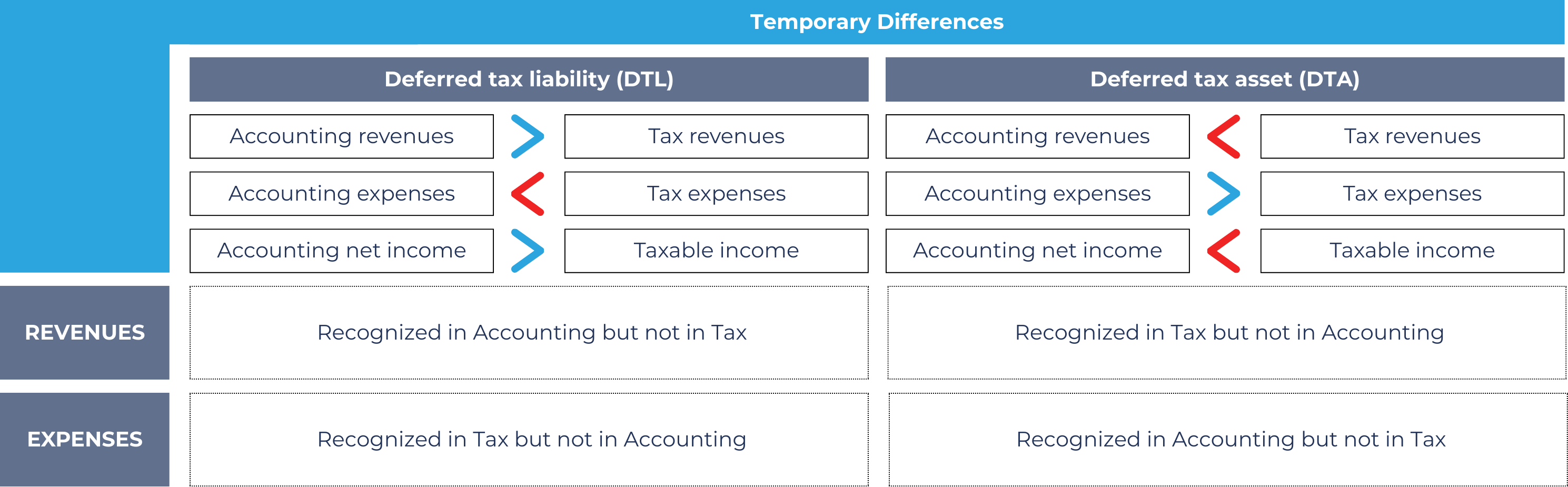
Temporary differences are also called timing differences, since the current income tax computed above doesn’t yet reflect the future tax impact of these items. That future impact is accrued separately as either a deferred tax liability or a deferred tax asset.
The concept can be summarized in the following illustration:
Under ASC 740, deferred tax assets and liabilities are always classified as noncurrent, regardless of when the temporary difference reverses. Within each tax jurisdiction, they’re offset and presented as a single net noncurrent amount; amounts from different jurisdictions aren’t netted together.