


Achievable logoAchievable logo
CCMA
Sign in
Sign up
Purchase
Textbook
Practice exams
Support
How it works
Exam catalog
Mountain with a flag at the peak
Textbook
1. Medical assistant
2. Electronic records
3. Medical terminology and anatomy
4. The fundamentals of infection control
5. Introduction to vital signs
6. The patient interview and history
7. The physical examination
8. Appointment scheduling
9. Insurance billing
10. Diagnostic coding and the ICD-10-CM System
11. Procedural coding
12. Medical billing and reimbursement essentials
13. Assisting with medical specialties
13.1 Environmental and traumatic skin disorders: burns, cold injuries, and carcinomas
13.2 The anatomy of the integumentary system
13.3 Inflammatory skin disorders
13.4 Skin lesions and infectious diseases of the integumentary system
13.5 The medical assistant’s role in examinations, procedures, and treatments
14. Assisting with the musculoskeletal system
15. Assisting with the cardiovascular system
16. Assisting with the respiratory system
17. Assisting with the nervous system
18. Anatomy and physiology of the urinary system
19. Assisting in obstetrics and gynecology
20. Assisting in endocrinology
21. Assisting in ophthalmology & otolaryngology
22. Assisting in gastroenterology
23. Assisting in the immune & lymphatic systems
24. Assisting in pediatrics: the developmental stages and care
25. The medical assistant’s role in caring for the older patient
26. The role of the medical assistant in physical therapy examination and assessment
27. Preparing for minor surgery: room, solutions, and supplies
28. Introduction to the clinical laboratory
29. Urinalysis
30. Blood collection
31. Analysis of blood
32. Electrocardiography and heart structure
33. The principles of pharmacology
34. Essential calculations and measurement systems
35. Solid, liquid, & solutions medication doses
36. Administering medications
37. Metabolism and core nutrient roles
38. Medical emergencies in the healthcare setting
Achievable logoAchievable logo
13.4 Skin lesions and infectious diseases of the integumentary system
Achievable CCMA
13. Assisting with medical specialties
Our CCMA course is currently in development and is a work-in-progress.

Skin lesions and infectious diseases of the integumentary system

7 min read
Font
Discuss
Share
Feedback

Diseases and disorders of the skin

Diseases of the integumentary system are varied in appearance and cause. Many factors can cause skin diseases, such as bacterial, fungal, viral, and parasitic infections. Here are some of the common signs and symptoms seen in patients with skin diseases and disorders:

  • Skin discoloration or redness
  • Itching, weeping, or bleeding lesions
  • Blisters, macules, papules
  • Scaly or flaky skin surface
  • New or changing lesions The underlying cause will vary and likely dictate the type of treatment needed. A skin lesion is any visible, localized abnormality of skin tissue. It can be described as either primary or secondary. Primary lesions are early skin changes that have not yet undergone natural evolution or change caused by manipulation. Secondary lesions are the result of natural evolution or the manipulation of a primary lesion.

Skin lesions

Skin lesions can be caused by a systemic problem, such as an allergic reaction to a medication, or they may develop from a localized infection. When communicating with the provider and documenting in the patient’s health record, always use correct medical terminology to describe skin lesions, such as “The patient reports a widespread maculopapular rash across the anterior trunk” rather than “The patient has a red, raised rash on his stomach.” When you gather details from the patient about the characteristics of lesions, here are some of the elements you should consider:

  • Describe the color, elevation, and texture of the lesion.
  • Does the patient have any pain or pruritus (itching)? If pruritus is present, is the area excoriated or inflamed?
  • Is any drainage present? If so, what are its characteristics?
  • What is the exact anatomic location of the lesion? Have changes occurred over time? Primary lesions are those that appear immediately. Macules, papules, plaques, nodules, cysts, wheals, and pustules are all primary lesions. Secondary lesions are the result of alterations in a primary lesion. Examples of secondary lesions include scales, crusts, fissures, erosions, ulcerations, and scars. For instance, vesicles (blisters) from a partial-thickness burn are primary lesions, but if the blisters break and ulcerations form, healing ends in a scar. Ulcerations and scars are secondary lesions.
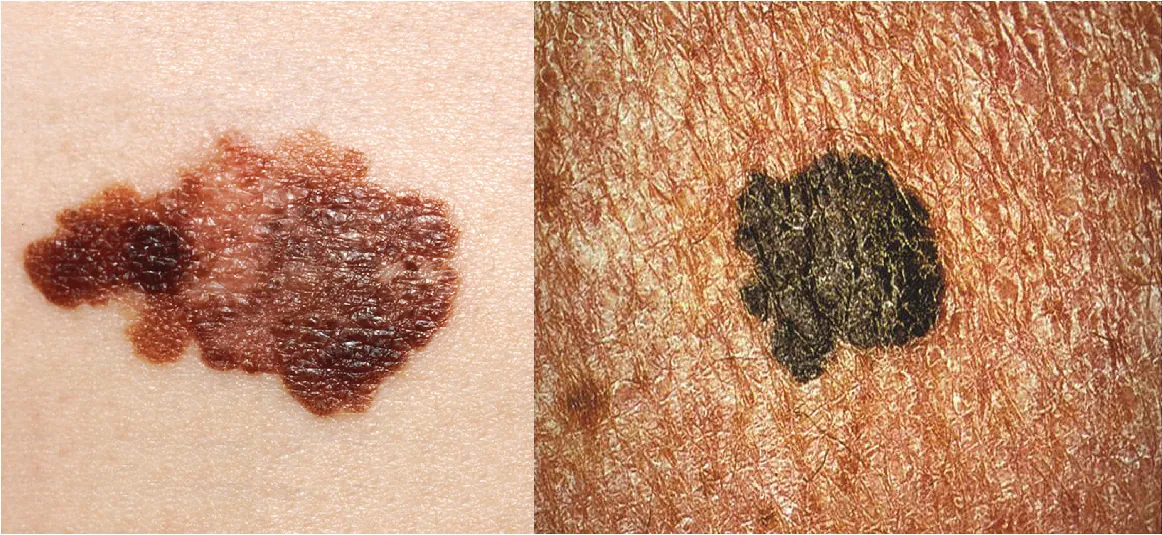
Various types of skin lesions and their characteristics shown
Skin leisions
OpenStax
/
CC BY 4.0

Infections

Infections of the integumentary system can be caused by many different pathogens. When working with patients in this specialty, it is important to have an understanding of the different types of infections. These infections are discussed in the following sections.

Bacterial infections

When working in dermatology, a medical assistant should be familiar with the common bacterial infections that are found in the integumentary system. The following sections discuss those bacterial infections.

Impetigo

Impetigo is a common, superficial infection caused by Streptococcus sp. or Staphylococcus aureus that usually affects children. Initially, impetigo looks like small vesicles on the face (especially around the nose and mouth) that quickly enlarge and rupture, excreting a honey-colored exudate. The exudate forms crusty lesions, and beneath the crust, the area is inflamed and moist. Pruritus accompanies the infection, and scratching helps spread the lesions at the site. Impetigo is contagious, and bacteria are transmitted by direct contact with the drainage, whether this occurs at other sites or with other children through the sharing of toys and physical contact. Consistent handwashing is required to help break the chain of infection. It is also important to keep personal items that may be contaminated, such as washcloths, linens, and drinking glasses, away from other members of the family. If the areas of infection are limited, topical treatment with an antibiotic ointment may be effective. However, impetigo caused by streptococci may result in glomerulonephritis; more involved infections may require treatment with oral antibiotics.

Acne vulgaris

Acne vulgaris is a skin condition that occurs when a hair follicle becomes plugged with oil and dead skin cells. Acne is most common on the face, but it can occur on other sites of the body, such as the neck, chest, shoulders, and back. Acne is most common during adolescence, but it can occur at any age. Because acne can cause scarring, it is best treated as early as possible to minimize scars and emotional distress. The main causes of acne include excess oil production, pores clogged with dead skin cells and oil, and bacterial infections. Once a pore is clogged, bacteria trapped in the pore multiply and cause inflammation. Risk factors for acne include age (adolescents are most prone due to hormonal changes), medications (corticosteroids, androgens, oral contraceptives, and lithium), stress, and diet (a diet that is high in dairy products and simple carbohydrates, such as refined sugars, processed foods, and sweets, can make acne worse). The signs and symptoms of acne can vary in severity. Common symptoms include the following:

  • Whiteheads and blackheads
  • Papules and pustules
  • Large, solid, painful nodules
  • Painful, pus-filled lumps beneath the skin’s surface, known as cystic acne There are many treatments used for acne, from simple over-the-counter (OTC) lotions to more extensive use of medications, antibiotics, and dermatologic procedures:
  • Common medications include topical prescription-strength benzoyl peroxide, antibiotics, retinoids, and oral contraceptives.
  • Common dermatologic procedures include light therapy, chemical peels, extraction of whiteheads and blackheads by a provider, and steroid injections.
  • Common dietary changes recommended include reducing or eliminating dairy products, refined sugar, and simple carbohydrate foods. Examples include juice, soda, sweets, pasta, and bread.
  • More extensive treatments include dermabrasion, laser resurfacing, and minor skin surgery to repair areas of damage or excessive scarring. Acne often requires extended treatment and follow-up, depending on the severity of the condition.

Rosacea

Rosacea is a chronic disease seen most frequently in women between the ages of 30 and 60. It causes inflammation and pustule formation and begins as frequent flushing across the nose, forehead, cheeks, and chin. As the condition progresses, capillaries of the face dilate and are visible across affected areas as small, red, edematous lines; these are accompanied by eye inflammation and photosensitivity. Over time, the face appears red, eye inflammation is more apparent, and painful nodules and pustules form. Men with rosacea may develop rhinophyma, a large, inflamed, bulbous nose caused by hyperplasia of sebaceous nasal tissue. Individuals with rosacea eventually may develop an obvious thickening of the skin across the forehead, nose, cheeks, and chin. The condition is treated with topical antibiotics and, as symptoms progress, with oral antibiotics, such as doxycycline (Oracea), which helps reduce the number of pimples and bumps on the face; however, it may not reduce the redness and flushing.

Furuncles and Carbuncles

A furuncle, or boil, is a localized staphylococcal infection that begins as inflammation of a hair follicle (folliculitis) or skin gland. The affected area is raised, inflamed, and painful and eventually may produce purulent drainage. A carbuncle is a collection of furuncles that have joined to form a large, infected area that may drain through multiple sites or form an abscess. Both infections are treated with oral antibiotics, frequent cleansing of the area, application of an antibiotic ointment and, in some cases, surgical incision and drainage of the purulent material.

Cellulitis

Cellulitis is an acute infection of the skin and subcutaneous tissue caused by staphylococci or streptococci. It begins from a small cut or as a result of a skin injury or develops at the site of a furuncle or an ulcer. The area surrounding the site becomes inflamed, edematous, and painful, with red streaks along the lymph vessels that lead from the infection. The condition is treated with oral antibiotics. Warm compresses applied locally aid healing, and analgesics may be needed to relieve discomfort. It is important that patients with cellulitis are treated appropriately because a systemic infection can develop if the lymph glands become involved.

Diseases and Disorders of the Skin

  • Caused by bacteria, fungi, viruses, or parasites
  • Common signs: discoloration, itching, lesions, blisters, scaly skin
  • Lesions classified as primary (initial) or secondary (evolved/manipulated)

Skin Lesions

  • Use precise medical terminology for documentation
  • Assess: color, elevation, texture, pain/pruritus, drainage, location, changes over time
  • Primary lesions: macules, papules, plaques, nodules, cysts, wheals, pustules
  • Secondary lesions: scales, crusts, fissures, erosions, ulcerations, scars

Bacterial Infections

  • Common pathogens: Streptococcus, Staphylococcus aureus

    • Impetigo

      • Superficial, contagious infection (mainly children)
      • Honey-colored crusts, pruritus, spreads by contact
      • Treat with topical/oral antibiotics; hand hygiene critical
    • Acne Vulgaris

      • Blocked hair follicles by oil/dead skin, bacteria
      • Lesions: whiteheads, blackheads, papules, pustules, nodules, cysts
      • Risk factors: adolescence, hormones, certain meds, diet, stress
      • Treatments: topical/oral meds, procedures, dietary changes
    • Rosacea

      • Chronic, mostly women 30–60
      • Flushing, visible capillaries, pustules, possible rhinophyma in men
      • Treated with topical/oral antibiotics
    • Furuncles and Carbuncles

      • Furuncle: infected hair follicle (boil); carbuncle: cluster of boils
      • Painful, swollen, may drain pus
      • Treat with antibiotics, cleansing, possible incision/drainage
    • Cellulitis

      • Acute skin/subcutaneous infection (staph/strep)
      • Red, swollen, painful, red streaks along lymphatics
      • Treat with oral antibiotics, warm compresses, analgesics

Fungal Infections (Dermatophytoses)

  • Common types: tinea pedis (athlete’s foot), tinea cruris (jock itch), tinea corporis (ringworm)
  • Pruritic, scaly lesions with clear center, distinct border
  • Diagnosis: clinical exam, skin scraping, culture
  • Treatment: topical antifungals; oral antifungals for nail infections
  • Tinea unguium (onychomycosis): thick, discolored, brittle nails; long-term oral antifungals needed

Viral Infections

  • Warts (Verrucae)

    • Caused by HPV
    • Raised, cauliflower-like lesions; common on fingers, soles
    • Treatments: topical chemicals, surgery, laser, cryotherapy
  • Herpes Simplex (Cold Sores)

    • Caused by HSV-1
    • Painful oral/lip vesicles, may recur with triggers (stress, illness, sun)
    • Treated with topical/oral antivirals (acyclovir, valacyclovir, etc.)

Parasitic Infections

  • Scabies

    • Caused by Sarcoptes scabiei (itch mite)
    • Intense itching, burrows in skin folds
  • Pediculosis (Lice)

    • Head, body, or pubic lice infestations
    • Itching, red bumps, nits on hair
  • Transmission: close contact, shared items (combs, bedding, clothing)

  • Diagnosis: visual inspection, Wood’s light for nits, microscopic exam for scabies

  • Treatment: prescription shampoos, washes, lotions; clean all personal items and environment

  • Special precautions for infants and pregnant women with antiparasitic products

Sign up for free to take 15 quiz questions on this topic

Previous
Next  | 13.5 The medical assistant’s role in examinations, procedures, and treatments
All rights reserved ©2016 - 2026 Achievable, Inc.

Skin lesions and infectious diseases of the integumentary system

Diseases and disorders of the skin

Diseases of the integumentary system are varied in appearance and cause. Many factors can cause skin diseases, such as bacterial, fungal, viral, and parasitic infections. Here are some of the common signs and symptoms seen in patients with skin diseases and disorders:

  • Skin discoloration or redness
  • Itching, weeping, or bleeding lesions
  • Blisters, macules, papules
  • Scaly or flaky skin surface
  • New or changing lesions The underlying cause will vary and likely dictate the type of treatment needed. A skin lesion is any visible, localized abnormality of skin tissue. It can be described as either primary or secondary. Primary lesions are early skin changes that have not yet undergone natural evolution or change caused by manipulation. Secondary lesions are the result of natural evolution or the manipulation of a primary lesion.

Skin lesions

Skin lesions can be caused by a systemic problem, such as an allergic reaction to a medication, or they may develop from a localized infection. When communicating with the provider and documenting in the patient’s health record, always use correct medical terminology to describe skin lesions, such as “The patient reports a widespread maculopapular rash across the anterior trunk” rather than “The patient has a red, raised rash on his stomach.” When you gather details from the patient about the characteristics of lesions, here are some of the elements you should consider:

  • Describe the color, elevation, and texture of the lesion.
  • Does the patient have any pain or pruritus (itching)? If pruritus is present, is the area excoriated or inflamed?
  • Is any drainage present? If so, what are its characteristics?
  • What is the exact anatomic location of the lesion? Have changes occurred over time? Primary lesions are those that appear immediately. Macules, papules, plaques, nodules, cysts, wheals, and pustules are all primary lesions. Secondary lesions are the result of alterations in a primary lesion. Examples of secondary lesions include scales, crusts, fissures, erosions, ulcerations, and scars. For instance, vesicles (blisters) from a partial-thickness burn are primary lesions, but if the blisters break and ulcerations form, healing ends in a scar. Ulcerations and scars are secondary lesions.

Infections

Infections of the integumentary system can be caused by many different pathogens. When working with patients in this specialty, it is important to have an understanding of the different types of infections. These infections are discussed in the following sections.

Bacterial infections

When working in dermatology, a medical assistant should be familiar with the common bacterial infections that are found in the integumentary system. The following sections discuss those bacterial infections.

Impetigo

Impetigo is a common, superficial infection caused by Streptococcus sp. or Staphylococcus aureus that usually affects children. Initially, impetigo looks like small vesicles on the face (especially around the nose and mouth) that quickly enlarge and rupture, excreting a honey-colored exudate. The exudate forms crusty lesions, and beneath the crust, the area is inflamed and moist. Pruritus accompanies the infection, and scratching helps spread the lesions at the site. Impetigo is contagious, and bacteria are transmitted by direct contact with the drainage, whether this occurs at other sites or with other children through the sharing of toys and physical contact. Consistent handwashing is required to help break the chain of infection. It is also important to keep personal items that may be contaminated, such as washcloths, linens, and drinking glasses, away from other members of the family. If the areas of infection are limited, topical treatment with an antibiotic ointment may be effective. However, impetigo caused by streptococci may result in glomerulonephritis; more involved infections may require treatment with oral antibiotics.

Acne vulgaris

Acne vulgaris is a skin condition that occurs when a hair follicle becomes plugged with oil and dead skin cells. Acne is most common on the face, but it can occur on other sites of the body, such as the neck, chest, shoulders, and back. Acne is most common during adolescence, but it can occur at any age. Because acne can cause scarring, it is best treated as early as possible to minimize scars and emotional distress. The main causes of acne include excess oil production, pores clogged with dead skin cells and oil, and bacterial infections. Once a pore is clogged, bacteria trapped in the pore multiply and cause inflammation. Risk factors for acne include age (adolescents are most prone due to hormonal changes), medications (corticosteroids, androgens, oral contraceptives, and lithium), stress, and diet (a diet that is high in dairy products and simple carbohydrates, such as refined sugars, processed foods, and sweets, can make acne worse). The signs and symptoms of acne can vary in severity. Common symptoms include the following:

  • Whiteheads and blackheads
  • Papules and pustules
  • Large, solid, painful nodules
  • Painful, pus-filled lumps beneath the skin’s surface, known as cystic acne There are many treatments used for acne, from simple over-the-counter (OTC) lotions to more extensive use of medications, antibiotics, and dermatologic procedures:
  • Common medications include topical prescription-strength benzoyl peroxide, antibiotics, retinoids, and oral contraceptives.
  • Common dermatologic procedures include light therapy, chemical peels, extraction of whiteheads and blackheads by a provider, and steroid injections.
  • Common dietary changes recommended include reducing or eliminating dairy products, refined sugar, and simple carbohydrate foods. Examples include juice, soda, sweets, pasta, and bread.
  • More extensive treatments include dermabrasion, laser resurfacing, and minor skin surgery to repair areas of damage or excessive scarring. Acne often requires extended treatment and follow-up, depending on the severity of the condition.

Rosacea

Rosacea is a chronic disease seen most frequently in women between the ages of 30 and 60. It causes inflammation and pustule formation and begins as frequent flushing across the nose, forehead, cheeks, and chin. As the condition progresses, capillaries of the face dilate and are visible across affected areas as small, red, edematous lines; these are accompanied by eye inflammation and photosensitivity. Over time, the face appears red, eye inflammation is more apparent, and painful nodules and pustules form. Men with rosacea may develop rhinophyma, a large, inflamed, bulbous nose caused by hyperplasia of sebaceous nasal tissue. Individuals with rosacea eventually may develop an obvious thickening of the skin across the forehead, nose, cheeks, and chin. The condition is treated with topical antibiotics and, as symptoms progress, with oral antibiotics, such as doxycycline (Oracea), which helps reduce the number of pimples and bumps on the face; however, it may not reduce the redness and flushing.

Furuncles and Carbuncles

A furuncle, or boil, is a localized staphylococcal infection that begins as inflammation of a hair follicle (folliculitis) or skin gland. The affected area is raised, inflamed, and painful and eventually may produce purulent drainage. A carbuncle is a collection of furuncles that have joined to form a large, infected area that may drain through multiple sites or form an abscess. Both infections are treated with oral antibiotics, frequent cleansing of the area, application of an antibiotic ointment and, in some cases, surgical incision and drainage of the purulent material.

Cellulitis

Cellulitis is an acute infection of the skin and subcutaneous tissue caused by staphylococci or streptococci. It begins from a small cut or as a result of a skin injury or develops at the site of a furuncle or an ulcer. The area surrounding the site becomes inflamed, edematous, and painful, with red streaks along the lymph vessels that lead from the infection. The condition is treated with oral antibiotics. Warm compresses applied locally aid healing, and analgesics may be needed to relieve discomfort. It is important that patients with cellulitis are treated appropriately because a systemic infection can develop if the lymph glands become involved.

Key points

Diseases and Disorders of the Skin

  • Caused by bacteria, fungi, viruses, or parasites
  • Common signs: discoloration, itching, lesions, blisters, scaly skin
  • Lesions classified as primary (initial) or secondary (evolved/manipulated)

Skin Lesions

  • Use precise medical terminology for documentation
  • Assess: color, elevation, texture, pain/pruritus, drainage, location, changes over time
  • Primary lesions: macules, papules, plaques, nodules, cysts, wheals, pustules
  • Secondary lesions: scales, crusts, fissures, erosions, ulcerations, scars

Bacterial Infections

  • Common pathogens: Streptococcus, Staphylococcus aureus

    • Impetigo

      • Superficial, contagious infection (mainly children)
      • Honey-colored crusts, pruritus, spreads by contact
      • Treat with topical/oral antibiotics; hand hygiene critical
    • Acne Vulgaris

      • Blocked hair follicles by oil/dead skin, bacteria
      • Lesions: whiteheads, blackheads, papules, pustules, nodules, cysts
      • Risk factors: adolescence, hormones, certain meds, diet, stress
      • Treatments: topical/oral meds, procedures, dietary changes
    • Rosacea

      • Chronic, mostly women 30–60
      • Flushing, visible capillaries, pustules, possible rhinophyma in men
      • Treated with topical/oral antibiotics
    • Furuncles and Carbuncles

      • Furuncle: infected hair follicle (boil); carbuncle: cluster of boils
      • Painful, swollen, may drain pus
      • Treat with antibiotics, cleansing, possible incision/drainage
    • Cellulitis

      • Acute skin/subcutaneous infection (staph/strep)
      • Red, swollen, painful, red streaks along lymphatics
      • Treat with oral antibiotics, warm compresses, analgesics

Fungal Infections (Dermatophytoses)

  • Common types: tinea pedis (athlete’s foot), tinea cruris (jock itch), tinea corporis (ringworm)
  • Pruritic, scaly lesions with clear center, distinct border
  • Diagnosis: clinical exam, skin scraping, culture
  • Treatment: topical antifungals; oral antifungals for nail infections
  • Tinea unguium (onychomycosis): thick, discolored, brittle nails; long-term oral antifungals needed

Viral Infections

  • Warts (Verrucae)

    • Caused by HPV
    • Raised, cauliflower-like lesions; common on fingers, soles
    • Treatments: topical chemicals, surgery, laser, cryotherapy
  • Herpes Simplex (Cold Sores)

    • Caused by HSV-1
    • Painful oral/lip vesicles, may recur with triggers (stress, illness, sun)
    • Treated with topical/oral antivirals (acyclovir, valacyclovir, etc.)

Parasitic Infections

  • Scabies

    • Caused by Sarcoptes scabiei (itch mite)
    • Intense itching, burrows in skin folds
  • Pediculosis (Lice)

    • Head, body, or pubic lice infestations
    • Itching, red bumps, nits on hair
  • Transmission: close contact, shared items (combs, bedding, clothing)

  • Diagnosis: visual inspection, Wood’s light for nits, microscopic exam for scabies

  • Treatment: prescription shampoos, washes, lotions; clean all personal items and environment

  • Special precautions for infants and pregnant women with antiparasitic products

More from Assisting with medical specialties

  • Environmental and traumatic skin disorders: burns, cold injuries, and carcinomas
  • The anatomy of the integumentary system
  • Inflammatory skin disorders
  • The medical assistant’s role in examinations, procedures, and treatments